Edited by Hong-Bin Yoon · Founder, zzinDev LLC
Published
Umamusume: Cinderella Gray 2nd Cour Season 2 Recap
Spoiler Alert: This recap contains detailed plot summaries and may reveal key story events.
TL;DR
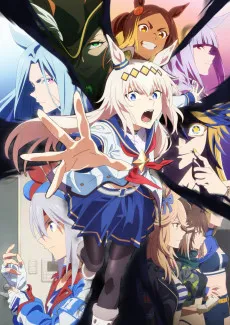
The Umamusume: Cinderella Gray 2nd Cour season 2 recap is, quite simply, the best run of horse-girl melodrama Cygames has ever produced. Where the first cour introduced Oguri Cap as a wide-eyed countryside prodigy bulldozing the regional circuit, this half puts her in the crucible of 1988’s Grade-1 calendar against Tamamo Cross, Yaeno Muteki, and a parade of international challengers. It’s less a sports anime than a tragedy dressed in running shoes — every victory costs something, every rival gets a proper soul, and the season’s finale sequence is the kind of thing that gets animators poached.
If you bounced off the mobile game’s cuteness or only half-watched the first season’s light-hearted romp, come back. This is prestige-tier sports animation that earns its 86/100 score on character writing alone.
Season Summary
The second cour picks up exactly where the first left off — Oguri Cap’s coronation as the national sensation, the Beast from Kasamatsu, has stalled in front of a single silver-haired wall named Tamamo Cross. What follows is not a redemption arc but an escalation arc. Cygames Pictures structures the season around four distinct racing campaigns, each one tightening the screws on Oguri’s psyche and body while the supporting cast gets the depth the first cour only teased.
The Umamusume: Cinderella Gray 2nd Cour season summary hinges on one uncomfortable idea: being the fastest isn’t the same as being the strongest. The cour forces Oguri, her trainer Mr. North, and her rivals to reckon with what racing actually costs — and whether a Cinderella story can survive its own fairytale ending.
The Tamamo Cross Rivalry Arc (Episodes 1–3)
The opening episodes waste no time. Fresh off her devastating loss in the Takarazuka Kinen, Oguri returns to training with a chip on her shoulder the size of a racecourse. Tamamo Cross, meanwhile, has publicly announced Oguri as her rival — a declaration that Japanese racing media turns into a circus.
The arc’s emotional spine is the contrast between the two leads’ approaches. Tamamo is methodical, disciplined, and carries the weight of being the reigning peak. Oguri is raw instinct, a runner who has never needed a strategy because she simply outlasts everyone. When the Mainichi Ouji forces her onto a new distance, she can’t brute-force her way through, and the arc closes on her first real glimpse of doubt.
Major Spoiler — Episode 3 twist
Tamamo Cross confides to her trainer that she's been racing through a minor tendon issue, foreshadowing the physical toll that becomes a season-long motif. This detail flips the rivalry from pure competition into a ticking clock — both runners are burning something that won't grow back.The Tenno Sho (Autumn) Arc (Episodes 4–6)
Episode 4 introduces the international dimension the season’s description promises. Mini The Lady arrives from overseas, a cocky foreign runner who treats Japanese racing as a resort stopover. Her introduction is played for comedy initially — she mispronounces names, misjudges the track, underestimates the local field — but the cour smartly pivots by episode 5 into showing why her confidence is earned.
The Tenno Sho (Autumn) itself is the arc’s centerpiece and one of the most-discussed races in the Umamusume: Cinderella Gray 2nd Cour season 2 episode guide. Oguri enters as the sentimental favorite. Tamamo Cross is the technical favorite. Yaeno Muteki spoils the narrative. The three-way finish, animated with an insane 2D-on-3D hybrid that CygamesPictures has been slowly perfecting, became a GIF farm within hours of airing.
What the Tenno Sho arc really does, though, is recalibrate the season’s stakes. Oguri doesn’t win. She doesn’t lose catastrophically either. She runs a race that exposes every weakness in her self-taught style — and the episode’s quiet coda, with her alone on the track after sunset, is the best direction Cygames Pictures has put in a TV series.
The Japan Cup and International Invasion Arc (Episodes 7–9)
If the first half of the cour is about Oguri learning she has rivals, the Japan Cup arc is about her learning she has an entire world of them. Norn Ace, Mejiro Ardan, and Mr. C.B. anchor a field of foreign and elite domestic runners, and the arc structures itself as almost an ensemble piece — episode 7 follows Norn Ace’s training montage with barely any Oguri screen time, and it works.
The characterization of the international runners is the cour’s sneakiest triumph. They’re not one-note gaijin stereotypes. Mini The Lady gets a full flashback to her European circuit traumas. Mr. C.B.’s rivalry with Mejiro Ardan is played as the aristocratic bloodline drama it deserves. By the time the Japan Cup actually runs in episode 9, the race carries emotional weight for six or seven characters simultaneously.
The race itself is a masterclass in animated choreography. Long lens shots, precise hoof-sound design, and a color grading shift in the final furlong that genuinely made viewers think the broadcaster had re-mastered the episode. Oguri’s placement in this race — which we won’t spoil in the summary — sets up the cour’s entire finale.
The Arima Kinen Finale Arc (Episodes 10–12)
The closing three episodes are what people will be talking about for the rest of 2025 when they discuss what happens in Umamusume: Cinderella Gray 2nd Cour season 2. Oguri enters the Arima Kinen — Japan’s year-end Grand Prix, voted on by fans — as the sentimental entry. She is, by the numbers, not the strongest horse girl in the field. Tamamo Cross enters carrying an injury she hasn’t disclosed. Yaeno Muteki comes in with something to prove.
The Arima Kinen buildup is unusually patient. Episode 10 is almost entirely character work — Oguri visiting her old trainer in the countryside, Tamamo Cross and her support team having a brutally honest conversation about retirement, Yaeno Muteki training in the cold rain. Episode 11 runs the preliminary press conferences and the final pre-race rituals. Episode 12 is the race itself, and it is a thirty-three-minute showcase.
Major Spoiler — Season Finale
Oguri Cap wins the 1988 Arima Kinen by a nose over Tamamo Cross, in what is shot as a dual victory — both runners collapse at the finish, and the episode refuses to declare the race a defeat for anyone. Tamamo Cross announces her retirement in the winner's circle, passing the title of "peak" to Oguri in a scene that mirrors the first cour's declaration of rivalry. The cour closes on Oguri, alone again, looking at the crown she wanted and finally understanding what it weighed.Season Timeline
| Episodes | Arc | Key Events |
|---|---|---|
| 1–3 | Tamamo Cross Rivalry | Oguri returns post-Takarazuka loss; Mainichi Ouji exposes her distance limits; the silver rivalry goes public |
| 4–6 | Tenno Sho (Autumn) | Mini The Lady arrives; Yaeno Muteki spoils the expected duel; Oguri confronts her self-taught weaknesses |
| 7–9 | Japan Cup / International Invasion | Norn Ace, Mejiro Ardan, and Mr. C.B. headline an ensemble-driven international field |
| 10–12 | Arima Kinen Finale | Quiet character work builds to the year-end Grand Prix; Tamamo Cross’s injury comes home to roost |
Key Races & Standout Sequences
Episode 2: The Mainichi Ouji Realization
Oguri, forced into a tactical middle-distance race, tries to run her usual back-of-the-pack-to-front strategy and simply runs out of track. The animation sells the physical panic in a way sports anime rarely nail — her breathing goes ragged, her form degrades across three shots, and the final stretch is cut with deliberate stillness. It’s the moment the cour stops being about winning and starts being about learning.
Episode 5: Yaeno Muteki’s Monologue
Mid-season, Yaeno Muteki gets a standalone scene that reframes her entire presence in the show. She’s not just a rival — she’s the runner who’s been quietly carrying a chip about being overlooked while Oguri and Tamamo Cross get the magazine covers. The scene is staged as a one-shot on the training track, and the voice acting is the cour’s best performance.
Episode 6: The Tenno Sho Finish
A three-way photo finish animated with the kind of frame-by-frame care usually reserved for feature films. The sequence ignores conventional sports-anime speed lines in favor of extended telephoto shots that make the runners look small against the track — a directorial choice that says more about stakes than any shouting commentary could.
Episode 9: Norn Ace’s Charge
Norn Ace, a supporting character introduced only two episodes earlier, mounts a charge in the Japan Cup that reads as the thesis statement for the entire international-rivals arc. The sequence proves that Cinderella Gray isn’t a two-character story anymore — it’s an ecosystem.
Episode 12: The Arima Kinen
Thirty-three minutes. One race. Three distinct animation styles used for different phases. A sound mix that lets the hooves do the talking. This is the sequence that will get Cinderella Gray its 86/100 score and put it on every “Best Sports Anime of 2025” list. Writing more would spoil it; you need to watch it cold.
Character Development This Season
Oguri Cap
Oguri starts the cour as a confident prodigy who’s just been humbled for the first time. She ends it as something harder to name — a champion who now understands that every win is a small piece of someone else’s loss. The Mainichi Ouji exposes her technical gaps. The Tenno Sho exposes her emotional ones. The Arima Kinen forces her to accept that winning will not return her to the carefree runner she was in the first cour.
What makes her arc land is that Cygames Pictures refuses to make her introspective in dialogue. Her growth is almost entirely physical — a change in posture, a new pre-race ritual, the way she starts looking at the track before the race instead of the crowd. It’s show-don’t-tell character writing of a kind anime sports rarely pulls off.
Tamamo Cross
The cour’s secret protagonist. Tamamo Cross enters as the confident peak who declared Oguri her rival. She spends the season managing an injury she never quite admits to, fighting a calendar that won’t stop, and coming to terms with the reality that her window is closing. Her performance across the Tenno Sho and Arima Kinen is the most technically brilliant racing in the cour, but the storytelling makes clear she’s running on fumes.
Her retirement scene in the finale is the season’s emotional apex. She doesn’t frame it as a loss — she frames it as a handoff, and the specific language she uses to pass the mantle to Oguri recontextualizes the entire rivalry. She wasn’t competing. She was training her replacement.
Yaeno Muteki
First-cour Yaeno was comic relief with a competitive streak. Second-cour Yaeno gets the spotlight episode she deserved. Her arc is about claiming space in a narrative that wanted to flatten her into a supporting role, and her Tenno Sho performance is both the arc’s climax and a quiet victory for every anime fan who ever rooted for the third-place character.
She ends the cour not as a winner but as a runner who’s been seen — which, Cinderella Gray argues, is its own kind of victory.
Norn Ace
The cour’s best new addition. Norn Ace is introduced as a confident outsider who seems destined to be a midseason villain, and the show carefully dismantles that read across three episodes. By the Japan Cup, she’s a fully-realized character with her own stakes, her own training relationship, and her own reason to run.
Mr. North (Trainer)
Oguri’s trainer gets a quiet but significant arc about learning to let his runner fail. The first cour was about him shaping a prodigy. The second cour is about him watching her hit limits he can’t coach her through and deciding that sometimes the best coaching is stepping back.
Anime vs Source Material
The Umamusume: Cinderella Gray 2nd Cour season 2 recap would be incomplete without addressing the manga it adapts. The source is the Cinderella Gray manga written by Masafumi Sugiura and illustrated by Taiyou Kuzumi, running in Shogakukan’s Weekly Young Jump since 2020. It’s a racing-drama retelling of the real Oguri Cap’s career, reframed through the Umamusume horse-girl concept.
This cour adapts roughly volumes 5 through 10 of the manga — the Mainichi Ouji through the 1988 Arima Kinen — and does so with unusual faithfulness. Major beats, race outcomes, and character introductions hit in the same order as the source. The animation team largely preserves Kuzumi’s dramatic paneling, with several direct shot-for-shot recreations of iconic manga moments (Tamamo Cross’s injury reveal, the Arima Kinen starting gate, the post-race collapse).
Where the anime diverges is almost entirely additive. Norn Ace gets more screen time than her manga counterpart. Mini The Lady’s flashback is anime-original. The Mr. North trainer arc is significantly expanded, pulling material the manga only implied into full scenes. None of the additions contradict the source; they just give the supporting cast more room to breathe.
If you watched the cour and want more, the manga is still ongoing — meaning the anime will eventually catch up to material that hasn’t been drawn yet, which is worth knowing before you start a marathon.
Our Take
Umamusume: Cinderella Gray 2nd Cour is the rare sports anime that trusts its audience to understand loss without explaining it. Compared to contemporaries — Blue Lock’s maximalism, Haikyuu’s ensemble charm, Run with the Wind’s literary restraint — Cinderella Gray carves a lane by committing fully to the tragedy baked into its source material. Every real racehorse eventually retires. Every fairytale has a last chapter. The cour’s greatest trick is making you feel that weight without ever becoming mawkish about it.
What it does uniquely well is the ensemble. Most sports anime invest in the protagonist and their primary rival and treat everyone else as scenery. Cinderella Gray treats its supporting cast as co-protagonists, and by the Arima Kinen you genuinely don’t know who to root for — which is the exact emotional state the real 1988 Arima crowd was in. The cultural impact here is bigger than the show itself; this is the first time the Umamusume franchise has produced something that transcends its fanbase, and the Fall 2025 discourse reflects that. Where the franchise goes next likely depends on whether a third cour or sequel series can sustain this tone without the benefit of such a beloved source arc.
Rating: 9.1 / 10 — The definitive Oguri Cap adaptation, and one of the best sports anime of the decade.
Where to Watch & Read
- Watch on HiDive
- Watch on Hulu
- Cinderella Gray Vol. 1 by Masafumi Sugiura and Taiyou Kuzumi — Shop on Amazon
- Oguri Cap Nendoroid Figure — Shop on Amazon
- Tamamo Cross 1/7 Scale Figure — Shop on Amazon
- Umamusume: Pretty Derby Official Fan Book — Shop on Amazon