Edited by Hong-Bin Yoon · Founder, zzinDev LLC
Published
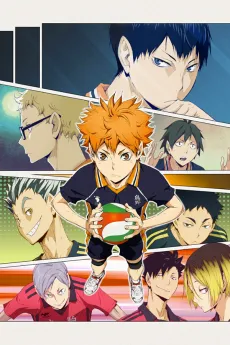
HAIKYU!! Season 2 Recap
Spoiler Alert: This recap contains detailed plot summaries and may reveal key story events.
TL;DR
Haikyu!! Season 2 is where Karasuno stops being the scrappy underdogs and starts becoming a real team. After their devastating loss to Aoba Johsai at the Inter-High, every player on the roster confronts their weaknesses head-on — none more dramatically than Hinata and Kageyama, who must dismantle their freak quick and rebuild it from scratch. The Tokyo training camp arc and the Spring High preliminaries that follow deliver some of the best volleyball animation and character development in all of sports anime. If Season 1 made you care about these characters, Season 2 is where they earn your respect.
Season Summary
This Haikyu!! 2nd Season season 1 recap covers the full 25-episode run that aired in Fall 2015, taking Karasuno from the ashes of their Inter-High defeat through grueling training and into a redemption arc at the Miyagi Spring High Preliminaries.
The Aftermath and Individual Resolve (Episodes 1–3)
The season opens in the shadow of Karasuno’s loss to Aoba Johsai. The third-years — Daichi, Suga, and Asahi — make the pivotal decision to stay on the team rather than retire, committing to one final shot at nationals through the Spring High tournament. This moment is quieter than it sounds, but it sets the emotional stakes for everything that follows.
Meanwhile, each player begins identifying their personal weaknesses. Kageyama receives an invitation to an elite All-Japan Youth training camp, which simultaneously motivates and isolates him from the team. Hinata, snubbed by the official camp, decides to crash the First Year Training Camp at Shiratorizawa uninvited — a perfectly in-character move that becomes one of the season’s most important decisions.
The Training Camps (Episodes 4–13)
Hinata’s subplot at the Shiratorizawa camp is brilliantly handled. Forced to serve as a ball boy because he wasn’t actually invited, Hinata swallows his pride and watches. For a character defined entirely by his hunger to be on the court, this restraint is agonizing. But it’s here that he begins to understand volleyball beyond just “jump high, hit ball.” He studies how elite players like Ushijima read the court, time their approaches, and make decisions mid-air.
Back at the Tokyo camp, Kageyama faces his own crisis. His tosses to Hinata — the freak quick that carried them through Season 1 — are fundamentally limited. Kageyama has been setting to Hinata, controlling every variable himself. For the quick to evolve, Hinata needs to open his eyes mid-approach and hit the ball with his own timing and judgment. This means Kageyama must do the hardest thing possible for a control-obsessed setter: trust his spiker.
The supporting cast shines in these episodes. Tsukishima’s arc is a standout — the perpetually disinterested middle blocker finally confronts why he refuses to care about volleyball. A conversation with Bokuto at the training camp cracks something open in him. Bokuto’s casual remark about “that moment” when a block finally connects gives Tsukishima a reason to try, and his transformation from reluctant participant to engaged player becomes one of the season’s most satisfying threads.
Yamaguchi also earns a spotlight, relentlessly practicing his jump float serve until it becomes a genuine tactical weapon. Tanaka works on his cross shots, Nishinoya develops his setting ability as a backup option, and Asahi refines his back-row attacks. Every player levels up in specific, believable ways.
The New Quick and Team Synergy (Episodes 14–16)
The training camp culminates in Hinata and Kageyama finally connecting on the evolved quick attack. Instead of Kageyama pinpointing the ball to a fixed location while Hinata swings blind, the new version has Kageyama tossing to where Hinata will be, while Hinata watches the ball and adjusts his own spike in real time.
The first time it connects in a practice match, it’s electric — not because of flashy animation (though Production I.G delivers), but because you understand the months of frustration, failed attempts, and ego battles that led to this moment. It’s faster and more unpredictable than the original because it incorporates Hinata’s own read of the blockers.
Karasuno leaves Tokyo having lost far more games than they won, but fundamentally transformed. They’re no longer a team with one trick. They have depth, adaptability, and something that resembles a real system.
Spring High Preliminaries — Early Rounds and Johzenji (Episodes 17–20)
The Miyagi Spring High Preliminaries begin, and Karasuno cuts through the early rounds with renewed confidence. The meaningful early opponent is Johzenji, a chaotic, instinct-driven team that plays without any real strategy. Their unpredictability initially rattles Karasuno, but Daichi’s leadership steadies the ship.
This match serves as a calibration point — it shows how far Karasuno has come while introducing the tournament atmosphere. It also lets the newer weapons (Yamaguchi’s serve, the evolved quick, Tsukishima’s improved blocking) debut in a competitive setting before the real tests arrive.
The bracket is set: Karasuno’s path to nationals runs through Aoba Johsai in the semifinals and potentially Shiratorizawa in the finals. Both rematches the audience has been waiting for.
Karasuno vs. Aoba Johsai — The Rematch (Episodes 21–25)
The crown jewel of the season. The Karasuno vs. Aoba Johsai rematch is a masterclass in sports anime storytelling, stretching across the final block of episodes with an intensity that never lets up.
Oikawa is at his absolute best here — not just as a setter, but as a leader who elevates every player around him. His rivalry with Kageyama adds personal stakes to every rally. The match seesaws brutally, with both teams pushing to five sets after trading momentum in ways that feel earned rather than manufactured.
Key moments define the match: Hinata debuts the new quick in full competitive context, leaving Aoba Johsai’s blockers scrambling to adjust. Tsukishima makes critical blocks that would’ve been unthinkable episodes earlier. Yamaguchi is subbed in specifically for his jump float serve in a high-pressure moment — and delivers.
Major Spoiler — Match Result
Karasuno wins in five sets, finally overcoming Oikawa and Aoba Johsai. The final point comes from a synchronized team effort rather than any single hero play, which perfectly encapsulates the season's theme. Oikawa's reaction — devastated but never broken — cements him as one of the best rivals in sports anime. His third-year arc ends here, and the weight of that finality hits hard.The season ends with Karasuno advancing to face Shiratorizawa in the prefectural finals, setting up the next season’s climactic showdown against Ushijima.
Highlights & Must-See Moments
- Episode 9: Tsukishima’s backstory — His brother’s disillusionment with volleyball explains everything about Tsukki’s detachment, and his conversation with Bokuto about “that moment” is the turning point for his character.
- Episode 15: The new quick connects — After episodes of failed attempts, watching Hinata open his eyes and spike on his own terms is a genuine fist-pump moment.
- Episode 22: Oikawa’s service ace streak — Oikawa reminds everyone why he’s the best setter in the prefecture with a terrifying run of serves that nearly breaks Karasuno’s receive.
- Episode 24: Yamaguchi’s clutch serve — The pinch server who spent the entire season grinding in practice finally delivers when it counts most, earning one of the season’s most emotional celebrations.
- Episode 25: The final rally — The last point of the Aoba Johsai match is choreographed like a team thesis statement, with nearly every player contributing to a single rally.
Our Take
Haikyu!! Season 2 is frequently cited as the point where the series transcends “great sports anime” and enters the conversation for great anime, full stop. What sets it apart from peers like Kuroko’s Basketball or Blue Lock is its commitment to process — you don’t just see characters get stronger between scenes, you watch them fail, adjust, and slowly improve through specific, technical practice. The training camp arc could have been a montage. Instead, it’s ten episodes of earned growth.
Production I.G’s animation peaks during the Aoba Johsai match, with fluid rally sequences that communicate both the speed of competitive volleyball and the split-second decisions players make. The soundtrack by Yuki Hayashi matches every emotional beat. But the real achievement is structural: every character arc planted in the first half pays off in the second, creating a satisfying narrative loop that rewards attentive viewers.
Rating: 9.2 / 10 — One of the finest seasons in sports anime history, where every character’s growth feels earned and every match carries genuine weight.
Where to Watch & Read
-
Watch on Netflix
-
Watch on Hulu
-
Haikyu!! Vol. 10 by Haruichi Furudate — Shop on Amazon
-
Haikyu!! Vol. 17 by Haruichi Furudate — Shop on Amazon
-
Haikyu!! Complete Illustration Book Haikyu-bu!! — Shop on Amazon