Edited by Hong-Bin Yoon · Founder, zzinDev LLC
Published
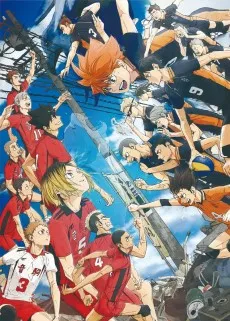
HAIKYU!! The Dumpster Battle Season 1 Recap
Spoiler Alert: This recap contains detailed plot summaries and may reveal key story events.
TL;DR
HAIKYU!! The Dumpster Battle is the first of two films comprising the Haikyuu!! FINAL project, adapting the long-awaited Nekoma vs. Karasuno match at the Spring Nationals. This isn’t just a volleyball game — it’s the emotional payoff of a rivalry built across four seasons, centering on Hinata and Kenma’s quiet but powerful connection. The film is beautifully animated, laser-focused on a single match, and delivers one of the most satisfying sports anime experiences in recent memory. If you’ve followed Haikyuu!! at all, this is essential viewing.
Season Summary
As a theatrical film rather than a traditional season, The Dumpster Battle covers a single, complete match — but what a match it is. This HAIKYU!! The Dumpster Battle season 1 recap covers every major turning point of the Karasuno vs. Nekoma showdown at Nationals.
The Stage Is Set (Opening Act)
The film opens with the electricity of the Spring Nationals tournament in full swing. Karasuno and Nekoma have finally made it to the same stage — a moment years in the making. The pre-match tension is thick as both teams warm up, and the film takes time to remind us why this matchup matters.
Flashbacks weave through the opening, revisiting the practice matches and training camps where these two teams sharpened each other. Coach Ukai and Coach Nekomata’s decades-old rivalry — the original “dumpster battle” between crows and cats — gives the match its emotional foundation. This isn’t just about the players on the court; it’s about fulfilling a promise between two old friends.
Hinata and Kenma’s dynamic takes center stage from the very first whistle. Kenma, Nekoma’s cerebral setter and self-proclaimed gaming enthusiast, has always viewed volleyball with detachment — until Hinata made it interesting. The film establishes early that this match will be the one that finally makes Kenma play with everything he has.
Nekoma’s Web Tightens (First Half of the Match)
Nekoma comes out with their trademark defensive strategy — “connect.” Their receives are airtight, their floor defense is suffocating, and Karasuno’s powerful attacks keep coming back. Kuroo’s blocking at the net is a wall, and Yaku’s libero play ensures almost nothing hits the floor.
Karasuno struggles to find gaps. Kageyama and Hinata’s quick attack, their greatest weapon, is being read and contained by Kenma’s analytical game sense. Kenma has studied Karasuno’s patterns exhaustively, and he calmly directs Nekoma’s defense like a chess grandmaster moving pieces. The frustration on Karasuno’s side is palpable.
Tsukishima emerges as a key factor in the early going. His read-blocking and volleyball IQ allow him to start disrupting Nekoma’s rhythm at the net, particularly against Kuroo. Their personal blocking rivalry, built up through training camps, becomes one of the match’s most compelling subplots. Tsukishima’s cool-headed analysis gives Karasuno the foothold they need to stay competitive.
Hinata Evolves (Middle Stretch)
The turning point comes as Hinata begins to adapt. No longer the one-dimensional decoy who can only hit Kageyama’s sets, the Hinata at Nationals is a player who has absorbed lessons from every opponent and teammate. He starts making receives, reading the court, and finding ways to be useful beyond his freak quick.
This is where the film shines brightest. Hinata’s growth is shown not through dramatic power-ups but through small, intelligent plays — a well-timed cover, a surprising tip shot, positioning himself where Kenma doesn’t expect him. Each play chips away at Nekoma’s calculated defense.
Kenma notices. And for the first time, something shifts behind those usually disinterested eyes. Hinata is making volleyball fun for Kenma in a way nothing else has. The film portrays this beautifully — Kenma begins to push himself physically in ways his teammates have never seen, diving for balls, calling for sets with urgency, refusing to let rallies die.
The Battle of Wills (Climax)
Major Spoiler
The match reaches a fever pitch as Kenma, exhausted and running on fumes, refuses to stop playing. His teammates are stunned — this is a Kenma they've never seen. He's smiling. He's calling for the ball. He's *wanting* to win, not just strategically but viscerally. The boy who always conserved energy is spending every last drop of it because Hinata made him care.Karasuno and Nekoma trade set wins in a brutal back-and-forth. The rallies grow longer and more desperate. Nekoma’s “connect” philosophy is tested to its absolute limit as Karasuno pours on offensive pressure. Kuroo gives everything at the net, Yamamoto attacks with raw power, and Kenma orchestrates it all with increasing desperation.
The film’s animation reaches its peak during the final set. Production I.G delivers sequences that blur the line between realism and kinetic abstraction — players stretch and contort with exaggerated motion that somehow feels more real than photorealism. The crowd noise fades in and out, replaced by heartbeats and the squeak of shoes on the court.
Resolution and Farewell (Ending)
Major Spoiler
Karasuno wins the match. But the film makes it clear that this isn't a story about winning or losing — it's about Kenma finally understanding why Hinata loves volleyball. In the aftermath, Kenma tells Hinata with a genuine smile: "That was fun." It's the emotional climax of the entire film, and arguably one of the most powerful moments in all of Haikyuu!!.The post-match scenes are handled with grace. Nekoma’s third-years — Kuroo, Kai, and Yaku — face the end of their high school volleyball careers. Kuroo’s quiet acceptance, after giving everything as both a captain and a blocker, is deeply moving. The film gives each departing player their moment without rushing.
The Dumpster Battle ends not with triumphant celebration but with mutual respect. The crows and cats have finally had their fated match, and both teams leave the court having given everything. Coach Nekomata and Coach Ukai’s decades-long dream has been fulfilled. This HAIKYU!! The Dumpster Battle season 1 summary wouldn’t be complete without noting that the film’s final moments look ahead — Karasuno’s tournament is far from over.
Highlights & Must-See Moments
- Kenma’s Awakening — The sequence where Kenma starts diving for balls and visibly wanting to win is the emotional centerpiece of the film. His teammates’ shocked reactions sell it perfectly.
- Tsukishima vs. Kuroo Net Battle — Their blocking duel is a chess match within a chess match, showcasing two of the series’ most cerebral players going head-to-head.
- Hinata’s All-Around Play — Watching Hinata make smart receives and tactical plays instead of relying solely on his freak quick shows just how far he’s come since season one.
- The Final Rally — The climactic point is animated with breathtaking intensity, stretching time and using creative visual metaphors that elevate the sequence beyond typical sports anime.
- “That Was Fun” — Kenma’s post-match confession to Hinata is quiet, simple, and absolutely devastating in the best way.
Our Take
The Dumpster Battle is a masterclass in how to adapt a beloved manga match into a cinematic experience. By focusing on a single game, the film achieves a density of emotion and tension that a weekly anime format might have diluted. It’s not trying to be an action spectacle — it’s a character study disguised as a sports movie, and it’s all the better for it.
What makes this film special is its thesis: the best rival isn’t someone you hate, but someone who makes you love the game more. Kenma and Hinata’s dynamic stands alongside the great sports anime rivalries — Ippo and Miyata, Midorima and Kuroko — but feels uniquely warm and personal. Production I.G’s animation is among the studio’s best work, and the decision to tell this story as a film rather than a TV season was the right call. If there’s a criticism, it’s that viewers unfamiliar with the full Haikyuu!! series may struggle with the emotional weight — this is a payoff film, and it requires the investment of four prior seasons to hit its hardest.
Rating: 8.8 / 10 — A soaring, emotionally rich conclusion to one of anime’s greatest rivalries, and proof that Haikyuu!! remains the gold standard for sports anime.
Where to Watch & Read
-
Watch on Netflix
-
Haikyuu!! Complete Illustration Book Haikara by Haruichi Furudate — Shop on Amazon
-
Nendoroid Kenma Kozume Haikyuu Figure — Shop on Amazon