Edited by Hong-Bin Yoon · Founder, zzinDev LLC
Published
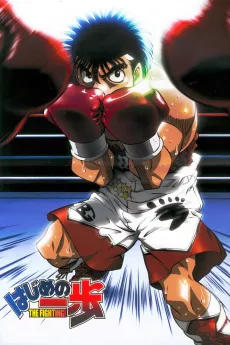
Hajime no Ippo: The Fighting! Season 1 Recap
Spoiler Alert: This recap contains detailed plot summaries and may reveal key story events.
TL;DR
Hajime no Ippo: The Fighting! is the gold standard of sports anime — a 75-episode journey following timid high schooler Makunouchi Ippo as he discovers boxing and transforms from a bullied pushover into a legitimate contender for the Japanese Featherweight title. This Hajime no Ippo: The Fighting! season 1 recap covers every major fight, every brutal training arc, and the emotional backbone that makes it all land. The animation by MADHOUSE holds up remarkably well, the fights are visceral and strategic, and the comedy hits as hard as Ippo’s Dempsey Roll. If you’ve ever wanted to watch someone earn every single victory through sheer willpower and hard work, this is the one.
Season Summary
This Hajime no Ippo: The Fighting! season 1 summary covers the full arc of Ippo’s rise from complete amateur to Japanese Featherweight championship challenger across 75 episodes of heart, humor, and devastating hooks.
The Awakening — Ippo Discovers Boxing (Episodes 1–5)
Makunouchi Ippo is a shy, gentle kid who spends his free time helping his mother run their fishing boat charter business. He has no friends, no confidence, and gets beaten up regularly by classmates who see him as an easy target. Everything changes when pro boxer Takamura Mamoru intervenes during one of these beatings and carries the unconscious Ippo to the Kamogawa Boxing Gym.
When Ippo wakes up surrounded by the sounds of speed bags and sparring, something clicks. Takamura, half-joking, tapes a photo of Ippo’s main bully to a heavy bag and tells him to punch it. Ippo’s punch surprises everyone — years of hauling fishing equipment have given him abnormal punching power without him ever realizing it. Ippo asks Takamura to teach him to box, but Takamura isn’t convinced. He gives Ippo a seemingly impossible challenge: catch ten falling leaves with jabs in one week. Ippo trains obsessively, and against all odds, he does it. The Kamogawa Gym opens its doors to him.
Learning the Ropes — The Miyata Rivalry Begins (Episodes 6–15)
Ippo begins training under the legendary coach Genji Kamogawa, a grizzled old man who immediately recognizes Ippo’s raw potential as an in-fighter. At the gym, Ippo meets the other regulars — the comedic duo Aoki and Kimura, fellow fighters who become his closest friends and provide much of the show’s humor. But the most important encounter is with Miyata Ichirou, a talented young boxer and the son of a former pro.
Miyata fights with precision counter-punching, the polar opposite of Ippo’s brawling power style. They spar twice. Ippo loses the first bout convincingly, but in the rematch, he pushes Miyata to his absolute limit, earning a narrow loss that leaves both of them changed. They make a promise: they’ll both go pro and meet again in the ring as equals. This rivalry becomes the emotional throughline of the entire series.
Ippo passes his pro test with flying force and officially becomes a professional boxer in the Featherweight division.
Climbing the Ranks — Early Pro Fights (Episodes 16–30)
Ippo’s early professional career is a trial by fire. His first opponent, Oda Yusuke, is a cocky fighter who underestimates him — Ippo wins but learns that pro boxing is a completely different beast. Each subsequent fight teaches him something new. He battles Jason Ozuma, whose reach and athleticism expose Ippo’s lack of technique, and Kobashi Kenta, a defensive specialist who forces Ippo to develop patience.
Meanwhile, the show develops Takamura’s parallel career. Takamura is a monster of a fighter — absurdly talented, brash, and hilarious. His bouts provide some of the show’s most entertaining moments and demonstrate what peak boxing looks like, giving Ippo a target to aspire to. Coach Kamogawa begins teaching Ippo the peek-a-boo style, emphasizing his strengths: bobbing, weaving, and getting inside to unleash devastating body blows and uppercuts.
The gym dynamics are a highlight here. Aoki and Kimura’s own fights and comedic misadventures keep the tone light between Ippo’s more intense bouts. The camaraderie at Kamogawa Gym feels genuine — these guys tease each other relentlessly but would do anything for one another.
The Rookie King Tournament (Episodes 31–52)
The Rookie King Tournament is where Hajime no Ippo truly shifts into high gear. This tournament pits the best first-year pros against each other, and Ippo enters as an underdog with raw power but limited experience. Each round pushes him further than the last.
His fight against Hayami Ryuuichi is a turning point. Hayami is flashy, fast, and has a devastating short uppercut — the “Shotgun.” He batters Ippo early and the fight looks hopeless. But Ippo’s chin and willpower are inhuman. He absorbs punishment, finds his rhythm, and unleashes a barrage that drops Hayami. It’s the first time the show demonstrates what makes Ippo special: he’s not the most skilled, but he simply will not stay down.
The semifinal against Mashiba Ryou is the most brutal fight of the tournament. Mashiba is terrifying — tall, long-armed, and willing to fight dirty. His Flicker Jabs keep Ippo at distance, and his elbow strikes in close range are vicious.
Major Spoiler
Mashiba injures Ippo’s eye with illegal hits, nearly blinding him. Coach Kamogawa almost throws in the towel, but Ippo rallies. He ducks under Mashiba’s reach, gets inside, and delivers a liver blow so devastating that Mashiba crumbles. The ref has to stop it. Mashiba’s loss has added weight because his sister Kumi is watching — she later becomes Ippo’s love interest.The Rookie King final against Sendo Takeshi is an all-time classic sports anime fight. Sendo is Ippo’s mirror — another pure in-fighter from Osaka with terrifying power and an unbreakable will. Their match is a war of attrition. Both fighters go down multiple times. The crowd is on their feet.
Major Spoiler
In the final round, both throw everything they have. Ippo connects with a massive uppercut, and Sendo, despite trying to rise, can’t beat the count. Ippo wins and is crowned the Eastern Japan Rookie King. But both fighters know this rivalry is far from over.The Road to the Championship — Date Eiji (Episodes 53–75)
With the Rookie King title under his belt, Ippo sets his sights on the Japanese Featherweight Championship. But first, he has more fights to prepare him. He faces Volg Zangief, a Russian boxer with exceptional amateur pedigree and a polished orthodox style. Volg represents technical mastery — everything Ippo is not. Their fight is emotional because Volg is sympathetic; he’s fighting in Japan far from home, struggling to adapt to pro rules.
Major Spoiler
Ippo wins against Volg in a grueling match, but it's bittersweet. Volg gave everything and lost to Ippo's relentless pressure and body attack. The show treats Volg with tremendous respect, making the victory feel earned rather than triumphant.The final arc builds to the championship match against Date Eiji, the reigning Japanese Featherweight champion. Date is everything Ippo aspires to be — experienced, disciplined, and technically brilliant. He also carries a dream of challenging the world champion, Ricardo Martinez, which gives the fight stakes beyond the belt. Coach Kamogawa develops the Dempsey Roll for Ippo — a devastating combination technique where Ippo weaves in a figure-eight pattern while throwing alternating hooks, building momentum with each swing.
Major Spoiler
The championship fight is heartbreaking. Ippo unleashes the Dempsey Roll and pushes Date to the edge, but Date's experience and his Corkscrew Counter prove too much. Ippo is knocked down and cannot beat the count. He loses. The season ends not with triumph but with Ippo on the canvas, having given everything and come up short against a champion who was simply better — for now. It's a devastatingly honest ending that makes Ippo's journey feel real.Highlights & Must-See Moments
- Episodes 1–3: Ippo catches the leaves — The moment that defines the entire series: an impossible task conquered through pure effort. It’s simple, it’s corny, and it’s perfect.
- Episode 25: Takamura vs. the bear — Yes, Takamura literally fights a bear in the mountains. It’s absurd, hilarious, and somehow fits perfectly with his character. Peak comedy in a sports anime.
- Episodes 39–41: Ippo vs. Mashiba — The dirtiest, most tense fight of the Rookie King Tournament. Mashiba’s willingness to fight outside the rules makes this terrifyingly unpredictable.
- Episodes 48–52: Ippo vs. Sendo (Rookie King Final) — Two unstoppable forces collide in what many consider one of the greatest fights in anime history. The animation, pacing, and emotional payoff are flawless.
- Episodes 73–75: Ippo vs. Date Eiji (Championship) — The Dempsey Roll debut and a gut-punch ending. The season finale earns its emotional devastation because the show spent 70 episodes making you believe Ippo could win.
Our Take
What makes Hajime no Ippo: The Fighting! endure over two decades later is its commitment to the fundamental sports anime truth: the journey matters more than the destination. In an era where many shonen protagonists stumble into power-ups, Ippo earns every single inch of progress through work that the audience watches in real time. The show never shortcuts training — you see the roadwork, the mitt drills, the sparring — and that investment makes every fight feel consequential.
The comparison to Ashita no Joe is inevitable and earned, but Ippo carves its own lane through humor and warmth. The Kamogawa Gym is one of the most lovable casts in anime: Takamura’s unhinged antics, Aoki and Kimura’s hopeless ambitions, and Kamogawa’s gruff mentorship create a world you want to spend time in between the fights. MADHOUSE’s animation — particularly the impact frames and first-person camera angles during bouts — set a standard that modern sports anime still chase. The decision to end the season on a loss rather than a championship victory is bold storytelling that respects both the characters and the audience.
Rating: 9.2 / 10 — A masterclass in sports storytelling that lands every emotional punch it throws.
Where to Watch & Read
- Watch on HIDIVE
- Watch on Netflix (select regions)
- The anime is based on the manga by George Morikawa, serialized since 1989
- Hajime no Ippo Vol. 1 by George Morikawa — Shop on Amazon
- Ippo Makunouchi Fighting Pose Figure — Shop on Amazon