Edited by Hong-Bin Yoon · Founder, zzinDev LLC
Published
Ping Pong the Animation Season 1 Recap
Spoiler Alert: This recap contains detailed plot summaries and may reveal key story events.
TL;DR
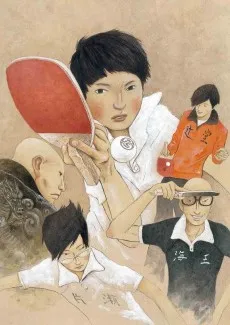
Ping Pong the Animation is a masterpiece disguised as a sports anime. Adapted from Taiyo Matsumoto’s manga by visionary director Masaaki Yuasa, this 11-episode season follows five table tennis players whose relationships with talent, effort, and purpose collide in one unforgettable tournament arc. The art style is deliberately rough and explosive, the character writing is among the best in anime history, and it will make you cry about ping pong. If you watch one sports anime in your life, make it this one.
Season Summary
This Ping Pong the Animation season 1 summary covers the complete story across its 11 episodes — a tight, devastating character study wrapped in the shell of a table tennis tournament.
The Hero and the Robot (Episodes 1–3)
The season opens at Katase High School’s table tennis club, where we meet our two leads through their dynamic contrast. Hoshino Yutaka — “Peko” — is loud, cocky, and believes he’s destined for greatness. Tsukimoto Makoto — “Smile” — is his childhood friend, an eerily talented player who never smiles and deliberately holds back to avoid hurting others.
Their coach, Koizumi (nicknamed Butterfly Jo), immediately recognizes what everyone else misses: Smile is the more gifted player. He’s a machine at the table, reading opponents with preternatural calm, but he refuses to go for the kill. Koizumi takes Smile under his wing, determined to unlock his competitive instinct and transform him from a passive talent into a true competitor.
Meanwhile, we meet the wider cast. Kong Wenge is a Chinese national team washout sent to Japan to play for Kaio Academy — humiliated, furious, and desperate to earn his way back to China. Ryuichi Kazama, “Dragon,” is Kaio’s stoic captain, a relentless perfectionist who has ground every trace of joy out of his game in pursuit of championships. And Sakuma “Demon” is Peko’s childhood rival, a player of modest talent who compensates with obsessive, punishing practice.
Peko, riding high on ego, gets obliterated by Kong in an early practice match. It’s not close. Kong dismantles him methodically, and for the first time, Peko confronts the possibility that natural talent and big talk aren’t enough. This loss breaks something in him.
The Fall and the Climb (Episodes 4–6)
This is where the Ping Pong the Animation season 1 recap gets heavy. After his crushing defeat, Peko spirals. He skips practice, avoids the club, and wanders through his days eating snacks and nursing his wounded pride. The hero who was supposed to fly can’t even get off the ground. His absence leaves a void — especially for Smile, who has always played ping pong for Peko, waiting for his hero to come save him.
Smile, under Koizumi’s relentless coaching, begins to transform. Koizumi teaches him to suppress his empathy at the table, to play like a machine — a “robot.” Smile adopts the persona, and it works. He starts winning decisively, coldly, without mercy. But there’s a cost: the more robotic he becomes, the further he drifts from the joy that once drew him to the sport.
Kong, meanwhile, deals with his own crisis. Exiled from China’s elite program and stuck coaching teenagers at a Japanese high school, he wrestles with homesickness and damaged pride. His mother calls, his former teammates move on without him, and he must decide whether ping pong in Japan is a punishment or a second chance.
Dragon continues his joyless march toward the championship, sacrificing everything — relationships, happiness, his girlfriend Yurie’s patience — on the altar of victory. And Demon trains until his body breaks, desperately trying to close a talent gap that practice alone cannot bridge.
The Interlude — What Ping Pong Means (Episodes 6–8)
The season’s philosophical heart emerges in its middle stretch. Through flashbacks, we learn that Peko and Smile’s bond was forged in childhood: Smile was bullied, isolated, and miserable until Peko burst into his life, loud and fearless, declaring himself a hero. Ping pong was never just a sport for Smile — it was the language of that rescue.
Major Spoiler — Smile's Breakthrough
During a critical match, Smile's "robot" persona fully takes over. He plays with terrifying precision, but in his mind, he's trapped inside a machine. It's Koizumi's coaching taken to its logical extreme — and it's suffocating. The show frames this not as success but as a kind of death, the loss of Smile's humanity in exchange for competitive dominance.Each character embodies a different answer to the show’s central question: Why do you play? Dragon plays to never lose. Kong plays to go home. Demon plays to prove he belongs. Smile plays because someone once saved him. And Peko — Peko has forgotten why he plays at all.
The Hero Returns (Episodes 9–10)
Peko’s redemption arc is one of the most satisfying in all of anime. After hitting rock bottom, he encounters an old mentor and rediscovers what he’d lost: the pure, childlike love of hitting the ball. He doesn’t return to ping pong out of obligation or revenge. He returns because he missed it.
He trains with a ferocity we haven’t seen from him before — not the desperate grinding of Demon, but joyful, explosive improvement. Peko is gifted, yes, but now he’s combining that gift with real work for the first time. The show makes clear that talent without effort is wasted, but effort without love is hollow. Peko has finally found both.
Major Spoiler — Demon's Exit
Sakuma "Demon" reaches his breaking point when he realizes that no amount of practice will close the gap between him and the truly gifted players. His loss is heartbreaking — not because it's unfair, but because the show treats his effort with genuine respect even as it acknowledges his ceiling. He eventually finds peace by stepping back from competitive play, one of the most honest portrayals of athletic limitations in the genre.The Final Tournament (Episode 10–11)
Everything converges at the tournament. Kong, renewed by his time in Japan, plays with rediscovered passion. Dragon marches forward, mechanical and dominant. And Peko blazes through the bracket like a comet, playing the most beautiful ping pong of his life.
Major Spoiler — The Final Match
Peko and Smile face each other in the climactic match, and it's everything the show has been building toward. Smile, locked in his robot mode, is finally freed when Peko's joyful, aggressive play reaches him. Smile begins to smile. He doesn't need the robot anymore because his hero came back. Peko wins, but the real victory is that both players rediscover why they loved the game. The final montage jumps forward in time — Peko goes pro, Smile becomes a teacher, Kong returns to competitive play in China, and Dragon finds a life beyond obsessive victory. Everyone lands where they were meant to.The ending is luminous. The Ping Pong the Animation season 1 finale doesn’t just resolve a tournament — it resolves five people’s relationships with ambition, talent, love, and purpose. The time-skip epilogue is remarkably generous, giving every character a future that feels earned.
Highlights & Must-See Moments
- Episode 6: Smile’s flashback — The childhood scenes revealing how Peko “saved” Smile reframe everything. Suddenly the whole show clicks into place.
- Episode 10: Peko vs. Dragon — Peko’s return to form against the series’ most intimidating player is visually explosive, with Yuasa’s animation going completely unhinged.
- Episode 11: The final rally — Peko and Smile’s last match is pure catharsis, culminating in Smile’s genuine smile — the emotional payoff the entire series earns.
- Episode 5: Kong’s phone call home — A quiet, devastating scene where Kong speaks to his mother. No ping pong, just loneliness and pride. One of the best character moments in sports anime.
- Episode 9: Peko’s training montage — Set to the incredible soundtrack by Kensuke Ushio, watching the hero remember how to fly is genuinely uplifting.
Our Take
Ping Pong the Animation stands alongside Hajime no Ippo and Slam Dunk as one of the greatest sports anime ever made, but it operates on a completely different frequency. Where those shows thrive on escalation and hype, Ping Pong is intimate and introspective. It’s closer to a Masaaki Yuasa character drama (which it literally is) than a conventional sports narrative — think The Tatami Galaxy’s existential restlessness applied to athletic competition.
Taiyo Matsumoto’s source material provides the story’s skeleton, but Yuasa’s direction gives it a heartbeat. The deliberately rough, sketch-like animation isn’t a budget limitation — it’s a statement. When the ping pong gets intense, the art erupts into abstract expressionism, conveying speed and emotion in ways no clean-lined production could match. Kensuke Ushio’s electronic soundtrack is equally vital, pulsing underneath every scene like a second nervous system. The show’s cultural impact has been immense: it’s a gateway anime for people who think they don’t like sports anime, and it regularly appears on “best anime of the decade” lists for good reason. In just 11 episodes, it says more about competition, friendship, and purpose than most series manage in hundreds.
Rating: 9.5 / 10 — A nearly flawless meditation on talent, effort, and joy that transcends its genre entirely.
Where to Watch & Read
- Watch on Funimation
- Read the manga Ping Pong by Taiyo Matsumoto — the complete two-volume series — Shop on Amazon
- The original soundtrack by Kensuke Ushio — Shop on Amazon
- Ping Pong Collector’s Edition manga box set — Shop on Amazon