Edited by Hong-Bin Yoon · Founder, zzinDev LLC
Published
You and I Are Polar Opposites Season 1 Recap
Spoiler Alert: This recap contains detailed plot summaries and may reveal key story events.
TL;DR
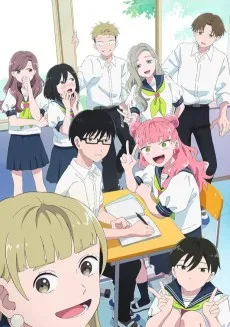
You and I Are Polar Opposites is the romcom palette cleanser you didn’t know you needed. Suzuki, a bubbly people-pleaser, confesses to Tani, her stoic and unbothered classmate — and he actually says yes. What follows is one of the most refreshing high school romance anime in years, skipping the “will they, won’t they” stalling and diving straight into the messy, heartwarming reality of two very different people learning how to date each other. If you liked Horimiya or My Love Story!!, this one’s for you.
Season Summary
This You and I Are Polar Opposites season 1 summary covers the full arc of Suzuki and Tani’s budding relationship across all 12 episodes. Rather than dragging out a confession until the finale, this series puts its cards on the table immediately — and is better for it.
The Confession (Episodes 1–3)
The season opens by establishing its two leads as complete opposites. Miyu Suzuki is the kind of girl who reads the room before she breathes — cheerful, agreeable, always molding herself to fit whatever social situation she’s in. Yuusuke Tani barely registers that a room has a mood. He eats lunch alone, speaks in blunt fragments, and genuinely does not care what anyone thinks of him.
Suzuki has been watching Tani from a distance, drawn to exactly the quality she lacks: his unshakeable authenticity. In a moment of courage that surprises even herself, she confesses to him directly. Tani’s response is characteristically no-nonsense — he accepts, plainly and without drama. Just like that, they’re dating.
But “just like that” is where the real story begins. Suzuki immediately spirals into overthinking: Does he actually like her? Was he just being polite? Why doesn’t he text with emojis? The early episodes mine comedy and genuine pathos from the gap between Suzuki’s anxious inner monologue and Tani’s quiet sincerity. He does like her — he’s just terrible at showing it in the ways she expects.
First Steps Together (Episodes 4–6)
With the relationship established, the season shifts into the daily rhythm of two people learning each other’s language. Suzuki tries to plan picture-perfect dates; Tani is content just walking home together. She fills silences with chatter; he’s comfortable letting them sit.
Their first proper outing becomes a highlight of the season — Suzuki has mentally rehearsed every possible scenario, while Tani shows up with zero agenda and somehow makes the whole day better for it. A quiet moment where he notices she’s been forcing herself to like a food she clearly hates — and tells her it’s fine not to — becomes one of the show’s most emotionally resonant scenes. It’s a tiny thing, but for Suzuki, who has spent her whole life performing agreeableness, hearing “you don’t have to pretend” hits like a thunderbolt.
These episodes also flesh out the supporting cast. Rikako Honda, Suzuki’s closest friend, serves as a grounding presence and foil. Where Suzuki broadcasts energy, Honda is measured and observant — and quietly dealing with her own complicated feelings about a classmate. Natsumi Nishi enters the picture as part of the broader friend circle, bringing a sharp-tongued warmth that rounds out the group dynamics. The show is smart about using its side characters not just as sounding boards but as mirrors, reflecting different approaches to vulnerability and connection.
The Wall Between Them (Episodes 7–9)
The honeymoon phase hits friction around the season’s midpoint, and this is where You and I Are Polar Opposites season 1 deepens beyond simple romcom territory. Suzuki begins to worry that she’s the only one putting effort into the relationship. Tani doesn’t initiate texts, doesn’t suggest plans, doesn’t react the way boyfriend characters are “supposed to.”
A school event forces the issue. Suzuki sees Tani interacting comfortably with other classmates and spirals — not out of jealousy, but out of the fear that maybe he doesn’t need her at all. She’s someone who derives her sense of self from being needed, and Tani’s self-sufficiency reads to her as indifference.
Major Spoiler — The Argument
The tension boils over when Suzuki confronts Tani, asking if he even wants to be with her. Tani, genuinely confused, gives an honest but painfully blunt answer: he doesn't understand why she needs constant reassurance. It's not cruel — it's just how he processes things. But for Suzuki, it confirms her worst fear. They don't speak for several days, and the silence is devastating precisely because the show has made us care about both perspectives.These episodes are the emotional core of the season. The writing resists the urge to make either character the villain. Suzuki’s need for validation is rooted in real anxiety; Tani’s emotional stoicism isn’t coldness, it’s just his wiring. The conflict isn’t about who’s right — it’s about whether two fundamentally different emotional languages can coexist.
Finding the Words (Episodes 10–11)
The reconciliation arc is where the show earns its emotional payoff. Tani, for the first time, is the one who has to reach across the gap. Through a conversation with his grandmother — a warm, perceptive woman who clearly understands her grandson better than anyone — Tani begins to grasp that love isn’t just feeling something; sometimes you have to show it in the other person’s language.
Tani’s grandmother is a scene-stealer in every appearance. She’s the one who points out, with gentle humor, that Tani has been carrying Suzuki’s favorite snack in his bag for a week without mentioning it. He does care — deeply — but his version of caring is invisible to someone who communicates through words and gestures.
Meanwhile, Suzuki has her own reckoning, aided by Honda. She realizes that her need to be validated isn’t Tani’s problem to solve — it’s something she brings into every relationship. Tani didn’t create her insecurity; he just exposed it. This is surprisingly mature writing for a show that also features goofy chibi reaction faces.
Major Spoiler — The Reconciliation
Tani shows up at Suzuki's door with a handwritten note — agonizingly awkward, barely a paragraph — telling her that being with her is the first time he's wanted someone to understand him. It's the most words he's strung together all season, and Suzuki breaks down crying. They reconcile not by fixing each other, but by accepting the work that comes with loving someone different from you.A New Normal (Episode 12)
The season finale pulls back from the drama and delivers a warm, low-stakes epilogue. Suzuki and Tani walk to school together, and for the first time, the silence between them isn’t anxious — it’s comfortable. Suzuki catches herself people-pleasing and corrects course. Tani, unprompted, texts her a photo of something that reminded him of her.
Small moments. Huge growth. The finale also plants seeds for future storylines — Honda’s developing feelings get a more explicit tease, and Nishi’s backstory gets a brief but intriguing window. The season ends not with a grand romantic gesture but with Suzuki smiling to herself, genuinely, without performing it for anyone.
Highlights & Must-See Moments
- Episode 1: The Confession — Suzuki’s internal monologue building to the confession is both hilarious and deeply relatable, setting the tone for the entire series.
- Episode 5: The Date — Tani telling Suzuki she doesn’t have to pretend is a small scene that redefines their entire dynamic. Beautifully directed.
- Episode 8: The Breaking Point — The argument scene is gut-wrenching because both characters are right and wrong simultaneously. Top-tier voice acting carries it.
- Episode 11: Grandma Knows Best — Tani’s grandmother steals the show, delivering wisdom wrapped in humor that cracks Tani’s emotional armor.
- Episode 12: The Quiet Walk — The final scene where silence becomes comfort instead of anxiety is a perfect seasonal closer.
Our Take
What makes this You and I Are Polar Opposites season 1 recap worth writing is how the show subverts romcom formula. By getting the confession out of the way in episode one, it frees itself to explore what most anime skip entirely: the actual work of being in a relationship. It has more in common with Horimiya’s lived-in intimacy than with confession-bait shows that string you along for 24 episodes.
Lapin Track’s production is modest but effective — the character animation focuses on micro-expressions and body language rather than flashy set pieces, which suits the material perfectly. The soundtrack is understated, leaning on acoustic guitar and piano cues that never overpower the quiet moments. If there’s a criticism, it’s that the supporting cast could use more screen time — Honda’s subplot in particular feels like it’s being held back for a second season rather than given room to breathe here. But as a complete 12-episode arc about learning to love someone on their terms rather than yours, this is one of Winter 2026’s best.
Rating: 8.0 / 10 — A refreshingly honest romcom that earns its emotional beats without gimmicks.
Where to Watch & Read
- Read the manga You and I Are Polar Opposites (Seihantai na Kimi to Boku) by Kocha Agasawa — Shop on Amazon
- The manga is serialized on Shonen Jump+ (available via MANGA Plus)
- Suzuki & Tani character acrylic stands — Shop on Amazon