Edited by Hong-Bin Yoon · Founder, zzinDev LLC
Published
Agents of the Four Seasons: Dance of Spring Season 1 Recap
Spoiler Alert: This recap contains detailed plot summaries and may reveal key story events.
TL;DR
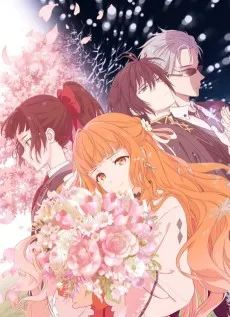
Agents of the Four Seasons: Dance of Spring is WIT Studio’s quiet, aching fantasy romance about a world locked in permanent winter and the two women trying to thaw it. Sakura Himedaka has spent years searching for her abducted charge, Hinagiku Kayo — the Agent of Spring herself — and Season 1 is the story of what happens when Hinagiku finally walks back into the snow. It is less a fantasy-action spectacle and more a slow-burn melodrama about devotion, guilt, and the politics of seasonal power. If you liked the painterly pacing of Violet Evergarden, the mythic romance of The Ancient Magus’ Bride, or the melancholic worldbuilding of Land of the Lustrous, this one belongs on your list.
Season Summary
This is where the Agents of the Four Seasons: Dance of Spring season 1 recap lives — arc by arc, from a frozen opening episode to a finale that genuinely earns its flower petals. WIT Studio structures the 12-episode run around four clean movements, each colored by a different emotional register. What begins as a hunt for a missing person becomes a much bigger story about who gets to decide when spring returns, and what it costs the people who carry that season inside them.
The season opens cold — literally. Snow is the default state, cherry trees are petrified, and the cultural memory of warmth is fading. Sakura’s search has become a legend that half the world treats as delusion. By the finale, the question is no longer whether Hinagiku can be found, but whether she can be kept.
The Endless Winter Arc (Episodes 1–3)
Season 1 opens with a stunning cold-open flashback: a younger Sakura, sword drawn, failing to protect Hinagiku as the Spring Agent is pulled through a vortex of black petals. The title card drops onto a present-day tableau — the same courtyard, now buried in six winters’ worth of snow. This compressed tragedy primes the viewer for every emotional beat that follows.
Episode 1 establishes the rules quickly. The world is governed by four Agents, each anchoring a season; when an Agent is absent, that season cannot turn. With Hinagiku gone, the other three Agents — Nadeshiko of Summer, Rindo of Autumn, and the icy Koubai Yukiyanagi of Winter — have ruled alone, and Koubai’s Winter has swallowed the calendar. Sakura, stripped of her official rank but still bound by her guard’s oath, travels a hollowed-out country chasing rumors of a girl who smells like daisies.
Episodes 2 and 3 introduce Nazuna, a pragmatic young tracker who becomes Sakura’s reluctant companion. They follow a lead to a shuttered spring-temple, where Sakura discovers a fragment of Hinagiku’s kimono pinned to a tree that is slowly, impossibly, budding. The arc closes with a single pink petal falling onto Sakura’s palm — the first the world has seen in six years — and the knowledge that somewhere, Hinagiku is still alive.
The Return Arc (Episodes 4–6)
The middle-early stretch of what happens in Agents of the Four Seasons: Dance of Spring season 1 hinges on reunion, and WIT Studio does not rush it. Hinagiku reappears at the end of Episode 4 — barefoot, amnesiac in fragments, and subtly wrong. She remembers Sakura’s name but not her face. She remembers spring but not how to summon it. The reunion is deliberately awkward, full of half-finished sentences, and all the more devastating for it.
Episode 5 is a bottle episode set in an abandoned hot spring where Sakura and Hinagiku try to rebuild trust in isolation. This is the episode that will get gifed into oblivion — a long, nearly wordless sequence where Hinagiku brushes Sakura’s hair and hums a lullaby she can’t remember learning. The romantic subtext the marketing promised becomes text, carefully and without sensationalism. WIT’s storyboarding here is the best character animation of the spring 2026 season.
Episode 6 snaps the mood with the arrival of Ruri and Ayame Hazakura, twin envoys from the Winter Court sent to “escort” Hinagiku back to the capital for verification. Their interrogation reveals that much of Hinagiku’s memory has been surgically edited, and the episode ends with the sisters openly debating whether the returned Hinagiku is the real Spring Agent or a careful forgery designed to destabilize Winter’s rule.
The Four Courts Arc (Episodes 7–9)
Major Spoiler: the real antagonist
The Four Courts arc reveals that Hinagiku's abduction was not the work of an external enemy — it was orchestrated from within the seasonal system itself. Koubai Yukiyanagi, the Agent of Winter, engineered the kidnapping to extend her own reign indefinitely. Her motive is not pure ambition but grief: her younger sister died during a previous spring's thaw, and Koubai has been trying to freeze the world in the moment before loss ever since.Episodes 7 and 8 take the cast to the capital, where the three remaining Agents hold court. The Agents of the Four Seasons: Dance of Spring season summary really opens up here — we finally see the full political architecture. Nadeshiko of Summer is a warm, exhausted diplomat who desperately wants her season back. Rindo of Autumn is a melancholic scholar who has been quietly documenting the irregularities in Winter’s reign. And Koubai — introduced in a breathtaking entrance sequence through a hallway of frozen wisteria — is revealed as terrifyingly composed, and the arc’s true architect.
Episode 9 is the season’s political climax. Hinagiku is put on trial before the Four Courts to prove her identity, and Sakura’s loyalty is tested when she is offered reinstatement in exchange for abandoning her charge. The episode closes on Sakura formally breaking her oath to the Courts so she can remain bound to Hinagiku alone — a gesture of devotion that, in this world’s legal framework, makes her an outlaw.
The Thaw Arc (Episodes 10–12)
The final three episodes pivot from political drama into a mythic confrontation. Koubai abducts Hinagiku again, this time in open daylight, and retreats to the frozen heart of the Winter Court. Sakura pursues her with Nazuna, the Hazakura twins (who have defected after realizing the truth), and an unexpected ally in Rindo of Autumn.
Episode 11 is the season’s visual showcase — a long assault on the crystalline Winter palace rendered in WIT’s signature fluid combat choreography, grounded by the emotional weight of Sakura fighting not for a kingdom but for a single person. The episode ends with Sakura reaching Hinagiku, only to find the Spring Agent has been placed in an enchanted sleep meant to last a thousand years.
Major Spoiler: how spring returns
In the finale, Sakura cannot break the sleep by force. Instead, she sits with Hinagiku and tells her every memory they shared — every dropped hairpin, every shared umbrella, every small tenderness from before the abduction. Hinagiku wakes not because Sakura defeats Koubai (though a brief duel resolves the antagonist plotline) but because Sakura's memory of her is strong enough to reconstruct what Koubai's magic tried to erase. The first cherry blossom in six years blooms on Sakura's sword as Hinagiku opens her eyes.The finale closes with the beginning of the world’s first true spring in years. Koubai, defeated but not destroyed, is remanded to Rindo’s custody for a trial to come in Season 2. Sakura and Hinagiku walk out of the frozen palace into a world that is, for the first time in the series, green.
Season Timeline
| Episodes | Arc | Key Events |
|---|---|---|
| 1–3 | The Endless Winter | Six-year flashback; Sakura’s search; Nazuna joins; first petal falls |
| 4–6 | The Return | Hinagiku reappears with damaged memories; reunion bottle episode; Hazakura twins arrive |
| 7–9 | The Four Courts | Political trial in the capital; Koubai revealed as antagonist; Sakura breaks her oath |
| 10–12 | The Thaw | Assault on Winter palace; Sakura wakes Hinagiku through memory; first spring in six years |
Standout Sequences
This is a Drama/Fantasy/Romance, not a battle shounen, so the highlights here are the scenes where Agents of the Four Seasons: Dance of Spring trusts silence, color, and blocking to do the heavy lifting.
Episode 1: The Courtyard Flashback
The cold open is a near-wordless two-minute sequence in which a younger Sakura is overwhelmed by a cloud of black petals while reaching for Hinagiku’s outstretched hand. The staging — shallow depth of field, desaturated color, and one perfect golden-hour shaft of light — establishes the entire emotional stakes of the season in less time than most shows spend on exposition. It’s the scene every recap of the Agents of the Four Seasons: Dance of Spring season 1 episode guide will reference.
Episode 5: The Hot Spring Hair-Brushing Scene
Thirteen minutes of uninterrupted character animation between Sakura and Hinagiku in a steam-softened inn room. No score for long stretches. Hinagiku hums a lullaby she can’t place; Sakura’s hands tremble once and then steady. It’s the episode that convinces skeptics the romance isn’t queerbait but the actual thematic spine.
Episode 9: Sakura Breaks Her Oath
The trial scene culminates in Sakura drawing her ceremonial dagger, cutting the cord of her guard’s insignia, and placing the severed braid at the feet of the Four Courts. The camera holds on the dropped insignia for a full seven seconds before cutting to Hinagiku’s face — lit only by the courtroom’s eternal winter moonlight — as she understands what Sakura has just given up for her.
Episode 11: The Wisteria Hallway Duel
Sakura’s battle with Koubai in a corridor of ice-preserved wisteria is the action set-piece of the season. WIT choreographs it as a dance — literal footwork from classical Japanese court dance, interrupted by sudden, savage exchanges. Frozen petals shatter with each strike. It’s beautiful the way Vinland Saga’s duels are beautiful: every blow costs something.
Episode 12: The First Blossom
The season closes on Sakura kneeling beside the sleeping Hinagiku, and a single cherry blossom bud unfolding on the guard of Sakura’s drawn sword. The petals catch a wind that hasn’t existed in six years. Hinagiku’s eyelids flutter. The show holds on her first intake of warm air for nearly thirty seconds. It is the most confident, unhurried finale beat of any 2026 spring debut.
Character Development This Season
Sakura Himedaka
Sakura begins the season as a woman who has let her entire identity collapse into a single task. She does not eat well, she does not sleep much, and she has replaced every non-essential part of herself with the search for Hinagiku. The first three episodes are a study in how devotion becomes indistinguishable from self-erasure — Sakura is so certain she has failed once that she cannot permit herself to exist outside the attempt to correct that failure.
By the finale, Sakura has had to learn something harder than persistence: that getting Hinagiku back is not the same as restoring the person she used to be, and that loving someone through amnesia means meeting the version of them that exists now. Her climactic choice in Episode 9 — breaking her oath, becoming legally no one — is the culmination of that growth. She stops defining herself as Hinagiku’s guard and starts defining herself as Hinagiku’s chosen companion. That distinction is the whole show.
Hinagiku Kayo
Hinagiku’s arc is the inverse of Sakura’s. She spends most of the season trying to rebuild a self from fragments that were deliberately taken from her. Her initial reappearance in Episode 4 is almost unbearable — she smiles correctly, says the right names, but her reactions arrive a half-second late, like a translation. She knows she is supposed to be the Agent of Spring without quite remembering what that means or how to do it.
Her transformation across the season is about reclaiming agency from both her abductor and her reputation. By the finale, Hinagiku is no longer a symbol to be recovered — she is a person who has decided, consciously and with full information, to accept her role and to love the woman who searched for her. Her final line of the season, whispered to Sakura as the first spring wind moves through the palace, is about choosing to remember rather than being made to remember.
Koubai Yukiyanagi
The season’s most complicated character is not a villain so much as a grieving older sister whose grief metastasized into policy. Koubai spends the first half of the season as a distant, imperious figure; the second half reveals her as someone so broken by loss that she weaponized the seasonal system to keep the world from ever having to feel her loss again. Her final confrontation with Sakura isn’t defeated by a better technique but by the plain recognition that freezing time does not actually prevent mourning.
Nazuna
The series’ rogue-adjacent audience surrogate begins as a cynical tracker who takes Sakura’s commission purely for pay. By the end of the season she has become the one person willing to name the emotional truth of every scene aloud, serving as both comic relief and the show’s moral compass. Her Episode 7 monologue about why she kept following Sakura even after the money ran out is a quiet highlight.
Rindo Azami
The Agent of Autumn is a late-arriving scene-stealer. Initially positioned as a potential antagonist, Rindo is revealed in Episodes 8 and 9 as the only other Agent who had suspected Koubai for years and was quietly building a case. Her defection to Sakura’s side and her soft-spoken resolve in the finale set her up as the series’ likely political center going forward.
Power Progression & Abilities
The magical system in Agents of the Four Seasons: Dance of Spring is elegant rather than dense. Each Agent embodies a season and can manifest its phenomena — Koubai commands snow, ice, and the living cold; Nadeshiko conjures heat and pollen storms; Rindo calls wind, rot, and harvest. The Agents do not fight the way shounen protagonists fight; their power is environmental, slow, and inexorable.
Hinagiku’s recovered Spring abilities are the season’s central mystery. Early in the show, her power is fragmentary — a single petal, a warm breeze that dies in seconds. As her memories return, so does her control: Episode 10 introduces Kaika, her signature technique, which accelerates any dormant plant into full bloom. By the finale, Hinagiku demonstrates Hanazakari no Kokoro (Heart in Full Bloom), a broader ability that restores not just flora but warmth itself across a landscape.
Sakura is not an Agent and does not have seasonal magic, but her season arc introduces a subtle power-up: her sword, a ceremonial blade bound to the Spring Agent’s guard, begins to bloom petals whenever Hinagiku’s power flows nearby. This is the show’s elegant way of quantifying their bond — the stronger their trust, the more the blade responds. The finale’s single-petal-on-the-guard moment is the visual payoff of an ability that has been building all season.
Koubai’s Winter abilities are the strongest shown on screen, which is thematically correct: her reign has been lengthening for six years, and she has had nothing to do but refine her control. The wisteria-hallway duel in Episode 11 demonstrates her Eien no Fuyu (Eternal Winter) technique, which preserves things in ice without killing them — the same magic she used to hold Hinagiku for six years.
Anime vs Source Material
Agents of the Four Seasons: Dance of Spring is adapted from the ongoing Japanese manga of the same name, and Season 1 covers roughly the first four volumes. WIT Studio’s adaptation is broadly faithful but makes three notable choices.
First, the hot-spring bottle episode (Episode 5) is significantly expanded from a short chapter in the manga. What was a few pages of character interaction becomes the emotional centerpiece of the season, and the anime-original framing of Hinagiku’s hummed lullaby pays off in the finale as a memory anchor. This is the kind of addition that manga readers tend to celebrate rather than resent.
Second, the political machinery of the Four Courts is streamlined. The manga features a larger cast of minor nobles and court officials; the anime trims them aggressively in favor of focusing on the three named Agents and the Hazakura twins. This keeps the emotional throughline clean but does remove some worldbuilding that will likely need to be reintroduced in Season 2.
Third, Koubai’s backstory about her deceased sister is revealed earlier in the anime than in the manga. Book readers learn her motive in Volume 6; the anime folds it into the Four Courts arc for better dramatic pacing. Both versions work, but the anime’s structural choice makes the finale land harder. Overall, faithfulness is high and the adaptation choices are confident.
Our Take
What Agents of the Four Seasons: Dance of Spring does best is something very few recent fantasy romances have gotten right: it treats devotion as interesting in its own right, not as a setup for a plot twist. Sakura’s loyalty to Hinagiku is not misplaced, is not revealed to be based on a lie, and is not punished by the narrative. It is simply real, and the show is content to watch it operate in a world that does not make space for it. That emotional honesty puts it closer to Yuri on Ice or Bloom Into You than to the fantasy-romance light-novel adaptations it will probably be marketed alongside.
WIT Studio is also at the top of its form here. The color script alone — a palette that starts in bleached blues and grays and slowly, episode by episode, admits pinks and greens — is the kind of long-form visual storytelling that reminds you why studio prestige still matters. If Season 2 can deliver on the Summer Agent’s political subplot and the Koubai trial without losing the quiet intimacy of Season 1, this franchise has a real chance to become a defining romance-fantasy of the decade.
Rating: 8.7 / 10 — a confident, painterly fantasy romance that trusts its audience to sit with silence.
Where to Watch & Read
- Watch on Hulu
- Watch on HiDive
- Agents of the Four Seasons: Dance of Spring Vol. 1 Manga — Shop on Amazon
- Sakura Himedaka 1/7 Scale Figure — Shop on Amazon
- Hinagiku Kayo Nendoroid Figure — Shop on Amazon