Edited by Hong-Bin Yoon · Founder, zzinDev LLC
Published
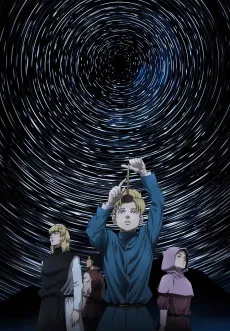
Orb: On the Movements of the Earth Season 1 Recap
Spoiler Alert: This recap contains detailed plot summaries and may reveal key story events.
TL;DR
Orb: On the Movements of the Earth is a gripping historical drama that follows generations of astronomers risking their lives to prove heliocentrism in 15th-century Europe — a time when such ideas could get you burned at the stake. Spanning decades and multiple protagonists, this Orb: On the Movements of the Earth season 1 recap covers a story that’s less about stars and more about the courage it takes to pursue truth against overwhelming oppression. MADHOUSE delivers stunning production values, and the writing is sharp, emotional, and surprisingly thrilling for a show about science. If you love intellectual drama with real stakes, this is essential viewing.
Season Summary
What makes this Orb: On the Movements of the Earth season 1 summary so compelling to write is that the show isn’t structured like a typical anime. It’s a generational epic — a relay race of ideas passed from one thinker to the next across decades, each risking everything to keep the flame of heliocentrism alive against the Inquisition’s iron grip.
Rafał’s Awakening (Episodes 1–5)
The season opens in 15th-century Poland, introducing Rafał, a child prodigy on track to study theology at university. He’s brilliant, curious, and exactly the kind of mind the Church wants to mold into orthodoxy. Everything changes when he encounters Hubert, a wandering scholar who has been secretly studying the heliocentric model — the heretical idea that the Earth revolves around the Sun.
Hubert shows Rafał the mathematical elegance of heliocentrism, and the boy is captivated. For the first time, Rafał sees a truth that the Church’s geocentric model simply can’t explain. But Hubert is no naive idealist — he knows the Inquisition is closing in. He’s been hunted for years, and his time is running out.
Major Spoiler
Hubert is captured by the Inquisition and burned at the stake, but not before entrusting his research and the burden of truth to Rafał. This death sets the entire series in motion — it's not just a tragedy, it's a call to action that echoes across generations.Rafał is left shattered but determined. He makes a fateful choice: he will not let Hubert’s work die. But he also learns the first cruel lesson of this story — passion for truth means nothing if you’re dead. Survival requires cunning.
The Heretic’s Gambit — Rafał and Nowak (Episodes 6–10)
Rafał begins his double life, outwardly pursuing theological studies while secretly continuing heliocentric research. He crosses paths with Nowak, a complex and morally ambiguous figure who becomes central to the story. Nowak is an agent of the Church tasked with rooting out heresy, but he’s far more intelligent and conflicted than a simple inquisitor.
The cat-and-mouse dynamic between Rafał and the forces of orthodoxy is electrifying. Rafał must navigate university politics, forge alliances with sympathetic scholars, and hide his true research behind layers of misdirection. The show excels at depicting intellectual combat — debates about astronomy become life-or-death confrontations.
Major Spoiler
Rafał ultimately realizes he cannot continue his work openly and survive. In a devastating decision, he chooses to pass his research forward rather than complete it himself, effectively sacrificing his own legacy so the idea can live on. He entrusts his findings to the next generation and steps back into the shadows.Oczy and the Underground Network (Episodes 11–16)
The story leaps forward in time, shifting focus to Oczy, a young woman with a gift for observation and mathematics. This transition is one of the show’s boldest moves — just as you’ve grown attached to Rafał, the narrative passes the torch entirely.
Oczy discovers remnants of the heliocentric research through an underground network of scholars, artists, and freethinkers who’ve been quietly preserving forbidden knowledge. She brings fresh eyes and a different temperament to the work. Where Rafał was cautious and methodical, Oczy is fierce and impatient.
The Inquisition has also evolved. Draka emerges as a formidable antagonist — a true believer who sees heresy not just as wrong but as an existential threat to civilization. Draka is terrifyingly effective because he’s not stupid or cartoonishly evil. He genuinely believes he’s saving souls, which makes him far more dangerous than a simple villain.
The tension escalates as Oczy’s circle is infiltrated. Trust becomes the scarcest resource, and the show masterfully depicts the paranoia of living under ideological surveillance. Every conversation could be a trap. Every new face could be an informant.
Badeni’s Proof and Schmitt’s Sacrifice (Episodes 17–22)
The generational baton passes again as Badeni, a methodical and patient scholar, takes center stage. Where previous characters fought with passion, Badeni fights with rigor. He understands that heliocentrism will never be accepted through argument alone — it needs irrefutable mathematical proof.
Schmitt, an instrument maker and craftsman, becomes Badeni’s crucial ally. Schmitt may not be a scholar, but his ability to build precise observational tools gives Badeni the data he needs. Their partnership is one of the season’s most touching relationships — the theorist and the craftsman, each incomplete without the other.
Major Spoiler
Schmitt is eventually discovered and faces the Inquisition. His fate is one of the most emotionally devastating sequences in the show — a good man destroyed not for ideas he fully understands, but for the simple act of helping a friend pursue truth. His sacrifice galvanizes Badeni's resolve.The show uses this arc to explore a profound theme: great discoveries aren’t the work of lone geniuses. They’re built on the labor, sacrifice, and courage of ordinary people whose names history may never record.
The Convergence — Legacy and Light (Episodes 23–25)
The finale brings the generational threads together in a deeply satisfying conclusion. Badeni’s work reaches a critical mass — the mathematical model of heliocentrism is finally complete enough to withstand scrutiny. But completing the work is only half the battle. Getting it published and into the world without being destroyed is another challenge entirely.
The final episodes weave together the legacies of every protagonist — Hubert’s initial spark, Rafał’s preservation, Oczy’s fierce protection, Schmitt’s tools, and Badeni’s proof. The show makes it viscerally clear that this isn’t one person’s achievement. It’s the product of decades of hidden courage.
Major Spoiler
The season ends on a note that is triumphant but bittersweet. The heliocentric model survives and is positioned to eventually change the world, but the human cost has been enormous. The final scenes honor those who were lost — not with monuments or glory, but with the quiet knowledge that truth endured because they chose to act.The closing moments draw an unmistakable parallel to Copernicus’s real-world publication of De revolutionibus, grounding the fictional narrative in historical reality and reminding us that this story, however dramatized, reflects genuine human struggle.
Highlights & Must-See Moments
- Episode 3: Hubert’s final lesson — The scene where Hubert explains heliocentrism to Rafał under the stars is breathtaking in both its visual beauty and emotional weight, knowing what comes next.
- Episode 9: The university debate — Rafał’s thinly veiled defense of heliocentric principles in an academic setting is pure intellectual thriller, every word a calculated risk.
- Episode 14: Oczy confronts Draka — A confrontation where neither side blinks, showcasing the show’s ability to make dialogue as tense as any action scene.
- Episode 20: Schmitt’s workshop — A quiet, beautiful episode about the craft of building instruments, proving that the show can find drama in precision and care.
- Episode 25: The final convergence — The season finale ties every thread together with masterful pacing and emotional payoff that rewards patient viewers.
Our Take
Orb: On the Movements of the Earth is unlike anything else in anime. It takes a subject that sounds dry on paper — medieval astronomers doing math — and transforms it into one of the most gripping dramas of 2024. The generational structure is its greatest strength and its biggest risk. Losing protagonists you’ve grown attached to is painful, but it drives home the show’s central thesis: truth is bigger than any individual.
MADHOUSE’s production is excellent, with period-accurate European settings rendered in rich detail, and a soundtrack that balances solemnity with moments of wonder. The show draws inevitable comparisons to Vinland Saga in its historical setting and thematic ambition, and to Steins;Gate in its love of scientific discovery as drama. What it does uniquely is frame intellectual courage as the highest form of heroism — not the courage to fight, but the courage to think.
Rating: 8.8 / 10 — A bold, intelligent, and deeply moving historical drama that proves the pen truly is mightier than the sword.