Edited by Hong-Bin Yoon · Founder, zzinDev LLC
Published
Monster Season 1 Recap
Spoiler Alert: This recap contains detailed plot summaries and may reveal key story events.
TL;DR
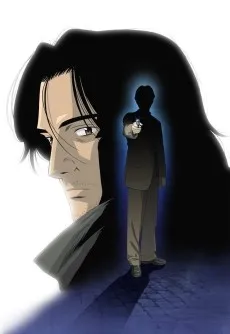
Monster is a slow-burn psychological thriller that asks one devastating question: what happens when a good man saves the wrong life? Dr. Kenzo Tenma, a gifted surgeon in 1990s Germany, saves a young boy named Johan Liebert — only to discover years later that he may have unleashed the most dangerous human being alive. Across 74 meticulously paced episodes, the series weaves a sprawling mystery through post-reunification Germany and the Czech Republic, touching on Cold War experiments, identity, and the nature of evil. If you have the patience for its deliberate storytelling, Monster rewards you with one of the most intelligent and haunting narratives in anime history.
Season Summary
This Monster season 1 recap covers the complete 74-episode adaptation of Naoki Urasawa’s manga — a single, unbroken story that functions as one massive season. What follows is a comprehensive Monster season summary organized by its major story arcs.
The Choice and Its Consequences (Episodes 1–10)
In 1986 Düsseldorf, Dr. Kenzo Tenma is the golden boy of Eisler Memorial Hospital. He’s engaged to Eva Heinemann, daughter of the hospital director, and is on track to become chief of surgery. But when a young boy named Johan Liebert arrives with a bullet wound to his head on the same night as the town mayor, Tenma faces an impossible choice. His superiors order him to operate on the mayor — the politically valuable patient. Tenma refuses. He saves Johan instead.
The mayor dies. Tenma’s career implodes overnight. Eva leaves him. Director Heinemann strips him of his position and buries him in administrative purgatory. Then, in a twist that reshapes the entire series, Director Heinemann and two other doctors who conspired against Tenma are found murdered — poisoned. Johan and his twin sister Anna vanish from the hospital without a trace.
With no other suspects and the convenient timing of the murders, Tenma falls under suspicion. But without evidence, the case goes cold. Tenma is eventually promoted to chief of surgery — inheriting the positions of the dead men. Nine years pass. Tenma has rebuilt his life, but a patient named Adolf Junkers arrives at his hospital, terrified and muttering about a “monster.” Before Tenma can learn the full truth, Junkers is killed — and standing over the body is a now-grown Johan Liebert, calmly thanking Dr. Tenma for saving his life all those years ago.
The Fugitive Doctor (Episodes 11–25)
Tenma’s world collapses for the second time. He realizes that Johan has been killing — methodically, invisibly — and that he bears responsibility for every death. Tenma makes a decision that horrifies even himself: he must find Johan and kill him. He acquires a gun and abandons his career, becoming a fugitive.
Meanwhile, BKA Inspector Heinrich Lunge — a brilliant but obsessive detective — becomes convinced that Tenma himself is the killer. Lunge’s theory is that “Johan” doesn’t exist, that Tenma invented an alter ego to commit murders. This dogged pursuit adds a second layer of tension: Tenma is hunting Johan while being hunted himself.
Along the way, Tenma encounters people whose lives Johan has touched and destroyed. He rescues a young boy named Dieter from an abusive foster situation connected to Johan’s network. He crosses paths with ex-detective Richard Braun, a broken alcoholic whose daughter’s death is tied to the conspiracy. Each encounter reveals more about Johan’s methods — he doesn’t just kill people, he convinces them to kill themselves or each other. He corrupts from within, weaponizing loneliness and despair. Tenma also gains an unlikely ally in Dr. Julius Reichwein, a psychologist who begins investigating Johan independently.
Nina’s Awakening and the Web of Conspiracy (Episodes 26–42)
Johan’s twin sister — now living under the name Nina Fortner — has built a normal life in Heidelberg, her traumatic childhood buried under amnesia. But the past doesn’t stay buried. When Johan’s associates begin circling her, fragments of memory return: fire, a border crossing, a children’s home, and a book about a nameless monster.
Nina’s arc parallels Tenma’s. She too picks up a gun. She too resolves to kill Johan. But where Tenma is driven by guilt, Nina is driven by recovered trauma and a desperate need to understand what happened to her and her brother.
This arc also introduces Johan’s network of influence in full. His right-hand operative, Roberto (also known as “The Baby”), is a psychopathic enforcer who carries out Johan’s will with terrifying loyalty. The series reveals that Johan has been manipulating neo-Nazi groups, organized crime, and wealthy benefactors — not for ideology or money, but seemingly for the sheer exercise of control. He moves through society like a ghost, leaving destruction and then vanishing.
Major Spoiler — Johan's Method
Johan's signature technique is psychological manipulation to the point of suicide. He identifies lonely, desperate people, befriends them with seemingly genuine warmth, and then methodically dismantles their will to live. Several characters across the series take their own lives after encounters with him, and the show treats each death with devastating weight.Inspector Lunge, still pursuing Tenma, begins to clash with other investigators. His refusal to consider Johan’s existence as a separate person becomes an increasingly dangerous blind spot, even as the evidence mounts.
The Darkness of 511 Kinderheim (Episodes 43–55)
The investigation leads to the ruins of 511 Kinderheim — a Cold War-era orphanage in East Germany where children were subjected to psychological experiments designed to create perfect soldiers. This is where Johan was forged.
Through testimonies, flashbacks, and recovered documents, the full horror emerges. The children at 511 Kinderheim were stripped of their names and identities, pitted against each other, and systematically broken down. The goal was to erase individuality and produce obedient instruments of the state.
Major Spoiler — What Happened at 511 Kinderheim
Johan didn't just survive the experiments — he destroyed the institution from within. As a child, he manipulated the staff and other children so thoroughly that the orphanage descended into a massacre. Adults and children killed each other while Johan watched. He was the experiment's ultimate success and its ultimate failure: a being of pure, weaponized emptiness.This arc also uncovers the figure behind the experiments: Franz Bonaparta, a Czechoslovak picture-book author whose seemingly innocent children’s stories — particularly The Nameless Monster — were actually tools of psychological conditioning. The recurring motif of the nameless monster becomes the series’ central metaphor: a creature without identity that devours everything, consuming names and lives until nothing remains.
Nina travels to Prague and the Czech Republic to trace her origins. She discovers that she and Johan were born as part of a eugenics experiment, and that their mother was forced to make an unthinkable choice.
Major Spoiler — The Mother's Choice
Their mother, a woman named Viera Černá, was forced by Bonaparta's organization to give up one of her twins. She chose to hand over Anna (Nina) — but the men took Johan instead, or possibly both at different times. The ambiguity of who was "given away" becomes central to Johan's fractured psyche. He may have witnessed his mother choosing between her children, and that moment of perceived abandonment became the void at his core.Convergence at Ruhenheim (Episodes 56–74)
All threads converge on Ruhenheim, a small German town where Franz Bonaparta has been living in hiding under an assumed name. Johan has orchestrated events so that every major player — Tenma, Nina, Lunge, Grimmer (a journalist and fellow 511 Kinderheim survivor), Roberto, and Bonaparta himself — arrives at the same place at the same time.
Grimmer’s storyline reaches its emotional crescendo here. A warm, gentle man who lost the ability to feel emotions due to 511 Kinderheim’s experiments, Grimmer has been one of the series’ most heartbreaking characters. He speaks about his alternate personality, “the Magnificent Steiner,” who emerges in moments of extreme danger — the only way his broken psyche can access survival instincts.
Johan’s endgame becomes clear: he wants to stage a “perfect suicide” — to be erased so completely that no one even remembers he existed. He has been systematically eliminating everyone who knows his name. Ruhenheim is meant to be the final act.
Major Spoiler — The Ruhenheim Massacre
Johan manipulates the residents of Ruhenheim into a paranoid frenzy. Neighbors turn on neighbors. Roberto and other operatives fuel the violence. The small town becomes a warzone. Grimmer is fatally shot while protecting a child — and in his final moments, he cries real tears for the first time, saying he finally feels something. It is one of the most devastating scenes in the entire series. Inspector Lunge, finally forced to confront Johan's existence as real, fights Roberto in a brutal confrontation and barely survives.In the climax, Tenma finds himself standing over Johan with a gun — the moment the entire series has been building toward. Can a doctor who believes all life is equal pull the trigger on the monster he created?
Major Spoiler — The Ending
Tenma cannot do it. He chooses not to shoot. A boy from the town shoots Johan instead, and Tenma — true to his nature — operates on Johan to save his life, just as he did years ago. Johan survives, hospitalized and under guard. In the final scene, Tenma visits Johan's hospital bed only to find it empty — Johan has disappeared. The bed is neatly made. The monster is gone. The series ends on this profoundly unsettling ambiguity: Tenma saved a life, as a doctor must, but the monster walks free.Highlights & Must-See Moments
- Episode 4: “Brother and Sister” — The reveal of the grown Johan standing over a corpse, thanking Tenma, is one of anime’s greatest “the floor drops out” moments.
- Episode 31: “The Nameless Monster” storybook sequence — The animated picture book within the show is haunting, beautiful, and crystallizes the entire series’ themes in a five-minute fairy tale.
- Episode 40: “Grimmer” — The introduction of Wolfgang Grimmer, a man who can’t feel emotions discussing them with perfect intellectual understanding, is quietly devastating.
- Episode 69-70: “The Ruhenheim Massacre” — A sleepy village tears itself apart in real time. The tension is almost unbearable, and Grimmer’s final moments rank among the most emotionally powerful scenes in anime.
- Episode 74: “The Real Monster” — The finale doesn’t provide easy answers. Tenma’s final choice and Johan’s empty bed will stay with you for years.
Our Take
The pacing will test some viewers. At 74 episodes with no filler arcs or action set pieces to break the tension, Monster demands commitment. But what it builds with that time is extraordinary: a cast of dozens of fully realized characters, each carrying their own tragedy, all orbiting the black hole that is Johan Liebert. Johan himself is anime’s greatest villain — not because he’s powerful or flashy, but because he’s terrifyingly plausible. He’s a study in what happens when empathy is surgically removed from charisma.
Rating: 9.2 / 10 — A masterwork of psychological suspense that earns every minute of its marathon runtime.
Where to Watch & Read
-
Watch on Netflix
-
Monster Perfect Edition Vol. 1 by Naoki Urasawa — Shop on Amazon
-
Another Monster: The Investigative Report by Naoki Urasawa — Shop on Amazon
-
Johan Liebert Nendoroid Figure — Shop on Amazon