Edited by Hong-Bin Yoon · Founder, zzinDev LLC
Published
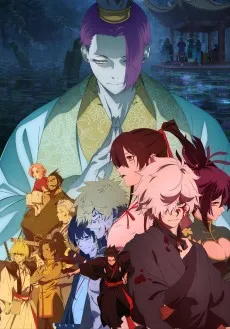
Hell’s Paradise Season 2 Recap
Spoiler Alert: This recap contains detailed plot summaries and may reveal key story events.
TL;DR
Hell’s Paradise is back, and Season 2 wastes no time throwing its survivors into the deep end of Shinsenkyo’s horrors. This 11-episode run picks up after the devastating Lord Tensen encounters, following Gabimaru, Sagiri, and their uneasy alliance as they master Tao and take the fight to the island’s immortal rulers. The pacing is tighter than Season 1, the fights are brutal, and the lore drops hit hard. If you’ve been waiting for answers about the island’s true nature, this Hell’s Paradise Season 2 season 1 recap covers everything you need to know.
Season Summary
This Hell’s Paradise Season 2 season 1 summary covers all 11 episodes of the Winter 2026 continuation, picking up directly after the harrowing events of the first season. MAPPA returns with the same visual ferocity, adapting the middle chapters of Yuji Kaku’s manga as the death island saga enters its most action-heavy phase.
The Tao Awakening (Episodes 1–3)
Season 2 opens in the aftermath of the Lord Tensen’s overwhelming display of power. The surviving criminals and their Yamada Asaemon monitors are scattered, battered, and forced to reckon with the fact that conventional weapons are useless against Shinsenkyo’s rulers. It’s Mei — the mysterious young girl connected to the Tensen — who becomes the unlikely key to survival, teaching the group about Tao: the life energy that flows through all things on the island.
The early episodes are a crucial reset. Gabimaru discovers that his shinobi training has actually given him an instinctive grasp of Tao, while Sagiri works to overcome her hesitation and find her own Tao attribute. The system is elegantly introduced — every person and Tensen has a Tao affinity tied to the five elements (Wood, Fire, Earth, Metal, Water), and exploiting elemental weaknesses is the only reliable way to disrupt a Tensen’s regeneration cycle. Fuchi, the scholarly Asaemon, becomes invaluable here, analyzing the Tao system with a scientist’s eye and identifying tactical advantages the fighters would miss.
What makes these episodes work is the alliance-building. The scattered groups — Gabimaru and Sagiri’s party, Shion and Nurugai, and other surviving duos — converge with a shared understanding: cooperate or die. Criminals who were sent here as expendable pawns and executioners who were meant to kill them now train side by side. The tension never fully dissolves, but necessity forges something resembling trust.
Lord Tensen Unleashed (Episodes 4–8)
Armed with Tao and a fragile alliance, the group takes the offensive — and this is where Season 2 truly ignites. The battles against the Lord Tensen are the centerpiece of this run, and MAPPA delivers some of its most visceral action sequences to date. The Tensen are not generic villains; each has a distinct fighting style, personality, and unsettling duality thanks to their ability to switch between male and female forms via Yin-Yang Tao cycling.
The confrontation with Ju Fa is a standout. This towering, plant-armored Tensen is a wall of raw power, and the coordinated effort required to bring Ju Fa down pushes the alliance to its breaking point. Fuchi’s role in this battle is critical — his real-time analysis of Ju Fa’s Tao flow guides the fighters toward openings they’d never spot on their own. The fight against Tao Fa runs parallel, testing a separate group’s resolve with a faster, more cunning opponent.
Major Spoiler — Tensen Battle Outcome
The alliance manages to disrupt the regeneration cycles of both Ju Fa and Tao Fa, dealing the first real blows against the supposedly immortal rulers of Shinsenkyo. But these victories come at a steep cost — not everyone survives the encounters, and the surviving Tensen become aware that the humans now pose a genuine threat, escalating the danger for everyone still on the island.These episodes also peel back layers on Gabimaru himself. As he channels more Tao in combat, fragmented memories of his wife surface — the entire reason he agreed to this suicide mission. The show handles this beautifully: Gabimaru’s emotional core isn’t a weakness but the source of his overwhelming power. His Tao burns hottest when he fights for something beyond survival.
Sagiri’s arc is equally compelling. No longer the uncertain executioner from Season 1, she begins to find her resolve as both a swordswoman and a leader. Her growing ability to read Tao gives her battlefield awareness that complements Gabimaru’s raw destructive force.
The Secrets of Hōrai (Episodes 9–11)
With the outer defenses weakened, the alliance pushes toward Hōrai — the palace at the island’s center where the Elixir of Life is believed to be created. What they find is far more disturbing than a simple treasure.
The horrors of the Banko — the plant-human hybrid creatures that litter the island — are finally explained. They aren’t natural phenomena. They’re the result of a centuries-long experiment: a ritual called the Rite of Just Compensation, in which human bodies are fused with the island’s supernatural flora to distill Tao into a consumable elixir. Every Banko was once a person. The expedition parties sent by the shogunate over the centuries weren’t just failures — they were raw material.
Major Spoiler — The Mastermind Revealed
The true architect of Shinsenkyo's horrors is Rien, the leader of the Lord Tensen and the one who has been orchestrating the Elixir experiments for centuries. Rien's goal extends far beyond the island — the perfected Elixir is intended to be brought to the mainland, and the implications for Tokugawa Nariyoshi and the shogunate's role in all of this begin to crystallize. The season ends with Rien setting the final phase of the plan into motion, turning the island itself against the surviving alliance.The season finale is a gut-punch cliffhanger. Just as the alliance begins to understand the scope of what they’re up against, the stakes escalate beyond a fight for survival into something with consequences for all of Japan. It’s a masterful setup that recontextualizes the entire mission.
Highlights & Must-See Moments
- Episodes 4–5: The Ju Fa Siege — A multi-episode battle that showcases the alliance working as a unit for the first time, with Fuchi’s tactical mind turning the tide against an overwhelming foe.
- Episode 3: Gabimaru’s Tao Erupts — The moment Gabimaru fully channels his Tao for the first time, tied to a flashback of his wife, is both visually stunning and emotionally devastating.
- Episode 7: Sagiri’s Stand — Sagiri proves she belongs on the front line, not just as a monitor but as a warrior in her own right, in a sequence that pays off her entire character arc from Season 1.
- Episode 10: The Banko Revelation — The most disturbing sequence in the series to date, as the true origin of the plant-human hybrids is laid bare in unflinching detail.
- Episode 11: The Cliffhanger — A finale that reframes the entire narrative scope and leaves you desperate for the next part.
Our Take
Hell’s Paradise Season 2 solves the biggest criticism of its predecessor: pacing. Where Season 1 occasionally dragged with introductions and island exploration, this run is relentlessly propulsive. The Tao power system gives the fights genuine tactical depth — this isn’t just power-level escalation but strategic combat where knowledge and teamwork matter as much as raw strength. In a landscape crowded with battle shonen, Hell’s Paradise distinguishes itself with its horror elements and willingness to make its world genuinely unsettling.
MAPPA’s production remains strong, particularly in the Tensen battles where fluid animation meets grotesque creature design. The show draws inevitable comparisons to Chainsaw Man and Jujutsu Kaisen as part of the “dark shonen trinity,” but Hell’s Paradise carves its own identity through its Edo-period setting and existential body horror. The 11-episode count feels slightly tight — a few more episodes could have let some character moments breathe — but it’s a trade-off for momentum that never lets up.
Rating: 8.1 / 10 — A tighter, meaner, and more confident season that delivers on Season 1’s promise and sets the stage for a devastating finale.
Where to Watch & Read
- Watch on Netflix
- Watch on Hulu
- Hell’s Paradise Jigokuraku Vol. 1 by Yuji Kaku — Shop on Amazon
- Hell’s Paradise Jigokuraku Box Set Volumes 1-13 — Shop on Amazon
- Gabimaru Nendoroid Figure — Shop on Amazon