Edited by Hong-Bin Yoon · Founder, zzinDev LLC
Published
Bleach Season 1 Recap
Spoiler Alert: This recap contains detailed plot summaries and may reveal key story events.
TL;DR
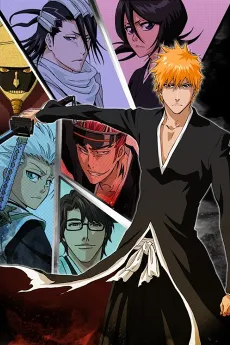
Bleach season 1 is a massive 100-episode journey that transforms Ichigo Kurosaki from a punk kid who can see ghosts into one of the most powerful Soul Reapers in existence. The season’s crown jewel is the Soul Society arc — a perfectly escalating rescue mission packed with iconic fights, shocking betrayals, and an unforgettable villain reveal. After that explosive climax, the season transitions into the anime-original Bount arc, which slows the pace considerably. If you’re looking for a Bleach season 1 recap, know this: the first 63 episodes are peak shonen, and the rest is completionist territory.
Season Summary
This Bleach season 1 summary covers the show’s foundational arcs — from Ichigo’s first encounter with a Soul Reaper to the aftermath of Soul Society’s greatest betrayal, plus the anime-original Bount saga that follows.
The Substitute Shinigami (Episodes 1–20)
The series opens with Ichigo Kurosaki, a scowling orange-haired teenager in Karakura Town who happens to see ghosts. His life flips upside down when a Soul Reaper named Rukia Kuchiki crashes through his bedroom wall chasing a Hollow — a monstrous corrupted spirit. When Rukia is badly wounded protecting Ichigo’s family, she transfers her Shinigami powers to him in a desperate gamble. It works a little too well.
Now operating as a Substitute Soul Reaper, Ichigo hunts Hollows across town while Rukia — stuck in a powerless human body — poses as a transfer student and coaches him. These early episodes introduce the core cast one by one. Orihime Inoue, Ichigo’s classmate, awakens her own spiritual abilities after a Hollow attack tied to her deceased brother. Yasutora “Chad” Sado, Ichigo’s towering best friend, discovers he can channel spiritual energy through his fists. And Uryu Ishida, a bespectacled loner, reveals himself as a Quincy — a rival spiritual lineage that destroys Hollows rather than purifying them.
Uryu challenges Ichigo to a Hollow-hunting contest that backfires spectacularly, attracting a massive Hollow swarm and a colossal Menos Grande to Karakura Town. Ichigo manages to repel the Menos in a jaw-dropping display of raw power that catches the attention of Soul Society. Meanwhile, Rukia grows increasingly anxious — the longer she stays in the human world, the more she’s breaking Soul Society’s laws. The arc closes with the arrival of two Soul Reapers sent to retrieve her: her childhood friend Renji Abarai and her adoptive brother, the terrifyingly cold Captain Byakuya Kuchiki. Ichigo is cut down in seconds, his borrowed powers shattered, and Rukia is dragged back to Soul Society to face execution.
Soul Society: The Entry (Episodes 21–41)
Ichigo refuses to accept Rukia’s fate. With the help of the mysterious shopkeeper Kisuke Urahara — a former Soul Reaper Captain hiding in the human world — Ichigo undergoes brutal training to unlock his own Shinigami powers. This training nearly kills him and includes a harrowing descent into his inner world where he must find his Zanpakuto spirit before becoming a Hollow himself.
Major Spoiler — Ichigo's Training
Ichigo nearly completes his transformation into a Hollow during Urahara's training. He claws his way back at the last second, emerging with both Shinigami powers and a Hollow mask fragment — the first hint that his powers are far more complex than anyone realizes.Armed with his own Zanpakuto, Zangetsu, Ichigo assembles a rescue team: Chad, Orihime, Uryu, and the talking cat Yoruichi Shihouin. They travel to Soul Society via a spirit gateway created by fireworks expert Kukaku Shiba, who literally shoots them over the walls of the Seireitei in a cannonball. Their entry shatters the barrier and scatters the group across the Soul Reaper stronghold.
Ichigo’s first major opponent is Ikkaku Madarame of Squad 11, followed by his captain’s right-hand man Yumichika. Meanwhile, the other members of the rescue team face their own battles throughout the Rukongai and Seireitei. The key emotional beat here is Ichigo’s confrontation with Renji Abarai, who fights to keep Ichigo away from Rukia — only for it to become clear that Renji himself is tormented by his inability to save her. Ichigo defeats Renji and pushes deeper into enemy territory, setting up the full-scale war to come.
Soul Society: The Rescue (Episodes 42–63)
This is where Bleach ascends to legendary status. The Seireitei is in chaos — captains suspect each other of treachery, and Ichigo’s invasion has exposed fractures in Soul Society’s rigid hierarchy. Rukia’s execution date keeps getting moved up, and something far darker than a simple punishment is clearly at play.
Ichigo faces Squad 11 Captain Kenpachi Zaraki in one of the arc’s most iconic fights — a raw, animalistic brawl between two warriors who fight on pure instinct. Neither uses technique; it’s just spiritual pressure and willpower. Ichigo barely survives and unlocks a deeper connection to Zangetsu in the process. He then enters secret training with Yoruichi, who reveals her true form as a former Squad 2 Captain, to achieve Bankai — the final release of a Zanpakuto that most Soul Reapers take decades to master. Ichigo does it in three days.
Major Spoiler — Aizen's Betrayal
Captain Sosuke Aizen — the gentle, scholarly leader of Squad 5 — is revealed to have orchestrated everything. He faked his own death, manipulated the entire Gotei 13, and engineered Rukia's execution to extract the Hogyoku, a reality-warping orb that Urahara had hidden inside Rukia's soul. Aizen peels off his kind-professor disguise, pushes his hair back, and becomes one of anime's greatest villains in a single scene. He defects to Hueco Mundo alongside Captains Gin Ichimaru and Kaname Tosen, declaring his intention to stand atop the heavens.The execution scene at Sokyoku Hill is the emotional peak. Rukia has accepted her death, but Ichigo arrives at the last second, blocking the execution weapon with his Zanpakuto. He defeats three lieutenants simultaneously, then unleashes his Bankai — Tensa Zangetsu — against Byakuya in a battle that redefines the power scale of the series. This fight isn’t just about strength; it’s about challenging a rigid system that would sacrifice its own people for the sake of law. Byakuya’s quiet acknowledgment of Ichigo’s resolve is one of the most emotionally satisfying moments in all of shonen anime.
The arc concludes with Soul Society in upheaval. Aizen has escaped, the captains are licking their wounds, and Rukia is pardoned. Ichigo returns home as a recognized ally of Soul Society, but the looming threat of Aizen and the Hogyoku casts a long shadow over everything.
The Bount Arc (Episodes 64–91)
Following the Soul Society saga, the anime shifts into its first major original storyline. The Bount arc introduces a race of immortal humans who survive by consuming the souls of the living. Led by the charismatic and bitter Jin Kariya, the Bounts seek revenge against Soul Society for experiments conducted on them centuries ago.
Each Bount wields a Doll — a summoned creature comparable to a Zanpakuto — and the early portion of the arc focuses on the Bounts targeting spiritually aware humans in Karakura Town. Ichigo and his friends face off against individual Bounts in a series of encounters that give supporting characters like Chad, Orihime, and Uryu extended fight time they didn’t get in Soul Society. The introduction of the Mod Souls — particularly the trio of Ririn, Kurodo, and Noba — provides comedic relief and detective-style Hollow tracking missions.
Kariya’s backstory adds genuine pathos: he’s a man who has lived for centuries, watched everyone he loved die, and concluded that Soul Society’s system is fundamentally broken. It’s a mirror of Ichigo’s own frustration with Soul Society’s rigid rules, but taken to a nihilistic extreme. The arc builds toward the Bounts finding a way to invade Soul Society itself.
Bount Invasion of Soul Society (Episodes 92–100)
Kariya and the surviving Bounts breach the gates of Soul Society, and the arc shifts to a multi-front battle across the Seireitei. Kariya seeks to absorb the spiritual particles of Soul Society itself to gain enough power to destroy it entirely. The Soul Reapers and Ichigo’s team form an uneasy alliance to hunt down the scattered Bounts.
These episodes feature match-ups between individual Bounts and Soul Reaper captains or lieutenants, escalating toward Kariya’s final confrontation. The stakes feel personal for Kariya but less urgent for the audience compared to the Rukia execution — the arc’s main weakness. Still, the invasion provides some solid action sequences and expands the world-building around Soul Society’s darker history. This portion of the Bount arc continues beyond episode 100, but the core conflict is fully in motion by this point.
Highlights & Must-See Moments
- Episode 1: “The Day I Became a Shinigami” — Rukia’s power transfer sets the entire series in motion, and Studio Pierrot nails the haunting atmosphere of that first Hollow encounter.
- Episode 16-17: Ichigo vs. the Menos Grande — A Substitute Soul Reaper repelling a skyscraper-sized Hollow with sheer willpower. The moment Bleach announces its ambitions.
- Episode 36-37: Ichigo vs. Renji — Their rematch in Soul Society is raw and emotional, with Renji’s flashbacks to his childhood with Rukia elevating this beyond a typical shonen fight.
- Episode 52-53: Ichigo vs. Kenpachi Zaraki — Two berserkers colliding in a death match with zero strategy and maximum spiritual pressure. Kenpachi’s grin is iconic.
- Episodes 58-63: The Execution and Aizen’s Betrayal — Ichigo’s Bankai debut, the Byakuya fight, and the greatest villain reveal in shonen history, all in one stretch. This is the reason people watch Bleach.
Our Take
The first 63 episodes of Bleach represent one of the tightest origin-to-climax arcs in shonen history. Where Naruto’s Chunin Exams built tension through tournament brackets and One Piece’s Arlong Park staked everything on crew bonds, Bleach’s Soul Society arc weaponizes style — every character drips with cool, every Zanpakuto release feels like an event, and Tite Kubo’s sense of dramatic composition translates beautifully to screen. The Aizen reveal remains a gold standard for anime plot twists two decades later.
The Bount arc that follows is a significant step down — a common growing pain for long-running shonen adaptations that outpace their source material. It’s not unwatchable, but it lacks the narrative tightness and emotional stakes of the canon material. Many fans skip it entirely on rewatches, and honestly, that’s a valid choice. For a complete Bleach season 1 recap, though, it’s part of the package — and Kariya is a more interesting filler villain than most.
Rating: 7.8 / 10 — The Soul Society arc alone is a 9.5, but 30+ episodes of filler drag the season’s average down. Essential viewing for shonen fans regardless.
Where to Watch & Read
- Watch on Hulu (subbed and dubbed)
- Watch on Disney+ (available in select regions)
- Read the manga Bleach by Tite Kubo on Amazon — season 1 covers roughly volumes 1–20
- Bleach: Souls Official Character Book by Tite Kubo on Amazon — essential companion for the massive cast