Edited by Hong-Bin Yoon · Founder, zzinDev LLC
Published
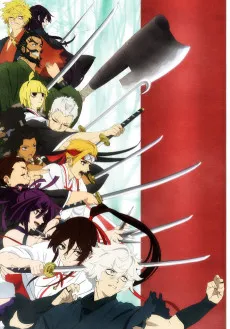
Hell’s Paradise Character Guide
Overview
Hell’s Paradise characters are defined by a single question: what makes life worth living? From condemned criminals seeking pardons to executioners questioning their duty, every member of this cast is forced to confront mortality on the nightmarish shores of Shinsenkyo. The ensemble weaves together shinobi, samurai, and immortal beings in a story where survival demands understanding — not just strength.
What makes this cast remarkable is how the island strips away pretense. Killers reveal their humanity, dutiful warriors discover their own desires, and ancient gods expose their fragility. This Hell’s Paradise character guide breaks down every major player across both seasons of Jigokuraku.
Main Characters
Gabimaru
- Role: Protagonist
- First Appearance: Season 1, Episode 1
Arc Summary: Gabimaru the Hollow begins the series as a paradox — a shinobi raised to be an emotionless weapon who claims he wants to die, yet whose body refuses to stop fighting. Sentenced to execution for his crimes as Iwagakure’s most dangerous ninja, he is offered a deal: travel to the mysterious island of Shinsenkyo, retrieve the Elixir of Life, and earn a full pardon.
What drives Gabimaru is not ambition but love. His wife — the village chief’s daughter — taught him warmth and connection, and it is the desire to return to her that makes him truly invincible. Across both seasons, Gabimaru’s arc is about reclaiming the emotions he was trained to suppress and proving that the “hollow” assassin was never truly empty at all.
Season 1 Spoilers
Gabimaru arrives on Shinsenkyo alongside other condemned criminals, each paired with a Yamada Asaemon executioner. He is partnered with Sagiri, and the two develop an uneasy alliance. On the island, Gabimaru encounters the monstrous plant-human hybrids and the Lord Tensen — immortal beings who rule the island. His raw combat power is tested to its limits as he faces threats that regenerate from any wound. By the season’s end, Gabimaru begins forming alliances with other survivors and learns the true nature of Tao, the life energy that governs the island. Season 1 Recap
Season 2 Spoilers
In Season 2, Gabimaru pushes deeper into the heart of Shinsenkyo, mastering Tao to combat the Lord Tensen on more equal footing. His memories of his wife and his past in Iwagakure become central to his fight, as the island’s power threatens to consume him. Gabimaru confronts the full horror of the Tensen’s immortality rituals and must reconcile his identity as a killer with his desire to live a peaceful life. The final battles test not just his strength but his will to remain human. Season 2 Recap
Key Relationships:
- Sagiri — His assigned executioner who becomes his most trusted ally. Their bond is built on mutual respect — she sees his humanity, he respects her resolve.
- His wife (Yui) — The emotional anchor of the entire series. Every fight Gabimaru survives is fueled by the memory of her kindness.
- Iwagakure village chief — His father-in-law and former master, representing the chains of his past as a tool of violence.
Significance: Gabimaru embodies the central theme of Hell’s Paradise: that even those forged into weapons can choose to be human. His struggle to reconcile his lethal nature with his capacity for love is the emotional backbone of the franchise.
Sagiri
- Role: Deuteragonist
- First Appearance: Season 1, Episode 1
Arc Summary: Yamada Asaemon Sagiri is one of the few female members of the Yamada clan of executioners, and she carries the weight of that distinction with quiet determination. Assigned as Gabimaru’s monitor on the expedition to Shinsenkyo, she must execute him if he steps out of line — a duty she takes seriously even as she begins to see the man behind the hollow reputation.
Sagiri’s arc is about finding her own sword. In a clan that doubts her abilities because of her gender, she must prove herself not through mimicry of her peers but by developing her own philosophy of the blade. The island forces her to grow from an uncertain executioner into a warrior who fights with conviction.
Season 1 Spoilers
Sagiri struggles early on with hesitation — her empathy, viewed as weakness by the Yamada clan, makes her question whether she can truly serve as an executioner. On Shinsenkyo, she is forced into combat situations that leave no room for doubt. Through her partnership with Gabimaru and encounters with the island’s horrors, Sagiri begins to understand that her ability to read people’s emotions is not a flaw but a strength. She starts to develop her awareness of Tao. Season 1 Recap
Season 2 Spoilers
Season 2 sees Sagiri come into her own as a fighter and leader. Her growing mastery of Tao gives her the tools to stand alongside even the most powerful warriors in the group. She plays a critical role in strategizing against the Lord Tensen, and her bond with Gabimaru solidifies into one of genuine partnership. Sagiri’s journey culminates in her fully embracing her identity — not as a woman trying to be an executioner, but as an executioner who happens to be a woman. Season 2 Recap
Key Relationships:
- Gabimaru — Her assigned criminal who becomes her partner. She is the first person to acknowledge his desire to live, and he is the catalyst for her growth as a warrior.
- The Yamada clan — Her complicated relationship with the clan’s expectations and her father’s legacy drives much of her internal conflict.
- Gui Fa — The Tensen who provides crucial knowledge about Tao and the island, becoming an unlikely guide for Sagiri’s development.
Significance: Sagiri represents the conscience of Hell’s Paradise. In a story full of killers and monsters, she asks the questions that matter: what does it mean to take a life with purpose? Her growth from hesitant observer to decisive warrior mirrors the show’s broader message that true strength comes from understanding, not just power.
Supporting Characters
Gui Fa
Gui Fa stands apart from the other Lord Tensen as the one who chooses dialogue over destruction. As one of the immortal beings ruling Shinsenkyo, Gui Fa possesses vast knowledge of the island’s Tao-based ecosystem, the nature of the Elixir of Life, and the horrifying rituals that sustain the Tensen’s immortality. When the human expedition arrives, Gui Fa becomes a crucial source of information and eventually an ally to the surviving group.
Season 1 Spoilers
Gui Fa’s role in Season 1 is largely mysterious, appearing as one of the island’s enigmatic rulers. Their true intentions remain unclear as the humans struggle to survive initial encounters with the Tensen. Season 1 Recap
Season 2 Spoilers
In Season 2, Gui Fa’s allegiance shifts decisively toward the human survivors. They provide essential exposition about Tao, the plant-human hybridization process, and how the Tensen can actually be killed. Gui Fa’s willingness to betray their own kind adds moral complexity to the Tensen — they are not a monolithic evil but individuals with their own wills. Season 2 Recap
Zhu Jin
Zhu Jin is one of the most dangerous Lord Tensen and serves as a recurring antagonist throughout both seasons. Powerful, capricious, and deeply attached to the pleasures of immortal existence, Zhu Jin represents the Tensen at their most threatening. Their ability to regenerate and shift forms makes them a nightmare opponent for the human expedition. Zhu Jin’s battles are among the most intense in the series, and their presence raises the stakes whenever they appear on screen.
Season 2 Spoilers
Zhu Jin’s extended combat sequences in Season 2 push the human alliance to its breaking point. Their refusal to accept mortality stands in direct contrast to Gabimaru’s embrace of his finite, human life — making their clashes thematically rich as well as visually spectacular. Season 2 Recap
Touma
Yamada Asaemon Touma is one of the executioners sent to Shinsenkyo alongside the condemned criminals. Skilled with the blade and dedicated to the Yamada clan’s code, Touma represents the disciplined warrior archetype within the expedition. His interactions with the other Asaemon members highlight the different ways each executioner processes the island’s horrors, and his combat contributions prove essential during key confrontations with the Tensen.
Genji
Yamada Asaemon Genji brings a pragmatic edge to the expedition. As one of the ranked executioners, he approaches the mission with a focus on survival and results rather than honor or philosophy. Genji’s practical mindset makes him a valuable tactician within the group, even as the island’s supernatural threats push far beyond anything conventional swordsmanship can handle.
Kishou
Yamada Asaemon Kishou adds another layer to the Yamada clan’s presence on the island. His dedication to the executioner’s duty is tested repeatedly as the mission’s true dangers reveal themselves, and his fate underscores the series’ unflinching approach to mortality — on Shinsenkyo, rank and skill offer no guarantee of survival.
Tesshin
Tesshin’s presence in the story connects back to the shinobi world that shaped Gabimaru. Tied to the shadowy politics and ruthless training of Iwagakure, Tesshin serves as a reminder that the dangers Gabimaru faces are not limited to the island. His role adds depth to the series’ exploration of loyalty, duty, and the cost of being raised as a living weapon.
Key Relationships
Gabimaru & Sagiri — Criminal and Executioner
The partnership between Gabimaru and Sagiri is the heart of Hell’s Paradise. Their dynamic begins as purely transactional — she is his executioner, he is her assignment — but the island breaks down those roles faster than either expects. Gabimaru’s raw honesty about wanting to return to his wife disarms Sagiri’s professional detachment, while her willingness to see him as a person rather than a criminal gives him something he never had in Iwagakure: genuine respect.
What makes this relationship exceptional is its restraint. This is not a romance but something rarer in anime — a profound mutual recognition between two people who help each other become more fully themselves. Sagiri learns decisiveness from Gabimaru’s clarity of purpose. Gabimaru learns that strength without empathy is just violence. Together, they prove the series’ thesis that connection is the antidote to hollowness.
Gabimaru & Yui — The Hollow and His Heart
Gabimaru’s relationship with his wife Yui is felt more than seen. She exists primarily in flashbacks and memories, yet she is arguably the most important character in the franchise. Every time Gabimaru’s body moves to survive when his mind has given up, it is because of her. The Iwagakure village raised Gabimaru to feel nothing, and Yui undid all of that simply by being kind.
This relationship elevates Hell’s Paradise beyond a survival action story. Gabimaru is not fighting for treasure, glory, or revenge — he is fighting to go home to the person who taught him what home means. It gives every battle scene emotional weight and makes his victories feel earned on a level beyond combat.
The Human Alliance vs. The Lord Tensen — Mortality Against Eternity
The broader conflict between the human expedition and the Tensen functions as a relationship in its own right. The Tensen have lived for centuries, achieving a form of immortality through Tao manipulation and horrific rituals. The humans are fragile, mortal, and outmatched in nearly every way. Yet it is precisely their mortality that gives the humans an edge the Tensen lack: the urgency to grow.
Across both seasons, the humans learn Tao, adapt strategies, and forge alliances at a pace the complacent Tensen cannot match. Characters like Gui Fa, who bridge the gap between the two sides, reveal that the Tensen’s immortality has cost them something essential. This dynamic — the desperate vitality of the dying versus the stagnant power of the deathless — is what makes the Hell’s Paradise characters so compelling as an ensemble.
Sagiri & The Yamada Clan — Duty and Identity
Sagiri’s relationship with the Yamada Asaemon clan is a quiet but persistent source of tension throughout the series. As a woman in a male-dominated order of executioners, she faces skepticism about her abilities and purpose. The other Asaemon on the island — Touma, Genji, Kishou — each embody different aspects of the clan’s values, and Sagiri must navigate their expectations while forging her own path.
This dynamic enriches the Hell’s Paradise main characters by grounding Sagiri’s growth in something relatable. Her struggle is not just against monsters and immortals but against institutional doubt — the quiet assumption that she does not belong. Her eventual mastery of her own style of combat is a victory against both the island and the limitations others placed on her.