Edited by Hong-Bin Yoon · Founder, zzinDev LLC
Published
Witch Hat Atelier Season 1 Recap
Spoiler Alert: This recap contains detailed plot summaries and may reveal key story events.
TL;DR
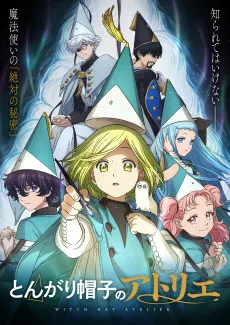
Witch Hat Atelier Season 1 is a gorgeous, measured adaptation of Kamome Shirahama’s acclaimed fantasy manga — a four-episode opening salvo that trades spectacle for storybook precision. BUG FILMS treats each frame like an illustration pulled from the page, and the pace reflects that: introductions, wonder, and a quiet moral panic when young Coco discovers that magic isn’t born, it’s drawn. This isn’t a season-long epic; it’s a prologue, but a stunning one. If you’ve ever wanted a fantasy anime that actually looks like the cover of a children’s picture book you loved as a kid, this Witch Hat Atelier season 1 recap is your starting line.
Season Summary
Season 1 of Witch Hat Atelier covers the opening arc of Shirahama’s manga — roughly the contents of Volume 1 and the very start of Volume 2 — and uses its four episodes to establish the rules of a world where magic is not a gift from the gods, but a craft done with ink, pen, and an almost embarrassing amount of practice. If you’re wondering what happens in Witch Hat Atelier season 1, the honest answer is: the whole premise is rebuilt from the ground up, slowly and deliberately, around a girl who was never supposed to be a witch in the first place.
The season is small in scope but enormous in implication. By the finale, the rules of the world have been quietly inverted, and Coco — a rural seamstress’s daughter — has crossed a threshold nobody in her village ever could.
Arc 1: The Forbidden Dream (Episodes 1–2)
The opening episodes introduce Coco, a bright-eyed girl in a countryside town whose entire childhood has been shaped by a single obsession: she wants to be a witch. The problem is well-established folklore. Magicians are born, not made. You either have the gift or you don’t, and Coco decidedly does not. She sews by her mother’s side, dreams with her nose pressed to witch-themed picture books, and quietly accepts that her destiny is thread and needle, not stars and spells.
The inciting incident arrives in the form of a traveling salesman who sells her a strange, ornately bound book. Coco, alone one evening, opens it and discovers what looks like instructions for drawing magic. She tries a spell. It works. And then, in the cold climax of episode 1, she tries another — and the consequences turn her beloved mother into stone.
Major Spoiler — Mother's Fate
Coco's mother is petrified by a forbidden spell Coco casts unknowingly. She is not killed, but she is frozen in a state that cannot be easily reversed, and this single act of well-meaning curiosity becomes the engine for the entire rest of Coco's story. Getting her mother back is the invisible motivation behind everything Coco does from this point forward.Episode 2 pivots on the arrival of Qifrey, a tall, soft-voiced traveling magician who arrives in the aftermath and realizes immediately what has happened. By witch law, Coco — a non-magician who has seen magic performed openly and whose memories contain forbidden spellcraft — should have her memory wiped. Qifrey begins the spell. Then he stops. Something in Coco’s eyes, or her drawings, or her dogged refusal to let her mother go, moves him to make a very different choice. He takes her on as an apprentice, promising that if she becomes a witch, she may one day be able to fix what she broke.
Arc 2: The Atelier (Episodes 3–4)
The middle of the season carries Coco away from her village and into Qifrey’s atelier, where she meets the three other apprentices who will define her daily life: Agott Arkrome, a prickly prodigy from a prestigious witch family; Tetia, a warm-hearted girl whose enthusiasm matches Coco’s own; and Tartah, a shy, kind boy whose quiet decency anchors the group. Alaira and the smaller supporting cast of townsfolk and witches round out the atelier’s orbit.
Episode 3 is where the show’s central, and genuinely brilliant, conceit crystallizes: magic is drawn. Witches carry special pens and inks, and casting a spell is a matter of inscribing precise magical glyphs within a circle. Get the circle wrong, the lines shaky, the ink wrong, and the spell misfires. This is the show’s quiet revolution. Magic in Witch Hat Atelier isn’t a gift — it’s calligraphy. Anyone with steady hands and the right materials could, in theory, do it. Which is, of course, exactly why the witches have spent generations keeping the method secret.
Episode 4 closes the season on Coco beginning her first real tests as an apprentice. She struggles. Her lines are shaky, her circles imperfect, her concentration fragile. Agott, who was raised to sneer at the very idea of a commoner casting magic, dismisses her immediately — but Tetia, Tartah, and Qifrey quietly believe. The arc ends on a tender, almost defiant grace note: Coco, seated alone with her pen, drawing and redrawing a single spell circle until dawn, because she has to get this right. Her mother is waiting.
Season Timeline
| Episodes | Arc | Key Events |
|---|---|---|
| 1 | The Forbidden Dream, Part 1 | Coco’s life in the village; the traveling salesman; the cursed book; her mother is petrified |
| 2 | The Forbidden Dream, Part 2 | Qifrey arrives; memory-wipe aborted; Coco becomes his apprentice |
| 3 | The Atelier | Journey to Qifrey’s home; meeting Agott, Tetia, Tartah; the revelation that magic is drawn |
| 4 | First Lessons | Coco’s first spell attempts; Agott’s disdain; Tetia and Tartah’s friendship; Coco’s resolve |
Standout Sequences
Witch Hat Atelier is fantasy adventure, but it’s not an action show in the shōnen sense — its memorable moments are emotional, atmospheric, and visually astonishing rather than combat-driven. BUG FILMS understands this and leans into the manga’s illustrative style in every set-piece.
Episode 1: Coco Opens the Book
The single best sequence of the early season is also the quietest. Coco, alone in her attic at night, opens the salesman’s strange book by candlelight. The animation slows. Pages turn. Ink glows. The moment she first understands what she’s looking at — that these are real instructions for real magic — the show pulls off something rare: it sells genuine wonder to a modern audience. The look on her face when the first small spell actually works is the emotional thesis of the entire series.
Episode 1: The Petrification
Moments later, the tone flips. Coco tries a second spell, overconfident, and the camera cuts hard to her mother’s face as the petrification begins. The animation deliberately refuses to be beautiful here. It’s ugly, silent, and far too fast. This is the cost of knowing magic without understanding it, and the show earns every second of the quiet horror.
Episode 2: Qifrey’s Choice
Qifrey raising his pen to erase Coco’s memories — and then lowering it — is one of the best character-defining moments in recent fantasy anime. No dialogue carries the scene. Just his face, her eyes, and the slow understanding that this child did not deserve what happened to her and might be something more than the witches’ laws can account for. It’s the foundational compassion that will define his mentorship for the rest of the franchise.
Episode 3: The First Drawn Spell
The moment Qifrey sits Coco down, hands her a pen, and shows her how to inscribe a basic spell circle is the show’s entire worldview in one scene. The camera follows ink to parchment like it’s an illuminated manuscript. You see a spell being written, not cast. It reframes every fantasy anime you’ve watched before.
Episode 4: Dawn at the Desk
The finale’s closing shot — Coco still at her desk as morning light fills the atelier window, surrounded by dozens of crumpled attempts at a single spell — is a quiet, devastating image of dedication. It says everything about who she is and why she will, eventually, be remarkable.
Character Development This Season
Coco
Coco begins the season as a romantic — a girl who loves the idea of magic more than she has ever understood its reality. She’s defined by longing: longing for a life larger than her village, longing to be chosen, longing to be exceptional. The season’s cruelty is that she gets her wish, but only because she’s destroyed the thing she loved most. Her mother’s petrification is not a dramatic inciting incident she shrugs off; it’s a wound the rest of her character arc is built around.
By the end of episode 4, Coco is no longer the dreamer of episode 1. She is still idealistic, still wide-eyed, but she has been introduced to consequence. Her late-night practice isn’t ambition — it’s penance. That transformation, from longing to obligation, is the real emotional journey of Witch Hat Atelier season 1, and the show handles it with admirable restraint.
Qifrey
Qifrey arrives in episode 2 as a figure of authority — a witch arriving to enforce witch law. The season’s most important quiet arc is watching him choose mercy instead. He is an enforcer who decides to become a teacher, and the show hints, through glances and pauses, that this decision is personal. Qifrey sees something in Coco that he either recognizes from himself or from someone he has lost, and that unspoken history becomes the shadow behind every lesson he gives her.
By the finale, Qifrey is already settling into the role of father-figure to his four apprentices, and the show sets up a central tension that will carry forward: he is hiding something. Whether it’s about himself, about Coco’s book, or about the forbidden magic she stumbled into, the season plants the seed that his kindness is sincere but his honesty is strategic.
Agott Arkrome
Agott spends most of the season as the cold antagonist within the atelier. She comes from a witch family with generations of pedigree, and Coco — a commoner, a cheat, an outsider — represents everything she has been taught to despise. Her cruelty is real, but the show is careful not to flatten her. Her disdain comes from insecurity about her own place in the family, not from simple arrogance.
She doesn’t change in these four episodes. That’s the point. The season lays the foundation for a slow, begrudging arc that will unfold across future seasons, and episode 4 ends with her already unable to fully dismiss Coco’s stubbornness. A crack has appeared, and both characters know it.
Tetia
Tetia is the warmth of the atelier. Where Agott represents the gatekeeping of magic, Tetia represents its joy. She befriends Coco almost immediately, treats her as an equal, and shares her own excitement about every lesson. Her role in these episodes is mostly structural — she’s the door Coco walks through into belonging — but her presence gives the show an emotional floor that keeps Agott’s hostility from tipping the atelier into cruelty.
Tartah
Tartah is the show’s most quietly interesting apprentice. He’s unassuming, gentle, and carries a small personal mystery involving his own complicated relationship with sight and spellwork. The season doesn’t spend much time on him yet, but his scenes with Coco — especially their shared work with inks and materials — suggest he will become the apprentice she most relates to on a human level.
Power Progression & Abilities
Witch Hat Atelier season 1 establishes one of the most distinctive magic systems in modern fantasy anime, and most of the season is effectively tutorial for it.
The Core Rule: Magic is drawn, not innate. Witches inscribe spell circles with special pens and inks on any compatible surface. The quality of the circle, the steadiness of the lines, and the purity of the ink all determine whether the spell succeeds and how powerful it becomes. This is why witches have historically kept their methods secret: anyone with the materials and training could, in principle, become one.
Forbidden Magic: The show introduces the concept of forbidden spells — magic with side effects severe enough that the witches’ governing body bans their use entirely. The petrification Coco casts on her mother falls into this category. This category of magic will become the central thematic concern of the franchise going forward.
Coco’s Progression: Coco begins with zero ability and ends episode 4 able to inscribe a basic, functioning spell circle — barely. Her progress is deliberately unglamorous. No sudden awakening, no hidden talent, no chosen-one reveal. She just practices until her hand hurts, which is both the show’s entire philosophy and its quietest rebellion against genre convention.
Qifrey’s Abilities: Qifrey demonstrates a range of high-level water and memory magic across the season, hinting at his status as a senior witch. His specialty appears to center on fluid and erasure spells, which connects thematically to his role as the witch who was sent to erase Coco’s memory.
Inks and Tools: The season introduces the fudemushi-style ink-producing creatures and the specialized pens witches carry. These tools are not decorative — future conflicts will hinge on who has access to which inks and what happens when the supply is compromised.
Anime vs Source Material
Witch Hat Atelier is adapted from the ongoing manga by Kamome Shirahama, published by Kodansha in Japan and Kodansha USA in English. The manga began in 2016 and is widely regarded as one of the most visually accomplished fantasy manga of the past decade. BUG FILMS’ adaptation leans heavily into the manga’s signature look — dense linework, storybook paneling, soft ink washes — and the season is clearly designed to honor the source rather than reinvent it.
Coverage: These four episodes adapt the opening chapters of Volume 1 and the very beginning of Volume 2. That’s a measured, faithful pace — roughly one manga chapter per episode — and it gives each major beat room to breathe.
Faithfulness: Dialogue, character designs, and compositions are often taken near-directly from the manga. Fans of Shirahama’s art will recognize individual panels recreated shot-for-shot, especially in the bookshop and atelier sequences.
Changes: The anime adds a small amount of incidental dialogue and atmospheric texture — longer establishing shots of the village, more time spent on Coco’s daily life before the inciting incident — but makes no significant plot alterations. There are no anime-original characters in these four episodes.
Recommended Reading: If you finish the season and want to continue immediately, Volume 2 and onward pick up directly from where episode 4 ends. The manga’s pace accelerates shortly after this point, with the first major external conflict — involving the apprentices’ pointed-hat test and the mysterious Brimmed Caps — arriving just a few chapters later.
Our Take
Witch Hat Atelier season 1 is the rare fantasy adaptation that understands its source material’s appeal is inseparable from its craft. This is not a show that could have been made by a studio on autopilot. BUG FILMS has clearly decided that the only acceptable version of this anime is one that looks like Kamome Shirahama drew every cel herself, and the result is a four-episode prologue that feels closer to a limited-run illustrated novella than a standard seasonal anime.
Comparisons to Mushishi and The Ancient Magus’ Bride are inevitable and largely earned — all three shows share a slow, atmospheric relationship to magic and a belief that wonder is more powerful than spectacle. But Witch Hat Atelier’s specific innovation is its insistence that magic is a skill, not a birthright, and that insistence carries a surprising amount of political weight in a genre that usually rewards the chosen. This show is, quietly, about access to knowledge, and what gatekeepers owe to the people they exclude. For a Witch Hat Atelier season summary, that thematic backbone is what separates it from the dozen other fantasy adaptations airing this year.
The only real criticism is structural: four episodes is not enough. The season ends right as it finishes laying its foundation, and viewers unfamiliar with the manga will feel the cutoff. Hopefully this is the first cour of a longer commitment rather than a one-and-done experiment.
Rating: 8.7 / 10 — A stunning, careful, slightly-too-short adaptation that earns every comparison to the best of the genre.
Where to Watch & Read
- Watch on Netflix
- Watch on HiDive
- Witch Hat Atelier Vol. 1 by Kamome Shirahama — Shop on Amazon
- Witch Hat Atelier Vol. 2 by Kamome Shirahama — Shop on Amazon
- Coco Witch Hat Atelier Figure — Shop on Amazon