Edited by Hong-Bin Yoon · Founder, zzinDev LLC
Published
Rooster Fighter Season 1 Recap
Spoiler Alert: This recap contains detailed plot summaries and may reveal key story events.
TL;DR
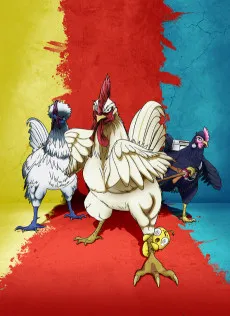
Rooster Fighter season 1 is three episodes of pure, unhinged absurdity — and it knows exactly what it is. A rooster named Keiji wanders through modern Japan obliterating building-sized demons with a single crow, and the show plays it dead straight, which makes it even funnier. SANZIGEN’s CG animation gives the kaiju battles surprising weight, and at just three episodes, it’s the perfect palate cleanser between heavier watches. If you’ve ever wanted to see a chicken save humanity, this is your moment.
Season Summary
This Rooster Fighter season 1 recap covers all three episodes of the Spring 2026 adaptation. Despite its short runtime, the show packs in monster fights, genuine heart, and an absurd premise it commits to with total sincerity.
Keiji Arrives — The Rooster Who Fights Demons (Episode 1)
The series opens on a quiet Japanese city going about its business — until a massive, grotesque demon materializes in the middle of downtown. Buildings crack, people flee, and the military scrambles with zero effect. In the chaos, a lone rooster struts through the rubble, utterly unbothered.
This is Keiji, and he is not a normal chicken. He sizes up the towering monster, plants his feet, and unleashes his devastating battle cry — Kokekokko! — which rips through the demon like a shockwave, obliterating it in a single blow. The city is saved. Nobody can quite process what just happened. Keiji walks away without looking back, the ultimate wandering hero who just happens to be poultry.
The premiere establishes the show’s tone perfectly: epic framing, dramatic camera angles, and a swelling orchestral score — all devoted to a rooster. The narrator treats Keiji’s exploits with the gravity of a historical war documentary, and the contrast is what makes the whole thing work.
The Stray and the Hen (Episodes 1–2)
Between battles, we see Keiji’s daily existence as a wanderer. He roams streets and alleys, scrounging for food and avoiding traffic. The show leans into the ronin archetype — Keiji is essentially a feathered Kenshin Himura, a drifter who fights evil and moves on.
Enter Elizabeth, a domestic hen who crosses Keiji’s path. Where Keiji is stoic and battle-hardened, Elizabeth is curious and sociable. She’s drawn to this mysterious rooster who clearly carries the weight of something on his small shoulders. Their dynamic adds a surprising layer of warmth to the comedy. Piyoko, a tiny chick, also tags along — serving as the emotional anchor that humanizes (chickenizes?) the cast.
We also meet human characters Keisuke and Morio, who witness Keiji’s battles and become reluctant believers. Keisuke in particular starts piecing together the pattern: wherever demons appear, this rooster shows up first. Their reactions ground the absurdity, giving the audience a proxy for the very reasonable question of why is a chicken doing this?
The Demon Swarm (Episodes 2–3)
The back half of the season escalates when multiple demons begin appearing in quick succession. These creatures seem to feed on human negativity — despair, anger, greed — growing larger the more suffering they absorb. Keiji faces increasingly dangerous opponents, and for the first time, we see him actually take hits.
Episode 3 delivers the season’s biggest set piece: a towering multi-headed demon that dwarfs anything Keiji has fought before. The monster shrugs off his initial crows, and the show milks the tension beautifully. Elizabeth and Piyoko are caught in the danger zone, raising the stakes beyond just property damage.
Major Spoiler — Season Finale
Keiji digs deep and unleashes a supercharged Kokekokko that levels the demon in a spectacular explosion of feathers and light. The effort clearly costs him — he collapses after the fight, battered and exhausted. Elizabeth rushes to his side. He recovers, naturally, because he's the greatest rooster alive, but it's the first crack in his invincible exterior. The season ends with Keiji walking toward the horizon as the narrator hints at even greater threats gathering beyond the city.The finale leaves the door wide open for more, establishing that whatever is spawning these demons is far from finished — and neither is Keiji.
Highlights & Must-See Moments
- Episode 1: Keiji’s First Battle — The reveal that this random rooster is actually an unstoppable demon slayer is comedy gold, elevated by the show’s refusal to wink at the camera.
- Episode 1: The Narrator’s Introduction — Delivered with the solemnity of a nature documentary about apex predators, except the predator weighs four pounds and has a wattle.
- Episode 2: Elizabeth Meets Keiji — A genuinely sweet scene where Elizabeth tries to share food with a rooster who only knows war. The comedy-drama balance is pitch perfect.
- Episode 3: The Multi-Headed Demon Fight — SANZIGEN’s CG shines here, with dynamic camera work swooping around a massive kaiju battle starring a chicken. It shouldn’t work this well, but it absolutely does.
- Episode 3: Keiji’s Collapse — The first moment the show lets you feel something other than laughter. A rooster lying in rubble shouldn’t be emotional, and yet.
Our Take
Rooster Fighter works because it commits. Lesser adaptations of absurd premises hedge their bets with self-aware humor or parody framing, but this show plays everything at face value. Keiji gets the same heroic treatment as Guts from Berserk or Saitama from One Punch Man, and the comedy emerges naturally from that straight-faced sincerity. It’s the same energy that made One Punch Man’s first season a phenomenon — take an overpowered protagonist, strip away the brooding, and let the absurdity speak for itself.
SANZIGEN’s 3DCG is a good fit for the kaiju battles, giving the demons real mass and presence. The character animation for the chickens can feel stiff in quieter moments, but honestly, that slightly uncanny quality adds to the charm. At three episodes, the season is more of a proof of concept than a full narrative, but it nails the tone and leaves you wanting the full-course meal. Rooster Fighter season 1 summary: short, absurd, and surprisingly effective.
Rating: 7.0 / 10 — A bite-sized blast of committed absurdity that earns its laughs and its surprisingly emotional finale.
Where to Watch & Read
- Read the manga Rooster Fighter by Shu Sakuratani — Shop on Amazon
- The manga is published in English by VIZ Media (8+ volumes available)
- Rooster Fighter Keiji figure by Banpresto — Shop on Amazon