Edited by Hong-Bin Yoon · Founder, zzinDev LLC
Published
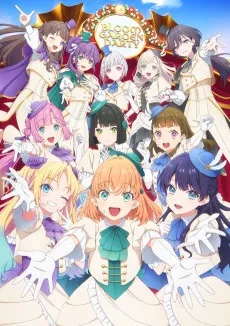
Love Live! Hasunosora Jogakuin School Idol Club: Bloom Garden Party Season 1 Recap
Spoiler Alert: This recap contains detailed plot summaries and may reveal key story events.
TL;DR
Love Live! Hasunosora Jogakuin School Idol Club: Bloom Garden Party is the long-promised culmination of the franchise’s “someday, surely” arc — the spring festival where the nine current members and the graduating 103rd-year third-years finally honor the pact made with the alumni a year ago. It’s quieter and weightier than past Hasunosora installments, leaning hard into bittersweet farewells, the pressure of bridging “before” and “after,” and the simple terror of an ending you’ve spent a year willing into existence. Sublimation gives the production a lush, garden-bright palette that makes every reaction shot land twice as hard. If you’ve followed Kaho and the club since the beginning, this is essential viewing; if you haven’t, start with the prior season — Bloom Garden Party is built almost entirely on payoff. Worth it.
Season Summary
The Love Live! Hasunosora Jogakuin School Idol Club: Bloom Garden Party season 1 recap is fundamentally a story about completing a circle. Where past seasons asked “can we even bloom?” this one asks the harder question: what happens to a promise once you’ve actually kept it? The answer Hasunosora gives is that keeping a promise is not a single moment — it’s an entire spring of small goodbyes, last rehearsals, and choices about what kind of club you leave behind.
The season opens not with celebration but with a strange, pre-emptive grief. Kaho Hinoshita and the rest of the club have spent a year chasing the Bloom Garden Party — and now, with the date finally on the calendar, they have to live with the fact that it’s also a finish line for Sayaka, Kozue, and Ceras. The early episodes establish that quiet contradiction: the dream is here, and so is its ending.
Arc 1: The Promise Returns (Episodes 1–3)
The season opens on a wintry Hasunosora campus where the Bloom Garden Party is suddenly weeks away rather than months. Kaho, now visibly more confident than the Kaho of a year ago, leads the first all-club planning meeting and is immediately confronted by how much there is left to do — the program, the new song commissions, the costumes, the alumnae visits, and the question of what each member’s “final piece” of the year should look like.
The opening arc smartly resists going straight to spectacle. Instead it spends time on logistics and on small character vignettes: Sayaka and Kozue choosing what to leave to their underclassmen, Rurino sorting through her sketchbook of one-year-ago goals, Izumi and Hime negotiating who will MC the event. There’s a recurring image — the empty stage in the school garden being measured and re-measured — that doubles as a quiet thesis statement. The space exists. They have to choose what to put on it.
The arc closes with a meeting between the current club and the 102nd-year graduates, who return to campus to formally hand over the promise. It’s not a ceremony so much as a conversation, and the season’s emotional thermostat resets here: this is going to be a tender, low-key season punctuated by a few enormous emotional explosions, not a contest-driven season of training montages.
Arc 2: Last Days as Students (Episodes 4–6)
The middle arc belongs to the third-years. Sayaka Murano, Kozue Otomune, and Ceras Yanagida Lilienfeld each get a focus episode that’s structured almost like a short film: a day-in-the-life that’s secretly a goodbye to a part of their school identity.
Sayaka’s episode finds her revisiting every classroom, club room, and stairwell where she rehearsed alone before the club existed, ending with a frank conversation with Kaho about what it actually felt like to be the lonely “first” idol of Hasunosora. Kozue’s episode is gentler and more domestic, threading her through the cafés and walks she shares with Rurino and Kaho, her cool detachment cracking just a little as she admits, almost in passing, that she does not want this version of herself to end. Ceras’s episode pivots international — a video call home, a conversation in a mix of Japanese and German with her family about what she’s chosen to make of her time abroad — and lands on the single most quietly devastating line of the season: that she wanted Hasunosora to be a place she missed, and now it is.
Rising stakes come not from external conflict but from the calendar. Each scene of laundry being folded, of a uniform being tried on for the last time, raises the temperature of what the Bloom Garden Party is going to mean. The season also seeds two complications: Hime’s quiet doubt about whether she’s ready to lead the club next year, and a logistical crisis with the garden venue that threatens to push the event indoors.
Arc 3: Rehearsals and Reckonings (Episodes 7–9)
The third arc is the season’s working heart. Now the songs exist, the staging exists, and the club is in the brutal late-stage rehearsal phase where everything that can go wrong, does. Choreography that worked in October falls apart in March because the third-years are leaner, more tired, more sentimental than they were. New unit songs — including a long-rumored Kaho/Hime duet and a full third-year trio number — get rebuilt from scratch.
This arc gives Kosuzu Kachimachi the spotlight she’s been quietly earning. Her unflappable optimism stops being a quirk and starts being load-bearing: she’s the one who can admit out loud that this is going to hurt, and the club gets to lean on her honesty. Izumi, meanwhile, takes over the technical direction of the show with surprising authority — a reminder that she is, by temperament, the club’s only true producer.
Major Spoiler — mid-season turning point
The arc's emotional climax arrives when Kaho, exhausted and frightened of "messing up the gift," has a small breakdown during a night rehearsal and is talked back from the edge not by a third-year but by Rurino — the friend who started the journey with her. The scene reframes the whole season: the Bloom Garden Party isn't a thing the seniors are giving the underclassmen, it's a thing the whole club is giving each other.Arc 4: The Bloom Garden Party (Episodes 10–11)
The event itself is the season’s spectacle peak. Sublimation pulls out every visual stop they’ve been saving — petal-light particle work, a long unbroken camera move through the garden audience, costume shots that feel like fashion plates. The setlist is staged as a journey through the club’s year: solo numbers first, then units, then the third-year trio, then the full nine-member finale.
The party works as a structural mirror of the season’s opening: where Episode 1 measured the empty stage, Episode 10 fills it. Each member gets a moment of camera-acknowledged catharsis, and the show is generous about giving even minor recurring characters — classmates, the homeroom teacher, the alumnae watching from a side balcony — reaction beats that feel earned rather than obligatory.
What’s notable is how restrained the climactic finale number is. Rather than a screaming hyper-pop crescendo, the season ends its main performance on a slower, almost hymn-like song built around the phrase “someday, surely.” It’s not the loudest possible ending. It’s the right one.
Arc 5: Graduation and the Next Promise (Episode 12)
The finale isn’t the party — it’s the next morning, and the morning after that. The closing episode follows the club through the actual graduation ceremony, the empty club room afterward, and the small private goodbye the nine of them hold without an audience.
The episode resists a tidy reset. Kaho doesn’t suddenly become the club’s leader; Hime doesn’t suddenly stop doubting; the third-years don’t make grand speeches. Instead, the season ends on a new promise — quieter than the original, scribbled into the same notebook the alumnae used a year ago — and on Kaho walking through the now-empty garden stage with the next first-years already starting to gather at the gate. Bloom Garden Party ends with the Hasunosora School Idol Club continuing, which is both the most predictable choice and the most emotionally honest one.
Season Timeline
| Episodes | Arc | Key Events |
|---|---|---|
| 1–3 | The Promise Returns | Planning begins; alumnae formally hand over the promise; the season’s tone is set as bittersweet rather than triumphant. |
| 4–6 | Last Days as Students | Focus episodes for Sayaka, Kozue, and Ceras; Hime’s leadership doubts surface; venue logistics nearly collapse. |
| 7–9 | Rehearsals and Reckonings | Unit songs rebuilt; Kosuzu and Izumi step up; Kaho’s late-night breakdown is defused by Rurino. |
| 10–11 | The Bloom Garden Party | The full event; solo, unit, and trio performances; the nine-member finale on “someday, surely.” |
| 12 | Graduation and the Next Promise | Graduation ceremony; private club goodbye; a new promise written into the same notebook. |
Standout Sequences
Episode 4: Sayaka’s Empty Classroom
Sayaka returns alone to the music room where she practiced before the club existed and sings the chorus of her debut song without backing track or accompaniment. The episode strips away all of Hasunosora’s lush production polish for almost three full minutes. It is the season’s quietest scene and one of its most affecting — a reminder that Sayaka was an idol before she had anyone to be one with.
Episode 6: Ceras’s Video Call
A long, almost real-time scene of Ceras speaking with her family in a code-switched mix of Japanese and German. The animation is restrained, mostly close-ups on her face and hands, but the writing carries it. Her admission that she wanted Hasunosora to be a place she missed lands so cleanly that the rest of the episode barely needs to do anything else.
Episode 9: Rurino on the Rehearsal Floor
The mid-season emotional turning point. Kaho is unraveling under the weight of the gift she’s trying to give the third-years, and Rurino — the one person who’s been with her literally since day one — sits her down on the rehearsal floor and reminds her that they are, all nine of them, giving each other this. It reframes the entire back half of the season.
Episode 10: The Long Take Through the Garden
Sublimation’s flex episode. A nearly unbroken camera move pushes from the back of the garden audience, past the alumnae on the balcony, around the side of the stage, and lands on the third-year trio mid-song. It’s the visual high point of the Love Live! Hasunosora Jogakuin School Idol Club: Bloom Garden Party season summary — pure spectacle delivered with restraint.
Episode 12: The Empty Garden
A wordless coda set the morning after graduation. Kaho walks the stage alone, the petals from the previous day still on the ground. The new first-years gather at the gate in the distance. No dialogue, no song, just ambient sound. It’s a small scene; it does everything it needs to.
Character Development This Season
Kaho Hinoshita
Kaho starts the season already transformed from the anxious first-year of the franchise’s debut, but she is not yet a leader — and she knows it. The early episodes show her trying on the role of “the one keeping the promise” and finding it heavier than she expected. Her perfectionism, played for warmth in earlier installments, here gets pushed to a genuine breaking point.
By the end of the season she’s something new: a Kaho who has accepted that she is going to be the club’s center next year, but who has also stopped believing that being the center means carrying everything alone. The season closes with her writing the new promise herself, in her own handwriting, in the same notebook the alumnae used. It’s a small, deliberate gesture — and it’s the strongest character resolution the franchise has given her.
Sayaka Murano
Sayaka enters the season as the club’s de facto founder, the original idol of Hasunosora, and the person with the most to lose by leaving. Her arc isn’t about discovering anything new — it’s about choosing what to leave behind. She spends the season visibly working out which parts of her identity are “Sayaka the Hasunosora idol” and which parts are just Sayaka.
By the finale she’s made a peace with both. Her last conversation with Kaho — wordless, just a long look across the empty rehearsal room — is the season’s clearest passing of a torch. Sayaka does not graduate as a saint or a tragic figure. She graduates as a person who can leave because she trusts what she’s leaving behind.
Hime Anyoji
Hime is the season’s quiet surprise. She begins it as the club’s reliable second-year — capable, well-liked, broadly assumed to be the natural next leader — and spends much of the middle stretch privately convinced she isn’t ready. Her doubt isn’t dramatized as a meltdown; it’s threaded through small choices, deferrals, and a couple of conversations she doesn’t quite have.
The season doesn’t resolve her doubt by giving her a triumphant moment. It resolves it by showing her, in the finale, simply doing the work — running the post-graduation club meeting, taking notes, asking the new first-years their names. Her growth is the most adult on offer this season: she doesn’t stop being uncertain, she just stops letting uncertainty stop her.
Ceras Yanagida Lilienfeld
Ceras’s arc is the season’s most internal. As one of the graduating third-years, she is also navigating the additional question of what comes after Hasunosora geographically — does she stay in Japan, return to Germany, find a third path? The season is careful not to flatten this into a single decision.
What changes for her is subtler: she stops treating her time in Japan as a chapter and starts treating it as a home. The video call episode is the load-bearing moment of this transformation, but it’s reinforced by smaller beats — her insistence on being part of the cleanup crew after the party, her decision to attend the new first-years’ welcome rather than skip it. By the end she is not “leaving” Hasunosora so much as expanding what Hasunosora means.
Kosuzu Kachimachi
Kosuzu has the season’s most enjoyable arc to watch precisely because she resists the standard idol-anime growth template. She does not need to overcome shyness, doubt, or trauma. What she gains over the season is gravity — the recognition that her cheerfulness is a tool the rest of the club genuinely relies on, and the willingness to wield it deliberately instead of accidentally. By Episode 9 she’s the one calling the rehearsal breaks. By Episode 12 she’s the one cracking the joke at graduation that lets everyone finally cry.
Our Take
What’s striking about Love Live! Hasunosora Jogakuin School Idol Club: Bloom Garden Party is how willing it is to be a small show. The Hasunosora sub-franchise has always been the more introspective Love Live! branch — less arena spectacle, more music-room intimacy — and Bloom Garden Party leans all the way into that. Compared to the Sunshine!! finale’s storm-the-Tokyo-Dome energy or Superstar!!‘s contest grind, this season is closer to K-On!‘s graduation arc in spirit: a story about a small group of people who chose each other, ending the way small groups end. That’s a brave choice for a franchise of this size, and it pays off.
The season isn’t flawless. Hime’s arc occasionally feels under-served by the runtime, and the third arc’s mid-rehearsal crisis episodes blur together on a first watch. But the things this season does well — the third-year focus episodes, the long-take party sequence, the wordless final coda — are among the best work the broader Love Live! franchise has produced. As a finale to the 103rd-year story and as a bridge to whatever Hasunosora becomes next, it earns its place. Where the franchise might go from here is genuinely open: the new first-years at the gate are as much a creative reset as a narrative one.
Rating: 8.6 / 10 — the rare idol-anime finale that ends quieter than it began and is stronger for it.
Where to Watch & Read
- Watch on Hulu
- Watch on HiDive
- Watch on Netflix
- Love Live! Hasunosora Jogakuin School Idol Club Official Visual Book — Shop on Amazon
- Kaho Hinoshita 1/7 Scale Figure — Shop on Amazon
- Love Live! Hasunosora Jogakuin School Idol Club Best Album CD — Shop on Amazon