Edited by Hong-Bin Yoon · Founder, zzinDev LLC
Published
Legend of the Galactic Heroes Season 1 Recap
Spoiler Alert: This recap contains detailed plot summaries and may reveal key story events.
TL;DR
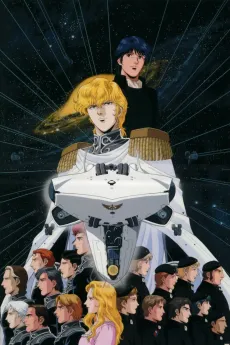
Legend of the Galactic Heroes is the War and Peace of anime — a sweeping space opera that spans politics, philosophy, and military strategy across 100 episodes of interstellar conflict. At its core, it’s the story of two brilliant men on opposite sides of an unwinnable war: Reinhard von Lohengramm, who would remake the galaxy by force, and Yang Wen-li, who’d rather be a historian but keeps winning battles for a democracy that doesn’t deserve him. If you want action set pieces, you’ll get them, but this is really a show about ideas — what makes governance legitimate, whether history is shaped by individuals or systems, and the terrible cost of ambition. This Legend of the Galactic Heroes season 1 recap covers the entire original OVA, and yes, every episode is worth your time.
Season Summary
This Legend of the Galactic Heroes season 1 summary covers the full arc of the original OVA — from the opening salvos at Astarte to the final, bittersweet resolution of a galactic war that consumed millions.
The Eternal War Breaks Open (Episodes 1–16)
The series opens with the Battle of Astarte, immediately establishing its two protagonists through contrast. Reinhard von Lohengramm, a young Imperial admiral with golden hair and burning ambition, annihilates a numerically superior Free Planets Alliance fleet through sheer tactical brilliance. On the other side, Yang Wen-li — disheveled, tea-drinking, and perpetually reluctant — salvages what remains of the Alliance force through an equally clever retreat.
We quickly learn what drives them. Reinhard’s beloved sister Annerose was taken as a concubine by the aging Kaiser, and Reinhard has sworn to seize the galaxy itself to free her. His childhood friend Siegfried Kircheis stands loyally at his side. Yang, meanwhile, only joined the military because it paid for school. He wanted to study history. Instead, he keeps making it.
Yang’s capture of the impregnable Iserlohn Fortress — using a cunning bluff rather than brute force — establishes him as Reinhard’s true rival. Meanwhile, the Alliance government, drunk on this success, launches a catastrophic invasion of Imperial territory. Yang warns against it. He’s ignored. The campaign collapses exactly as he predicted, with millions of Alliance soldiers starving and dying in a war of attrition engineered by Reinhard. This early stretch establishes the show’s thesis: brilliant commanders can win battles, but institutional rot loses wars.
The Lippstadt Rebellion & the Death of Innocence (Episodes 17–36)
With the Alliance reeling, the story pivots to internal Imperial politics. Reinhard deliberately provokes the old aristocracy into rebellion, knowing he can crush them and consolidate power. The Lippstadt Coalition — led by Duke Braunschweig and Marquis Littenheim — represents everything rotten about the Goldenbaum dynasty: entitled, incompetent, and casually cruel.
The civil war is decisive. Reinhard’s admirals — the “Iron Wall” Müller, the “Gale Wolf” Mittermeyer, and the “Iron Shield” Bittenfeld among others — systematically dismantle the noble forces. The high nobles resort to atrocities, including the nuclear bombardment of Westerland, which Reinhard’s cold-blooded strategist Paul von Oberstein allows to happen as propaganda.
Major Spoiler — The Death of Kircheis
This arc climaxes with the assassination of Siegfried Kircheis, who dies protecting Reinhard from a vengeful noble. It is the emotional turning point of the entire series. Kircheis was Reinhard's conscience, the one person who could temper his ambition with compassion. His death leaves a wound that never heals — Reinhard spends the rest of the series reaching for a friend who is no longer there, and every advisor who follows exists in Kircheis's shadow.On the Alliance side, Yang deals with his own political crisis. A military coup attempts to overthrow the civilian government, and Yang — despite his personal sympathy for the coup’s frustrations — puts it down, because he believes a democracy that allows military takeovers isn’t a democracy at all. It’s one of the show’s defining moral arguments: Yang fights for a system, not a government.
The Fall of Democracy (Episodes 37–54)
Reinhard, now the undisputed power in the Empire, turns his attention to the Alliance. What follows is a masterful campaign that exposes every weakness in the FPA’s political structure. The Alliance government, now led by the scheming Job Trunicht, is more interested in self-preservation than national defense.
The Battle of Vermillion is the centerpiece — a direct confrontation between Reinhard and Yang that represents the closest the series comes to resolving its central conflict by force. Yang, commanding an inferior fleet, systematically outmaneuvers Reinhard and comes within minutes of destroying his flagship.
Major Spoiler — The Surrender
Yang is on the verge of killing Reinhard when the Alliance government surrenders behind his back, ordering a ceasefire to save their own positions. Yang obeys — because a soldier who ignores civilian authority is no different from a dictator. It's the most agonizing moment in the series: democracy destroys itself not through weakness, but through the cowardice of its leaders. Yang wins the battle and loses the war because he believes in the system more than the system believes in itself.The aftermath sees the Alliance reduced to a vassal state. Yang is arrested, released, and left in political limbo — too dangerous to employ, too popular to eliminate. Reinhard establishes the Neue Reich, and for a moment, benevolent autocracy seems to be working. Hildegard von Mariendorf emerges as Reinhard’s most trusted political advisor, bringing a warmth and pragmatism that partially fills the void Kircheis left.
Yang’s Last Stand & the Rise of Julian (Episodes 55–82)
The second half of the series follows Yang and a small band of loyalists — including the resourceful Dusty Attenborough and Yang’s adopted ward Julian Mintz — as they establish an independent enclave at Iserlohn Fortress. Yang doesn’t want to overthrow Reinhard; he wants to preserve the idea of democratic governance until the galaxy is ready for it again.
Meanwhile, the Earth-based Terraist cult emerges as a shadowy third faction, manipulating events from behind the scenes. Their fanaticism provides a stark contrast to both Reinhard’s principled authoritarianism and Yang’s principled democracy.
Major Spoiler — Yang's Death
Yang Wen-li is assassinated by Terraist agents during what should have been a peace negotiation. It is quiet, sudden, and devastating — no grand battlefield death for the man who never wanted to be a soldier. The show loses its moral center, and Julian Mintz must inherit not just Yang's fleet but his philosophical mission. Yang dies believing democracy is worth preserving even when it's imperfect, and Julian carries that conviction forward with less experience but equal determination.Julian’s transformation from earnest protégé to capable leader is one of the series’ most rewarding character arcs. He lacks Yang’s genius but compensates with sincerity, adaptability, and the loyalty of Yang’s surviving companions — Attenborough’s tactical skill, Frederica Greenhill’s steady resolve, and the memory of what Yang fought for.
The Final Reckoning (Episodes 83–100)
The final stretch brings everything to a head. Julian’s Iserlohn Republic negotiates, fights, and maneuvers for survival against Reinhard’s overwhelming military power. The Battle of the Corridor and the Battle of Shiva are spectacular in scale, but the real drama is political — Julian fighting not to defeat Reinhard, but to convince him that autocracy needs a democratic counterweight.
Major Spoiler — Reinhard's Fate
Reinhard von Lohengramm, conqueror of the galaxy, is defeated not by any admiral but by illness. As his health deteriorates, he is forced to confront mortality and legacy — what happens to his empire after him? In his final days, he grants Julian's Iserlohn Republic autonomy, acknowledging that even a perfect autocrat cannot guarantee his successors will be equally just. Reinhard dies young, having reshaped the galaxy but never quite filled the emptiness left by Kircheis. His son, an infant, inherits an empire that will need the democratic safeguards Reinhard himself never fully trusted.The series ends not with triumph but with fragile hope — a negotiated peace between imperfect systems, carried forward by the next generation. It’s a conclusion that honors every character’s sacrifice without pretending any of it was simple.
Highlights & Must-See Moments
- Episode 1–2: The Battle of Astarte — The series’ opening gambit introduces both protagonists through action, establishing the show’s twin-perspective structure with immediate confidence.
- Episode 15: The Capture of Iserlohn — Yang takes an “impregnable” fortress through deception rather than firepower, defining his character in a single operation.
- Episode 26: Kircheis’s Death — The emotional axis on which the entire series turns. Reinhard’s grief reshapes every decision he makes for the remaining 74 episodes.
- Episode 49–50: The Battle of Vermillion — The ultimate Yang vs. Reinhard confrontation, where tactical genius meets institutional failure in the most heartbreaking way possible.
- Episode 82: Yang’s Assassination — Proof that this series will never take the easy way out. The greatest strategist in the galaxy is killed not in battle but by a fanatic with a weapon.
Our Take
Legend of the Galactic Heroes is often called the greatest anime ever made, and while that’s subjective, the argument is strong. What sets it apart from other space operas — even excellent ones like Gundam or Macross — is its refusal to simplify. There are no villains here, only people with incompatible visions of how civilization should work. Reinhard’s Empire delivers justice and efficiency; Yang’s democracy delivers freedom and accountability. Neither is sufficient alone, and the series is honest enough to say so.
The 1988 production values are dated, and the pacing demands patience — this is a show where characters debate Clausewitz and Machiavelli between fleet battles. But that’s precisely what makes it timeless. In an era of 12-episode seasons optimized for binge consumption, LOGH’s commitment to complexity feels almost radical. It trusts its audience to care about political philosophy as much as laser cannons, and that trust is rewarded with one of the most emotionally and intellectually satisfying narratives in any medium.
Rating: 9.5 / 10 — A monumental achievement in animated storytelling that rewards every minute of its epic runtime.
Where to Watch & Read
- Watch on HiDive (complete OVA series)
- Read the light novel series Legend of the Galactic Heroes by Yoshiki Tanaka on Amazon (published in English by Haikasoru/Viz Media)
- Collectible ship models and art books from the franchise are available on Amazon and import shops