Edited by Hong-Bin Yoon · Founder, zzinDev LLC
Published
Cowboy Bebop Season 1 Recap
Spoiler Alert: This recap contains detailed plot summaries and may reveal key story events.
TL;DR
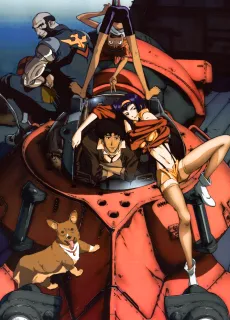
Cowboy Bebop is the gold standard of anime — a jazz-infused space western following a crew of broke bounty hunters drifting through the solar system in 2071. Across 26 episodes, the show weaves standalone bounty-of-the-week adventures with a devastating throughline about Spike Spiegel’s past catching up to him. The vibe is effortlessly cool: bebop jazz, Hong Kong action cinema, and noir melancholy blended into something that’s never been replicated. If you haven’t seen it, this Cowboy Bebop season 1 recap will show you what you’ve been missing — but honestly, just go watch it.
Season Summary
Cowboy Bebop’s genius is in its structure. Most episodes are self-contained stories about the Bebop crew chasing bounties across the solar system, but five key episodes — the show’s “Spike episodes” — form a serialized narrative about Spike’s ties to the Red Dragon crime syndicate. This Cowboy Bebop season 1 summary covers both the standalone arcs and the overarching story that ties everything together.
The Crew Assembles (Episodes 1–9)
The series opens with “Asteroid Blues,” dropping us into the partnership of Spike Spiegel and Jet Black with zero hand-holding. They’re bounty hunters (called “cowboys”) operating from their ship the Bebop, perpetually broke and hungry. The first episode establishes the show’s entire emotional register — a drug deal gone wrong on Tijuana, a doomed love story, and Spike walking away from an explosion without looking back.
These early episodes introduce the crew one by one through standalone bounties. Faye Valentine appears in “Honky Tonk Women” (Episode 3) as a con artist and gambler drowning in debt who keeps crossing paths with the Bebop crew. She’s abrasive, selfish, and running from a past she literally can’t remember — she was cryogenically frozen for 54 years and woke up with total amnesia.
Episode 5, “Ballad of Fallen Angels,” is the first major Spike episode and the series’ first gut-punch. Spike’s former partner in the Red Dragon syndicate, Vicious, resurfaces. We learn Spike once left the syndicate — and a woman named Julia — behind. Their confrontation in a cathedral ends with Spike crashing through a stained-glass window, and as he falls, we get fragmented flashbacks of Julia, roses, and violence. He survives, barely. This episode signals that beneath the cool exterior, Spike is a dead man walking.
Ein, a hyper-intelligent Welsh Corgi (a “data dog” created through illegal experiments), joins the crew in Episode 2 with no fanfare — Spike just ends up stuck with him. By Episode 9, the core quartet is nearly complete.
Cowboys and Outcasts (Episodes 10–17)
The middle stretch of Cowboy Bebop is where the show’s episodic brilliance shines. Each bounty is essentially a short film in a different genre: horror (“Toys in the Attic”), blaxploitation (“Mushroom Samba”), environmental thriller (“Ganymede Elegy”), and psychedelic horror (“Brain Scratch”).
Edward Wong Hau Pepelu Tivrusky IV — Ed — joins in “Jamming with Edward” (Episode 9), completing the crew. Ed is a barefoot, eccentric child hacker from Earth who names herself, talks in third person, and treats the Bebop’s computer systems like a playground. She brings a manic energy that balances the show’s melancholy.
“Ganymede Elegy” (Episode 10) gives Jet his defining backstory episode. We learn he was an ISSP cop who quit the force after being betrayed and shot by his own partner. He returns to Ganymede to find his ex-girlfriend Alisa has moved on. Jet’s arc is about a man who clings to the past — he still wears the pocket watch Alisa gave him, stopped at the moment she left.
“Jupiter Jazz” (Episodes 12–13) is the show’s first two-parter and a critical turning point. Faye runs off with the crew’s money. Spike chases a lead on Julia to a frozen moon and instead encounters Gren, a former soldier who knew Vicious during the Titan War. Through Gren’s tragic story — Vicious betrayed him, and he’s now dying — we see another layer of how Vicious destroys everyone around him.
Major Spoiler
Gren dies at the end of the two-parter, choosing to drift into space toward Titan rather than seek treatment. It’s the show’s clearest statement yet: the past kills.These episodes also deepen Faye’s arc. Beneath the gambling and grifting, she’s terrified of attachment. She keeps leaving and coming back to the Bebop because it’s the closest thing to a home she has — but admitting that would mean she has something to lose.
Ghosts of the Past (Episodes 18–22)
The back third escalates the personal stakes. “Speak Like a Child” (Episode 18) is a quiet masterpiece — Jet and Spike spend the entire episode tracking down an ancient Betamax player to watch a mysterious tape addressed to Faye.
Major Spoiler
The tape is a message from teenage Faye to her future self, recorded before her accident and cryogenic freeze. She doesn’t remember the girl on the screen. It’s the only glimpse of who she was before she lost everything, and Faye watches it in stunned silence.“Wild Horses” and “Pierrot Le Fou” showcase the show’s range. “Pierrot Le Fou” (Episode 20) is genuinely terrifying — Spike stumbles into a fight with Tongpu, an indestructible, psychotic assassin created by a government experiment. It’s the only time Spike is outmatched so badly he has to run for his life. The episode plays like a horror film, complete with an abandoned amusement park showdown.
“Brain Scratch” (Episode 23) tackles a digital cult leader convincing people to upload their consciousness to the internet. Ed gets her biggest spotlight here, hacking through the cult’s digital fortress. But even this standalone story reinforces the theme: people desperately seeking escape from reality.
Hard Luck Woman & The Farewell (Episodes 24–26)
“Hard Luck Woman” (Episode 24) is the quiet heartbreak before the storm. Faye finally tracks down her childhood home on Earth — and finds nothing. The house is gone. The people are gone. Everything she was before the freeze is erased.
In the same episode, Ed discovers her father is alive on Earth — the eccentric cartographer Appledelhi. She makes a choice: she leaves the Bebop, taking Ein with her. There’s no dramatic farewell. She draws a smiley face on the deck in chalk, and she’s gone. Spike and Jet sit down to eat the hard-boiled eggs she left behind. They eat in silence. It’s devastating.
“The Real Folk Blues” (Episodes 25–26) brings everything to a head. The Red Dragon syndicate’s elders move to eliminate Vicious after his attempted coup — but Vicious strikes first, massacring the leadership and seizing control. Now in power, he sends assassins after both Spike and Julia.
Julia finally appears in the present timeline. She and Spike reunite, and for one brief moment, there’s a chance they could run away together.
Major Spoiler
Julia is killed by syndicate gunmen on a rooftop. Her last words to Spike: “It’s all a dream.” The one thing tying Spike to life — the possibility of Julia — is gone.Spike returns to the Bebop one last time. He tells Jet a story about a man who wasn’t sure if he was alive or dreaming. Then he tells Faye — who begs him not to go — that he’s going “to find out if I’m really alive.”
Major Spoiler
Spike storms the Red Dragon headquarters alone, fights his way to Vicious in a sequence that mirrors their entire history, and they strike each other down simultaneously. In the final scene, Spike descends the stairs, points a finger gun at the surviving syndicate members, whispers “Bang,” and collapses. The screen cuts to a single star fading in the sky — and a title card reads: “You’re gonna carry that weight.”Highlights & Must-See Moments
- Episode 5: “Ballad of Fallen Angels” — The cathedral fight and stained-glass fall is the moment Cowboy Bebop announces it’s more than just a cool action show. Yoko Kanno’s “Green Bird” playing over Spike’s descent is unforgettable.
- Episode 12–13: “Jupiter Jazz” — Gren’s saxophone, the frozen landscape, and Spike alone in the snow searching for a woman who isn’t there. The show’s loneliness distilled into two episodes.
- Episode 18: “Speak Like a Child” — The Betamax tape reveal recontextualizes everything about Faye. A masterclass in showing rather than telling.
- Episode 20: “Pierrot Le Fou” — Pure horror-action. The amusement park fight is the most visually inventive sequence in the series, and Tongpu is the scariest one-off villain in anime.
- Episode 26: “The Real Folk Blues Part 2” — One of the greatest anime finales ever produced. Every frame of the last ten minutes is burned into the memory of anyone who’s seen it.
Our Take
Cowboy Bebop isn’t just a great anime — it’s one of the great works of serialized fiction, full stop. What director Shinichiro Watanabe and composer Yoko Kanno achieved in 1998 remains untouched: a show that’s simultaneously a love letter to jazz, Bruce Lee films, noir fiction, and classic sci-fi, yet feels entirely its own. Where most anime of its era leaned into exposition and power scaling, Bebop trusted its audience to read between the lines. It shows you everything and explains almost nothing.
The show’s closest spiritual relatives — Samurai Champloo (Watanabe’s own hip-hop remix), Trigun, and to some extent Firefly — all owe it a debt, but none capture its specific alchemy of cool and sadness. The 2021 live-action Netflix adaptation proved that the original’s magic can’t be reverse-engineered. What makes this Cowboy Bebop season summary so bittersweet to write is knowing there’s only one season. Twenty-six episodes was all it needed. You’re gonna carry that weight.
Rating: 9.5 / 10 — A stone-cold masterpiece that earns every ounce of its reputation.
Where to Watch & Read
- Watch on Netflix
- Watch on Hulu
- Cowboy Bebop Blu-ray Complete Series — Shop on Amazon
- Cowboy Bebop: The Jazz Messengers by Bones — Shop on Amazon
- Spike Spiegel Pop! Vinyl Figure — Shop on Amazon