Edited by Hong-Bin Yoon · Founder, zzinDev LLC
Published
Journal with Witch Season 1 Recap
Spoiler Alert: This recap contains detailed plot summaries and may reveal key story events.
TL;DR
Journal with Witch (also known as Majo to Yajuu… actually, let me correct that — this is Majo no Nikki, the Winter 2026 drama) tells the quiet, devastating story of two people bound together by loss. Reclusive novelist Makio Koudai suddenly becomes guardian to her teenage niece Asa after a family tragedy, and the series traces their slow, painful, beautiful journey toward becoming a real family. If you loved Usagi Drop or Sweetness & Lightning, this is that same found-family warmth — but with sharper edges and deeper grief. Studio Shuka delivers one of Winter 2026’s most emotionally resonant sleeper hits.
Season Summary
This Journal with Witch season 1 recap covers the full arc of the series’ 13-episode run — a compact, deliberately paced drama that earns every one of its emotional beats.
The Arrival (Episodes 1–3)
The series opens in the aftermath of a car accident that killed Makio’s younger sister and brother-in-law. Makio Koudai — a successful but deeply introverted novelist who lives alone and communicates with her editor Hattori almost exclusively by phone — is the only viable guardian for fifteen-year-old Asa Takumi.
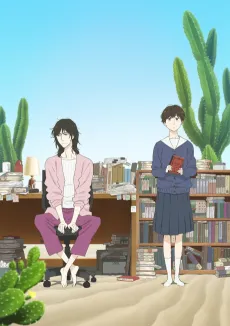
Their first meeting as guardian and ward is painfully awkward. Makio’s apartment is a cluttered fortress of manuscripts and books, clearly designed for one person. Asa arrives with a single suitcase and a wall of emotional armor. Neither of them cries. Neither of them knows what to say. The early episodes are defined by silence — meals eaten without conversation, doors kept closed, two people grieving in parallel rather than together.
Makio’s attempts at parenting are clumsy and well-meaning. She buys groceries she doesn’t know how to cook, sets up a futon in her study, and tries to maintain Asa’s school enrollment — all while missing her manuscript deadlines. Hattori, her long-suffering editor, becomes an unlikely lifeline, gently pushing Makio to actually talk to the girl living in her apartment.
Finding a Rhythm (Episodes 4–7)
The middle stretch of the season is where Journal with Witch finds its groove. Small domestic moments become the architecture of connection — Asa discovers Makio’s novels and starts reading them quietly at night. Makio learns that Asa is a talented artist who sketches constantly in a journal she never shows anyone.
The “witch” of the title begins to take shape here. Makio’s novels feature a recurring witch character — a solitary woman who observes the world from a distance and records everything in a journal. Asa starts calling Makio “the witch” half-mockingly, and the nickname sticks. It becomes a term of cautious affection, a way to acknowledge Makio’s eccentricities without confrontation.
Ikki Juno, a fellow novelist and Makio’s only real friend, provides crucial comic relief and outside perspective. His visits to the apartment break the tension and show Asa a version of Makio that’s warmer and more human than the stiff guardian she sees daily. Meanwhile, Asa’s school life introduces Misaki Oki, a classmate who becomes her first new friend since the move — and a window into the normal teenage life Asa is trying to hold onto.
Episode 6 marks a turning point when Asa has a breakdown at school after a classmate casually mentions their own parents. She calls Makio instead of the school counselor, and Makio — who has never comforted anyone in her life — drops everything and comes. She doesn’t say the right things. She doesn’t hug Asa or offer wisdom. She just sits next to her on a bench outside the school and waits. It’s one of the most quietly powerful scenes of the season.
Cracks and Confrontations (Episodes 8–10)
The honeymoon of their tentative peace breaks apart in the season’s most emotionally intense stretch. Asa discovers that Makio and her sister had been estranged for years before the accident — they hadn’t spoken in over three years. The revelation lands like a bomb. Asa feels betrayed: why should this woman who couldn’t even maintain a relationship with her own sister be trusted to raise her?
Major Spoiler — The Letter
Episode 9 reveals that Makio's estrangement from her sister stemmed from Makio's novel *The Distant Garden*, which fictionalized painful details of their shared childhood. Her sister felt exposed and betrayed, and their relationship never recovered. Makio has carried this guilt silently — it's the real reason she accepted guardianship without hesitation. Not just obligation, but atonement.But Makio doesn’t fight it or beg Asa to return. Instead, she does the only thing she knows how to do: she writes. She begins a new story — not for publication, but for Asa.
The Journal (Episodes 11–13)
The final arc brings the season’s themes into sharp, beautiful focus. Makio’s new manuscript is essentially a letter to Asa — a fictionalized account of a witch who finds an abandoned fox kit and must learn to care for another living creature for the first time. It’s transparent, almost embarrassingly so, but it’s honest in a way Makio has never managed to be in person.
Episode 12 features the emotional climax — Asa returns to the apartment, and the two finally have the conversation they’ve been avoiding for the entire series. They talk about Asa’s parents, about Makio’s sister, about guilt, about fear. It’s messy and tearful and imperfect, exactly as it should be.
The finale doesn’t wrap everything up neatly. Makio is still awkward. Asa still has hard days. But the final scene — Asa sketching at the kitchen table while Makio writes at her desk in the next room, both doors open — says everything about where they’ve arrived. Two people creating side by side. The witch has let someone into the tower.
Highlights & Must-See Moments
- Episode 1: The Silent Dinner — Makio and Asa’s first meal together, where neither speaks for a full three minutes of screen time. The sound design carries the entire scene — chopsticks, the clock, traffic outside. Masterful restraint from Studio Shuka.
- Episode 6: The Bench Scene — Makio sits with Asa outside school after her breakdown. No grand speech, no tears from Makio — just presence. This is the moment their relationship truly begins.
- Episode 9: The Distant Garden — The reveal of why Makio and her sister stopped speaking. The flashback sequence is devastating, and it recontextualizes everything we’ve seen from Makio.
- Episode 12: The Conversation — The full, unguarded talk between Makio and Asa. After eleven episodes of emotional restraint, the dam breaks. Have tissues ready.
- Episode 13: Open Doors — The final image of the season. Simple, quiet, perfect. A visual thesis statement for what the whole series has been about.
Our Take
Journal with Witch is a masterclass in slow-burn emotional storytelling. In a season packed with flashy isekai and action spectacles, this series made silence and stillness feel radical. Studio Shuka’s adaptation understands that grief doesn’t resolve in dramatic outbursts — it lives in the spaces between people, in the things left unsaid, in doors kept closed.
The series draws inevitable comparisons to Usagi Drop and March Comes in Like a Lion, and it holds up well against both. Where it distinguishes itself is in its unflinching portrayal of adult emotional incompetence — Makio isn’t a cool, capable guardian learning to soften. She’s a deeply flawed person who has no idea what she’s doing, and the show never lets her off the hook for that. The “witch” metaphor is wielded with surprising elegance, evolving from a joke into the thematic spine of the entire season. With an 87/100 score, this Journal with Witch season 1 summary can confirm: the acclaim is deserved.
Rating: 8.7 / 10 — A quiet, devastating gem that rewards patient viewers with one of the most authentic portrayals of found family in recent anime.
Where to Watch & Read
- Read the manga Journal with Witch — Shop on Amazon
- The original soundtrack by Studio Shuka’s music team is worth seeking out — the piano-driven score perfectly complements the series’ emotional tone
- Art book and setting materials collection available on Amazon (Japanese import)