Edited by Hong-Bin Yoon · Founder, zzinDev LLC
Published
Hyakushou Kizoku 3rd Season OVA Season 1 Recap
Spoiler Alert: This recap contains detailed plot summaries and may reveal key story events.
TL;DR
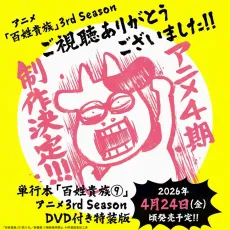
Hyakushou Kizoku 3rd Season OVA is a two-episode bundle packaged with the ninth tankoubon volume of Hiromu Arakawa’s autobiographical manga, and it continues exactly what made the TV runs so beloved: punchy, unsentimental farm-life comedy narrated by a cow-headed version of the Fullmetal Alchemist mangaka herself. The format is tight — two short OVAs, no cliffhangers, no filler — but each one is dense with the dry Hokkaido humor, agricultural trivia, and “you-will-not-believe-this-actually-happened” anecdotes that define the franchise. If you enjoyed the TV series or Silver Spoon, this is essential viewing. Newcomers can jump in cold, because every vignette is self-contained.
Season Summary
The 3rd Season OVA exists outside the regular television broadcast cycle — it’s a manga-volume bonus, a gift to readers who buy the physical ninth volume. That context shapes everything about the release: there’s no grand narrative arc, no seasonal structure, just two carefully curated bundles of Arakawa’s best recent essays animated by Pie in the sky, the studio that’s handled the property since its debut. Rather than organize by traditional story arcs, this season summary walks through each OVA as a self-contained collection of vignettes.
OVA 1: The Bovine Chronicles (Episode 1)
The first OVA opens, as nearly every Hyakushou Kizoku chapter does, with the cow-headed Arakawa avatar addressing the camera directly and warning that what the viewer is about to see is real, was not exaggerated for comedic effect, and in fact had to be toned down for publication. This framing device remains one of the most effective comedy tools in the series — the deadpan disclaimer primes the audience for absurdity without ever overselling the punchline.
The bulk of this OVA covers life on the Arakawa family dairy farm in rural Hokkaido, with particular focus on the sheer physicality and unpredictability of working with cattle. We get vignettes about calves escaping enclosures at the worst possible moments, the surprisingly elaborate politics of herd hierarchy, and an extended sequence about a cow whose personality the family simply cannot reconcile with the gentle-bovine stereotype city people imagine. The humor is observational, never cruel — Arakawa’s affection for the animals is obvious even when she’s complaining about being kicked.
A standout sequence in this OVA is an extended riff on the misconceptions urban consumers have about dairy farming, delivered as a rapid-fire Q&A between Arakawa-cow and an imaginary city dweller. The show uses visual gags — cutaway charts, infographics drawn in Arakawa’s signature scratchy style — to deliver legitimate agricultural education without ever feeling like a lecture. This is Hyakushou Kizoku’s secret weapon: it teaches while it entertains, and most viewers don’t realize how much they’ve learned until someone asks them how milk production actually works.
OVA 2: Seasons, Machines, and Family (Episode 2)
The second OVA shifts emphasis toward the cyclical, seasonal rhythm of Hokkaido farming. Where the first episode focused on livestock, this one leans harder into crops, equipment, and weather — the trifecta of non-animal concerns that consume the other half of any working farmer’s mental bandwidth. Arakawa devotes significant time to the relentless, terrifying Hokkaido winter, including a long set piece about what actually happens when a blizzard traps the family and their machinery on the wrong side of a field.
Family dynamics take center stage in the middle stretch of this OVA. Arakawa’s father, a perennial scene-stealer across all seasons of Hyakushou Kizoku, gets several extended sequences that show off his mixture of gruff competence and baffling eccentricity. Her mother, older brother, and assorted aunts, uncles, and neighbors rotate through as well, each drawn with distinctive cow-head variations that let viewers tell them apart without any need for dialogue tags. There’s a particularly funny bit about intergenerational arguments over equipment maintenance that anyone from a family business will recognize instantly.
Emotional Beat
The OVA closes with a quieter, more reflective vignette about the passing of an elderly family member and what inheritance means on a working farm — not in the sappy sense, but in the practical sense of who gets which tractor, who learns which techniques, and how knowledge that took decades to accumulate has to be transferred before it's lost. It's the closest Hyakushou Kizoku gets to sentimentality, and it lands because it's so unadorned.Season Timeline
| Episodes | Arc | Key Events |
|---|---|---|
| 1 | The Bovine Chronicles | Cattle mishaps, herd politics, and urban-vs-rural dairy misconceptions explained through cow-Arakawa infographics |
| 2 | Seasons, Machines, and Family | Hokkaido winter survival, machinery repair chaos, multigenerational family vignettes, and a reflective closing beat on farm inheritance |
Standout Sequences
Because Hyakushou Kizoku is pure comedy slice of life, there are no battles to rank. Instead, here are the scenes that define this Hyakushou Kizoku 3rd Season OVA season 1 episode guide — the moments most worth rewinding.
Episode 1: The Escape Artist Calf
A single calf repeatedly breaks out of its pen using increasingly creative methods, and the family’s attempts to contain it escalate from simple latches to borderline engineering projects. The sequence is timed like classic silent comedy — each new containment strategy is shown, defeated by the calf, and then upgraded in a rhythmic repetition that never overstays its welcome. What elevates it from typical slapstick is Arakawa’s closing narration about how the calf grew up to be a completely placid adult cow, as if all of the earlier chaos had been a phase.
Episode 1: The Milk Infographic Monologue
Arakawa-cow delivers a direct-to-camera explanation of how long fresh milk actually lasts, why grocery-store milk looks the way it does, and what the “whole milk” on the carton really means. It’s three minutes of dense information delivered with cartoon visual aids, and it manages to be both informative and laugh-out-loud funny. This is the kind of sequence that makes Hyakushou Kizoku feel genuinely useful beyond entertainment.
Episode 2: The Blizzard on the Back Forty
The family’s tractor gets stuck during an unexpected whiteout, and the sequence that follows — Arakawa’s father trudging through chest-deep snow, the rest of the family trying to coordinate rescue by radio, the eventual absurd solution — is the most visually ambitious scene in the OVA bundle. Pie in the sky’s animation leans into the oppressive white void of the Hokkaido landscape in a way that makes the viewer feel genuine cold. The punchline, delivered by Arakawa’s father with complete deadpan, is one of the best in the franchise.
Episode 2: The Tractor Generations
A montage showing the family’s tractors across decades — which machines were bought when, which broke down famously, which got handed down to which sibling — doubles as a family history told through agricultural equipment. It’s a surprisingly moving sequence, especially the final beat when Arakawa reveals which tractor still runs and why.
Episode 2: Grandmother’s Notebook
The closing vignette about a worn notebook of hand-written farming notes being passed between generations is the emotional high point of the OVA. It’s short, unsentimental, and devastating in the way that the best Hyakushou Kizoku beats tend to be — a reminder that this is a comedy built on top of a real family’s real history.
Character Development This Season
Because Hyakushou Kizoku is autobiographical slice of life rather than a plotted drama, “character development” here means the way each installment deepens our understanding of the real people Arakawa is drawing from. The 3rd Season OVA doesn’t transform anyone — these are established figures — but it adds meaningful new facets.
Hiromu Arakawa (cow-self)
The in-universe narrator and audience surrogate starts this OVA bundle in her usual mode: wry, self-deprecating, and constantly slightly exasperated with the farm, her family, and the city readers who send her increasingly bewildering fan mail. The 3rd Season OVA finds her slightly more reflective than in earlier seasons, willing to pause mid-anecdote to acknowledge that the farm has changed, that she has changed, and that some of the things she’s documenting will never happen again.
By the end of OVA 2, Arakawa-cow has moved from pure comedic narrator into something closer to family archivist. The closing notebook sequence reframes everything that came before as a kind of preservation project — not a funny diary about weird farm stuff, but a deliberate attempt to keep a specific way of life from vanishing. It’s a subtle shift, easy to miss, but it’s the most interesting character beat in the bundle.
Arakawa’s Father
The patriarch enters the OVA as the unflappable Hokkaido farmer archetype: tough, practical, quietly eccentric, fluent in the specific dialect of people who have spent more hours with livestock than with humans. The first OVA uses him mostly for punchlines — his reactions to calves, machines, and weather are the most reliable source of laughs in the series.
The second OVA deepens him considerably. He gets the blizzard sequence, where his competence under pressure is played completely straight, and he anchors the tractor-generation montage with a single monologue about which equipment he would and wouldn’t save from a fire. By the end, the father has transformed from comedic foil into the emotional center of the bundle — the keeper of the knowledge that the closing notebook vignette is really about.
Arakawa’s Mother
Often under-featured compared to her husband, Arakawa’s mother gets unusually strong material in this bundle. She’s the one who narrates the urban-misconception infographic in OVA 1, delivering agricultural corrections with the precise tone of a woman who has answered the same city-visitor question a thousand times. In OVA 2, she’s the hinge of the family-dynamics middle section, and her perspective on what marrying into a farming family actually requires is one of the OVA’s most quietly pointed commentaries.
The Arakawa Siblings and Extended Family
The older brother, cousins, and assorted relatives rotate through the OVAs as supporting players. None of them gets a solo arc, but each adds texture: the brother’s role as reluctant successor, the cousins’ perspective as family members who left the farm for city life, the in-laws who still haven’t quite adjusted. Together they sketch out a complete portrait of a multigenerational Hokkaido farming family without any single vignette having to do all the heavy lifting.
Anime vs Source Material
Hyakushou Kizoku 3rd Season OVA is a direct adaptation of essays from Hiromu Arakawa’s autobiographical comedy manga of the same name, which has been serialized since 2006 and has been continuously in print for nearly two decades. The two OVAs were produced specifically as a bundle with the ninth tankoubon volume — a common Japanese publishing practice where animated extras are packaged with physical manga as a sales incentive.
Because these OVAs are tied to a specific volume, the content is drawn almost exclusively from chapters included in that volume. The adaptation is famously faithful: Pie in the sky has, across both TV seasons and now this OVA bundle, treated Arakawa’s original panel layouts and gag timing almost as storyboards. Character designs match the manga’s cow-headed self-insertion convention precisely, and dialogue is lifted nearly verbatim from the source chapters in most cases.
The main advantages of the anime version over reading the manga directly are voice acting and pacing. Arakawa’s text is already funny on the page, but hearing the deadpan delivery of her family members’ lines elevates the humor considerably, and the animation lets certain visual gags — especially the infographic sequences — breathe in a way static panels can’t match. Anime-original material is minimal; this is a bundle designed to reward manga readers, not to expand the canon.
For viewers curious about what didn’t make the cut, the ninth volume contains several chapters not included in the OVA bundle — presumably held back for possible future TV or OVA adaptations. The OVAs do not adapt chapters from later volumes, so the release is a genuine companion piece rather than a preview of future animation.
Our Take
Hyakushou Kizoku has always occupied a strange and valuable niche in the anime landscape: it’s autobiographical nonfiction comedy about agriculture, drawn by one of the most commercially successful mangaka alive, animated by a small studio that treats each release as a labor of love. Nothing else on the seasonal charts looks or feels like it, and the 3rd Season OVA reinforces why the franchise has such a devoted following. Compared to Arakawa’s other autobiographical-adjacent work — Silver Spoon, which fictionalized a lot of the same material into a full-length serialized narrative — Hyakushou Kizoku is looser, funnier, and more willing to be genuinely informative without dressing the information up in plot. It sits alongside shows like Sounan Desu Ka? and Heaven’s Design Team as anime that teaches real-world competence through comedy, though it’s funnier than either.
What this 3rd Season OVA does uniquely well is balance the comedic and the quietly reflective. The closing stretch of the second OVA is a subtle but real evolution for the franchise — a signal that after two decades Arakawa is thinking about what this work is actually for. Whether future TV seasons will lean into that mode or return to pure comedy is an open question, but either direction would be welcome. The franchise’s Hokkaido setting and deeply specific agricultural lens also give it unusual cultural staying power: this is one of the few anime you can recommend to non-anime-watching relatives with complete confidence.
Rating: 8.2 / 10 — An essential companion piece for existing fans, and a perfectly viable entry point for newcomers who don’t mind jumping into an established gag manga.
Where to Watch & Read
- Watch on HiDive
- Watch on Netflix
- Hyakushou Kizoku Vol. 9 by Hiromu Arakawa — Shop on Amazon
- Silver Spoon Vol. 1 by Hiromu Arakawa — Shop on Amazon
- Fullmetal Alchemist Fullmetal Edition Vol. 1 by Hiromu Arakawa — Shop on Amazon