Edited by Hong-Bin Yoon · Founder, zzinDev LLC
Published
Haibara's Teenage New Game+ Season 1 Recap
Spoiler Alert: This recap contains detailed plot summaries and may reveal key story events.
TL;DR
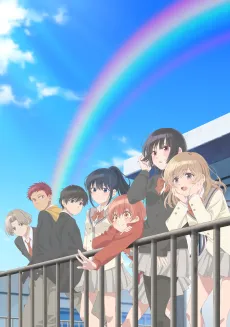
Haibara’s Teenage New Game+ follows Natsuki Haibara, a socially anxious college senior who mysteriously wakes up seven years in the past — one month before high school begins. Armed with the painful hindsight of his lonely adolescence, he’s determined to rewrite his story: build confidence, make real friends, and win over the girl of his dreams. This Spring 2026 rom-com from Studio Comet is a charming, wish-fulfillment-driven slice of life that blends second-chance nostalgia with genuine emotional stakes. If you’ve ever daydreamed about a high school do-over, this one’s for you.
Season Summary
This Haibara’s Teenage New Game+ season 1 recap covers Natsuki’s journey from anxious loner to someone who finally starts seizing the life he always wanted. The season adapts the early volumes of the light novel and establishes the core cast, the rules of Natsuki’s “new game+,” and the romantic tensions that drive the series forward.
The Reset — A Second Chance at Everything (Episodes 1–3)
The season opens in the present day with college senior Natsuki Haibara at his lowest point. He’s about to graduate with virtually no friends, no romantic experiences, and a mountain of regret about his high school years. After a particularly painful night reflecting on what could have been, he wakes up in his old bedroom — seven years younger, one month before high school entrance ceremonies.
The initial episodes balance comedy and genuine pathos as Natsuki grapples with the impossibility of his situation. He still has all his memories and maturity from college, trapped in his scrawny teenage body. Rather than spiral into existential crisis, he makes a decision: he’s going to do everything differently this time. He starts a rigorous workout routine, studies social skills from online guides, and mentally prepares a game plan for the social battlefield of high school.
Crucially, these early episodes reintroduce his childhood friend Hikari Hoshimiya, who in his original timeline drifted away from him during high school. This time, Natsuki makes the conscious choice to maintain their relationship instead of letting his anxiety push her away — a small but significant first victory.
New Game, New Natsuki — The First Month of High School (Episodes 4–7)
The entrance ceremony arrives, and this is where the Haibara’s Teenage New Game+ season 1 summary really kicks into gear. Armed with foreknowledge and hard-won confidence, Natsuki makes choices his past self never could. He introduces himself to classmates, joins conversations instead of hiding in the corner, and even volunteers for class duties — something the original Natsuki would have found unthinkable.
He quickly draws the attention of several key figures. Miori Motomiya, the class’s social queen bee, is intrigued by this oddly mature yet awkward boy. Tatsuya Nagiura, the naturally popular athlete, becomes an unexpected ally when Natsuki helps him with a studying problem — in the original timeline, Natsuki had avoided Tatsuya out of jealousy. Meanwhile, Hikari watches Natsuki’s transformation with a mix of happiness and quiet confusion, sensing something has fundamentally changed about her childhood friend.
The tension of these episodes comes from the gap between Natsuki’s adult mind and teenage circumstances. He knows what to do socially but still battles crippling anxiety in the moment. Several scenes play this for both comedy and heart — like when he perfectly plans a cool self-introduction but freezes mid-sentence, or when he gives surprisingly mature advice to a classmate and has to awkwardly cover for why a freshman sounds like a life coach.
The Hoshimiya Dilemma — Old Bonds, New Feelings (Episodes 5–8)
Running parallel to Natsuki’s social reinvention is the series’ emotional core: his evolving relationship with Hikari Hoshimiya. In his first life, Hikari was his closest childhood friend who he secretly loved but never confessed to. They grew apart in high school, and she eventually became popular while he became invisible.
This time, Natsuki is determined to stay close to her — but his adult perspective creates complications. He genuinely cares about Hikari, but he also recognizes that his “plan” to win her over feels manipulative. Is it fair to pursue someone when you have seven years of insider knowledge about them? These moments of self-awareness elevate the show beyond standard rom-com fare.
Hikari herself is portrayed with real depth. She’s warm, slightly teasing, and perceptive enough to notice that Natsuki is different without understanding why. A standout subplot involves Hikari defending Natsuki to classmates who remember him as “that quiet weird kid from middle school,” showing that she valued their friendship even in the original timeline.
Major Spoiler — The Rooftop Scene
In a pivotal late-arc moment, Hikari confronts Natsuki about his sudden personality shift. He nearly breaks down and tells her the truth about his time travel but stops himself. Instead, he tells her honestly that he spent years regretting not being braver around her — technically true from his perspective. It's the most emotionally raw scene of the season and redefines their dynamic going forward.Rising Stakes — The Social Pyramid and Its Thorns (Episodes 8–10)
As Natsuki climbs the social ladder, the season introduces real obstacles. Uta Sakura, a shy, bookish girl, becomes an unexpected complication when she develops feelings for Natsuki — something that never happened in his first life because they never interacted. This is the show’s clever thesis at work: changing the past creates new problems, not a clean path to happiness.
Yuino Nanase, an upperclassman with a sharp tongue and reputation for intimidation, takes an interest in Natsuki after seeing him stand up to a group of bullies targeting a first-year student. In his original timeline, Natsuki would have walked past that situation. His intervention earns Yuino’s respect but also puts him on the radar of the upperclassman social hierarchy in ways he didn’t anticipate.
The season also doesn’t shy away from showing Natsuki’s failures. A particularly painful episode has him overplay his hand at a class social event, coming across as try-hard rather than natural. The fallout temporarily undoes some of his progress and forces him to reckon with the fact that social confidence can’t be speedrun — even with a cheat code.
The Cultural Festival and a Promise (Episodes 11–13)
The first season builds toward the school’s early cultural festival, a classic anime milestone that serves as the backdrop for several converging plotlines. Natsuki’s class decides to run a café, and he ends up on the planning committee alongside both Hikari and Miori — a socially complex triangle that the show mines for both comedy and tension.
Tatsuya and Natsuki’s growing friendship is tested when they clash over how to handle a situation with a classmate being excluded from festival prep. Natsuki’s adult perspective pushes him to intervene, while Tatsuya takes the more typical teenage approach of not getting involved. Their resolution strengthens their bond and marks Tatsuya as someone Natsuki can genuinely rely on.
The festival itself delivers the season’s emotional climax. Natsuki manages to create the kind of happy high school memory he always fantasized about — laughing with friends, working together on something fun, feeling like he belongs. But the moment is bittersweet because he’s acutely aware that this version of his youth is built on a second chance most people never get.
Major Spoiler — Season Finale Cliffhanger
The season ends with Natsuki discovering something alarming: a photo on his phone that shouldn't exist — a picture from his college years that somehow carried over into this timeline. This suggests the time travel may not be as clean a reset as he assumed, and raises the terrifying possibility that his two timelines could converge or that his window to change things might be limited.Highlights & Must-See Moments
- Episode 1: The Morning After — Natsuki’s realization that he’s actually traveled back in time, played with perfect comedic timing as he cycles through denial, panic, and maniacal determination.
- Episode 4: The Entrance Ceremony — Watching Natsuki nail (and fumble) his social reintroduction is equal parts cringe and triumph. The split-screen comparing his two timelines is a brilliant directorial choice.
- Episode 7: The Rooftop Confession — Hikari and Natsuki’s emotionally charged conversation is the season’s dramatic peak, grounding the rom-com in real vulnerability.
- Episode 9: The Fallout — Natsuki’s social overreach and its consequences deliver the season’s most important lesson: there are no true cheat codes for human connection.
- Episode 13: Festival Fireworks — The cultural festival finale beautifully captures the bittersweet joy of Natsuki’s second chance, capped with a cliffhanger that reframes the entire premise.
Our Take
Haibara’s Teenage New Game+ slots into the crowded “second chance” subgenre alongside titles like ReLife and Erased, but carves out its own niche by focusing squarely on social anxiety rather than mystery or tragedy. Where ReLife used its premise to explore workplace burnout and Erased chased a killer, Haibara’s keeps its stakes intimate and relatable — this is about a guy who just wants to not eat lunch alone. Studio Comet’s warm, soft-palette animation suits the tone perfectly, even if it lacks the visual fireworks of bigger productions.
The show’s greatest strength is its refusal to make Natsuki’s do-over a pure power fantasy. He has advantages, yes, but the series consistently argues that knowing what to do and actually doing it are very different things when anxiety is involved. The supporting cast — particularly Hikari and the surprisingly layered Yuino — prevent this from becoming a one-man show. At a score of 63/100, it’s clearly polarizing, and viewers looking for action or high-concept plotting will bounce off hard. But for fans of character-driven rom-coms with a dash of speculative fiction, this is a cozy, rewarding watch.
Rating: 7.0 / 10 — A heartfelt second-chance romance that’s stronger on character than spectacle, with enough emotional honesty to stand out in a crowded genre.
Where to Watch & Read
- Watch on HIDIVE
- Read the light novel Haibara’s Teenage New Game+ by Kazuki Amamiya — Shop on Amazon
- Read the manga adaptation Haibara’s Teenage New Game+ — Shop on Amazon
- Check out the original soundtrack on major streaming platforms