Edited by Hong-Bin Yoon · Founder, zzinDev LLC
Published
Gachiakuta Season 1 Recap
Spoiler Alert: This recap contains detailed plot summaries and may reveal key story events.
TL;DR
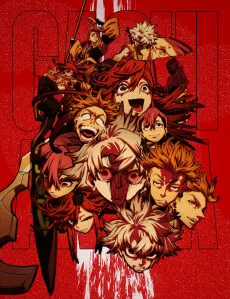
Gachiakuta season 1 is a 24-episode ride through one of the most visually inventive shonen premises in years. Rudo, an orphan living in the slums of a floating city, gets framed for murder and literally thrown off the edge of the world — into a wasteland of living garbage monsters. Down in The Pit, he discovers he can turn trash into weapons and joins a band of warriors fighting to survive. Studio Bones brings their A-game to the animation, and the class-warfare themes hit harder than most battle shonen dare to go. If you liked Dorohedoro or Deadman Wonderland, this is your next obsession.
Season Summary
This Gachiakuta season 1 summary covers the full journey from Rudo’s unjust exile to his rise as a Cleaner in The Pit. For anyone wondering what happens in Gachiakuta season 1, here’s the complete breakdown.
The Fall from Grace (Episodes 1–4)
The season opens in The Sphere, a floating city where the privileged elite live in luxury at the center while the poor cling to the crumbling outer edges. Rudo is a scrappy orphan who was found as a baby in a pile of garbage by Regto, an old man who took him in and raised him with a stubborn sense of right and wrong. Their life is hard but genuine — Regto teaches Rudo that even discarded things have value.
Everything shatters when Regto is found dead. The authorities of The Sphere waste no time pinning the murder on Rudo, the “trash kid” nobody would defend. Despite his desperate protests, Rudo is convicted in a rigged trial and sentenced to the ultimate punishment: being “Dropped” — hurled off the edge of The Sphere into the abyss below, alongside the rest of society’s garbage.
The Drop sequence is one of the most striking openings in recent anime. Rudo plummets through clouds of debris, screaming into the void, and crashes into a world nobody above believes is survivable. These early episodes do exceptional work establishing the caste system that will drive the entire series — The Sphere doesn’t just discard its trash, it discards its people.
Welcome to The Pit (Episodes 5–9)
Rudo wakes up on the surface — a nightmarish landscape built from centuries of garbage dumped from above. The waste hasn’t just piled up; it’s come alive. Mutated creatures called Scavengers roam The Pit, born from the festering hatred and decay embedded in discarded objects. They’re grotesque, creative, and genuinely threatening.
Cornered by a Scavenger with no weapon and no hope, Rudo’s survival instinct triggers something dormant inside him. He awakens his Jinki — the ability to channel spiritual energy through discarded objects, transforming garbage into a powerful weapon. His particular Jinki manifests through a battered old broom, which he can reshape into a devastating combat tool. It’s an absurd visual that somehow works perfectly with the series’ themes.
Major Spoiler — Rudo's Rescue
Enjin, a seasoned warrior from the surface, intervenes just as Rudo is about to be overwhelmed. Enjin recognizes Rudo's raw Jinki potential and brings him back to the Cleaner settlement — a hidden community of Dropped survivors who have organized into a fighting force against the Scavengers.The Cleaner settlement reveals that Rudo isn’t the first person to survive the Drop. An entire society exists below, made up of the falsely accused, the politically inconvenient, and the genuinely dangerous — all living together in uneasy cooperation. The worldbuilding in these episodes is dense and rewarding.
Training Among the Discarded (Episodes 10–14)
Rudo formally begins training with the Cleaners, and the series expands its cast significantly. Zanka Nijiku emerges as a key figure — eccentric, unpredictable, and carrying secrets about the nature of Jinki that even veteran Cleaners don’t fully understand. Nijiku’s mentorship of Rudo is unorthodox and often antagonistic, pushing Rudo to his breaking point.
The training arc explores the mechanics of Jinki in satisfying depth. Each Cleaner’s power is shaped by the specific type of garbage they bond with, and the “memories” embedded in discarded objects influence how Jinki manifests. Rudo learns that his broom-based Jinki connects to Regto — the old man’s lifetime of careful, stubborn care literally lives on in the weapon his adopted son now wields. It’s the kind of power system that rewards emotional investment, not just cool factor.
We also meet Riyou Reaper, whose reputation among the Cleaners is equal parts reverence and fear. Riyou is one of the most powerful Jinki users alive, and their philosophy about The Pit’s ecosystem clashes sharply with the more aggressive faction that wants to fight their way back up to The Sphere. These ideological tensions give the training episodes real stakes beyond “protagonist gets stronger.”
Alice Stilza and Konza round out the supporting cast — Alice as a resourceful survivor with sharp tactical instincts, and Konza as a grizzled veteran whose loyalty to the Cleaners’ mission is unshakeable. Bones gives each of them at least one standout character moment during these episodes.
Into the Deep Pit (Episodes 15–20)
The Cleaners mount a major expedition deeper into The Pit, where the garbage is older, the Scavengers are more powerful, and the environment itself becomes hostile. This arc is where Bones’ animation budget really flexes — the deep zones are surreal landscapes of compressed, ancient waste that moves and shifts like a living organism.
Rudo faces his first truly life-threatening battles against evolved Scavengers that can mimic human tactics and even speak fragments of remembered language. The horror elements ramp up considerably, and the series isn’t shy about putting the cast in genuine danger. Team dynamics become critical as Rudo, Enjin, and the other Cleaners have to coordinate their different Jinki abilities to survive encounters that none of them could handle alone.
Major Spoiler — Deep Pit Revelation
The expedition uncovers evidence that The Sphere's ruling class knows the surface is inhabited. The Drops aren't just punishment — they're population control, and the Scavengers may not be entirely natural. Someone above has been engineering the ecosystem of The Pit to ensure that no one ever climbs back up.This revelation reframes Rudo’s personal vendetta against the people who framed him into something much larger. His desire for revenge becomes entangled with the Cleaners’ broader mission, and the series smartly avoids making him choose between them. Both goals point upward.
Vengeance Rising (Episodes 21–24)
The final arc of the season escalates on every front. Armed with new intelligence about The Sphere’s conspiracy, the Cleaner factions debate their next move — some want to mount an assault upward, while others argue for strengthening their position below first. Rudo, characteristically, wants to do both.
A powerful new enemy connected to The Sphere’s ruling class descends into The Pit, and the season’s climactic battles are spectacular. Rudo’s Jinki abilities evolve under pressure, and his final fight of the season pushes his broom-weapon into forms that are equal parts ridiculous and breathtaking — exactly the energy this series thrives on.
Major Spoiler — Season Finale
The season ends with Rudo declaring his intent to climb back to The Sphere — not just for revenge against those who killed Regto and framed him, but to tear down the entire system that treats people as disposable. The final shot mirrors his fall from Episode 1, but inverted — he's looking up now, and he's not alone.Highlights & Must-See Moments
- Episode 1: The Drop — Rudo’s freefall from The Sphere is an all-timer anime opening sequence. Bones animates the terror and beauty of the descent with breathtaking precision.
- Episode 6: First Jinki Awakening — The moment Rudo turns a broken broom into a weapon is ridiculous, emotional, and perfectly captures the series’ identity.
- Episode 12: Regto’s Memory — The training revelation connecting Rudo’s Jinki to Regto’s lingering care is the season’s emotional peak. Bring tissues.
- Episode 17: Deep Pit Horror — The evolved Scavengers that speak in fragments of remembered human language are genuinely unsettling. Peak horror-shonen blending.
- Episode 23: The Climactic Battle — Studio Bones delivers a sakuga showcase that rivals their best Mob Psycho work. This fight will be in AMV compilations for years.
Our Take
Gachiakuta season 1 is the best argument in years for why Studio Bones remains one of anime’s premier action houses. The premise — “what if Made in Abyss met Deadman Wonderland with a garbage-punk aesthetic” — could have been a gimmick, but Kei Urana’s source material has genuine thematic depth that the adaptation honors. The class-warfare commentary isn’t subtle, but it doesn’t need to be. When your hero’s power literally comes from what the powerful throw away, the metaphor is the plot.
Where the season truly excels is in making its power system emotionally resonant. Jinki isn’t just “garbage magic” — it’s a meditation on what we discard and what persists. Rudo fighting with a broom his dead father figure used every day is more compelling than any legendary sword. The pacing across 24 episodes is remarkably confident for a first season, never rushing the worldbuilding but never dragging during training. If the inevitable second season maintains this quality, Gachiakuta could be the defining shonen of its generation.
Rating: 8.4 / 10 — A powerhouse debut that turns trash into treasure in every sense.
Where to Watch & Read
- Read the manga Gachiakuta by Kei Urana — published by Kodansha (available from Kodansha USA) — Shop on Amazon
- The manga is serialized in Weekly Shōnen Magazine and is ongoing, well ahead of the anime
- Gachiakuta Vol. 1 manga on Amazon — a great entry point to get ahead of the anime
- The official soundtrack by Bones’ music team is available on streaming platforms