Edited by Hong-Bin Yoon · Founder, zzinDev LLC
Published
Tomorrow's Joe Season 2 Recap
Spoiler Alert: This recap contains detailed plot summaries and may reveal key story events.
TL;DR
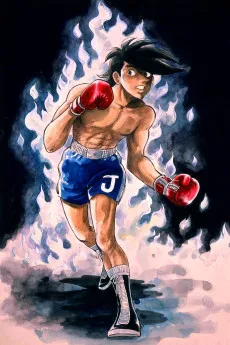
Tomorrow’s Joe 2 picks up after the most devastating moment in its predecessor — the death of Rikiishi Tooru — and follows Joe Yabuki as he claws his way from grief-stricken wanderer to world title challenger. This Tomorrow’s Joe 2 season 1 recap covers all 47 episodes of raw, unflinching sports drama that defined an era. The animation is a massive leap over the original, the fights hit harder both physically and emotionally, and Joe’s journey toward burning himself out completely is one of the most iconic character arcs in anime history. If you watch one classic boxing anime, make it this one.
Season Summary
This Tomorrow’s Joe 2 season 1 summary covers Joe’s complete journey from broken fighter to legendary challenger across five major story arcs.
The Wandering — Joe’s Grief (Episodes 1–8)
Tomorrow’s Joe 2 opens in the aftermath of tragedy. Joe Yabuki killed a man in the ring — his greatest rival, Rikiishi Tooru — and the weight of it has hollowed him out. He’s left Tange Gym, abandoned boxing, and drifts through the margins of society with no direction and no will to fight.
During his wandering, Joe crosses paths with Wolf Kanagushi, a rough street fighter, and Goromaki Gondo, a yakuza-connected strongman. These encounters aren’t gentle — they’re violent provocations that force Joe to use his fists again whether he wants to or not. The ember inside him, the one that lives for combat, refuses to die no matter how much grief smothers it.
Joe eventually returns to the Doya slums and to Danpei Tange’s gym. But he’s not the same fighter. Every time Joe throws his cross — the same punch that killed Rikiishi — his body locks up. He sees Rikiishi’s face. His fists betray him. Danpei recognizes that Joe’s problem isn’t physical but psychological, a trauma so deep it’s rewritten his muscle memory. The question becomes: can Joe ever truly fight again?
Carlos Rivera — The Mirror (Episodes 9–21)
Enter Carlos Rivera, a charismatic Venezuelan boxer and former world-ranked bantamweight, invited to Japan by the Shiraki boxing conglomerate. Carlos is everything Joe isn’t right now — loose, joyful, flamboyant, and utterly in love with boxing. He dances through life with a grin, wins over crowds effortlessly, and carries none of the darkness Joe drags behind him.
But Carlos has his own hidden wound. Beneath the showmanship, Carlos is suffering from early-stage punch-drunk syndrome — the cumulative brain damage that haunts every fighter who stays in the ring too long. He hides it well, but the tremors in his hands and the occasional lapses tell the real story. Carlos represents what Joe could become, and more importantly, what Joe refuses to fear.
Their rivalry builds beautifully. Carlos deliberately provokes Joe, goading him into exchanges that force Joe to throw his cross. It’s not cruelty — it’s therapy delivered through violence. Carlos understands that Joe can only heal inside the ring. Their official bout is a war of attrition and artistry, two fighters who genuinely respect each other trying to destroy each other. The match ends in a draw, but the real result is that Joe’s psychological block shatters. He can fight again.
Major Spoiler — Carlos's Fate
After their fight, Carlos's punch-drunk condition deteriorates rapidly. The man who entered Japan as a dancing, smiling champion leaves as a shell — confused, childlike, unable to recognize where he is. It's one of the most devastating character exits in sports anime, and it haunts every fight Joe takes from this point forward. Carlos's fate is the series' most brutal thesis statement: the ring takes everything eventually.The Ranked Fights — Climbing Back (Episodes 22–30)
With his trauma behind him, Joe throws himself back into competitive boxing with ferocious intensity. Danpei structures a campaign to rebuild Joe’s ranking, and what follows is a gauntlet of increasingly dangerous opponents that test every dimension of Joe’s ability.
Joe develops his signature technique during this stretch — the no-guard counter style where he absorbs punishment to create openings for devastating counterattacks. It’s thrilling to watch and terrifying to think about. Every fight Joe wins costs him something physical. Danpei sees the toll mounting but knows he can’t stop Joe any more than he could stop a wildfire.
Youko Shiraki’s role deepens here. The wealthy heiress of the Shiraki boxing empire watches Joe’s rise with a complicated mix of admiration and dread. She’s drawn to his absolute refusal to compromise, his willingness to burn, but she also understands — perhaps better than anyone — that his path leads somewhere irreversible. Her quiet tension with Joe is one of the series’ most compelling relationships, built on unspoken understanding rather than romance.
Harimau — The Beast (Episodes 31–38)
Harimau is a terrifying opponent — a Southeast Asian fighter with vicious, unorthodox striking that blurs the line between boxing and something more primal. Where Joe fights with instinct refined by Danpei’s coaching, Harimau fights with raw predatory aggression.
Their buildup is intense. Harimau’s style exposes weaknesses in Joe’s counter-fighting approach because Harimau doesn’t follow predictable patterns. Joe can’t bait what he can’t read. Danpei and Joe have to adapt, developing new defensive strategies while maintaining the aggressive counter-punching identity that defines Joe as a fighter.
The Harimau fight is one of the series’ most physically brutal encounters. Joe takes tremendous punishment and dishes out equally savage blows. The animation during these later bouts is remarkable for 1980 — Dezaki’s trademark postcard memories (still-frame dramatic shots) punctuate the action with an almost painterly beauty. Joe wins, but the cost is written across his body. The series never lets you forget that every victory is also a withdrawal from a finite account.
Jose Mendoza — Burning White (Episodes 39–47)
Jose Mendoza is the world bantamweight champion and the final mountain. He’s not a villain — he’s simply perfect. Technically flawless, physically superior, mentally unshakable. Mendoza represents what boxing looks like at its mathematical peak: no wasted movement, no emotional vulnerability, no cracks to exploit.
Joe’s preparation for the world title fight is the emotional climax of the entire series. Danpei pours everything he has into the training camp, knowing this is the fight that will define both their lives. Youko watches from the periphery, unable to intervene, unable to look away. The supporting cast from the Doya slums — the kids, the neighbors, the people who watched Joe grow from a delinquent punk into something extraordinary — rally behind him one last time.
The championship fight itself spans multiple episodes and is widely considered one of the greatest animated fight sequences ever produced. Mendoza is a wall. Every technique Joe has developed, every trick, every desperate gambit — Mendoza answers them all with clinical precision. Joe gets knocked down again and again. But he keeps standing.
Major Spoiler — The Ending
Joe pushes himself beyond every human limit. He can't beat Mendoza on points, can't outbox perfection, so he does the only thing he knows — he trades his body for damage, absorbing punishment to land blows that slowly, impossibly begin to crack Mendoza's composure. By the final rounds, both fighters are transformed. Mendoza, for the first time in his career, looks shaken. Joe, for the first time in his life, looks at peace.The fight ends. Joe loses on points, but he has done something no one believed possible — he made the perfect champion bleed, made him afraid. In the final image, Joe sits in his corner after the bell. His gloves are off. There’s a faint smile on his face. He doesn’t move. He has burned himself completely to white ash — the metaphor that has defined his entire journey. Whether Joe is dead or simply spent beyond recovery is left deliberately ambiguous, and it is one of the most iconic final images in all of anime.
Highlights & Must-See Moments
- Episodes 18–20: Joe vs. Carlos Rivera — The draw heard around the world. Two fighters who love the sport and each other tearing themselves apart in the ring. Peak sports anime.
- Episode 21: Carlos’s departure — The scene where Carlos leaves Japan is gut-wrenching. No dramatic music, no speeches — just the quiet horror of watching a brilliant mind dissolve.
- Episodes 35–37: Joe vs. Harimau — Raw, savage, beautifully animated. Dezaki’s direction turns a boxing match into visual poetry through his signature freeze-frame technique.
- Episodes 44–47: The Mendoza fight and finale — The final stretch is transcendent. Four episodes of escalating drama that culminate in the most famous ending in classic anime history.
- Episode 1: Joe’s wandering — A masterclass in visual storytelling. Almost no dialogue, just a broken young man moving through a world that has no place for him.
Our Take
Tomorrow’s Joe 2 is not just a great sports anime — it’s one of the defining works of Japanese animation, period. Where the original series mixed its boxing drama with comedic slum-life episodes and a more episodic structure, Joe 2 strips everything down to the essential: one man’s compulsive need to burn in the ring and the people who love him enough to watch it happen. Director Osamu Dezaki’s work here is career-defining, his postcard memory technique transforming key moments into frozen paintings that sear themselves into your memory.
What makes this series endure is its refusal to romanticize what it depicts. Joe is not rewarded for his sacrifice. Carlos is not saved by friendship. The ring does not care about heart or willpower — it takes and takes and takes. And yet the series finds something transcendently beautiful in Joe’s commitment to burning completely rather than fading. It’s a philosophy that influenced everything from Slam Dunk to Hajime no Ippo to Megalo Box (which is an explicit homage). The ending alone has become a permanent part of Japanese pop culture. Forty-five years later, nothing in sports anime has topped it.
Rating: 9.4 / 10 — A masterpiece of sports drama and one of anime’s all-time greatest character studies.
Where to Watch & Read
- Watch on HiDive
- Watch on RetroCrush
- Ashita no Joe Vol. 1 by Asao Takamori and Tetsuya Chiba — Shop on Amazon
- Tomorrow’s Joe 2 Blu-ray Complete Collection — Shop on Amazon
- Revoltech Yamaguchi Joe Yabuki Action Figure — Shop on Amazon