Edited by Hong-Bin Yoon · Founder, zzinDev LLC
Published
THE FIRST SLAM DUNK Season 1 Recap
Spoiler Alert: This recap contains detailed plot summaries and may reveal key story events.
TL;DR
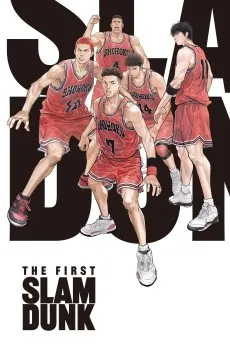
THE FIRST SLAM DUNK is not a TV season — it’s a feature film that reimagines the most legendary match in sports manga history. Directed by original creator Takehiko Inoue himself, the movie reframes the iconic Shohoku vs. Sannoh Kogyo Inter-High game through the eyes of point guard Ryota Miyagi, weaving his deeply personal backstory between the on-court action. If you’ve ever loved Slam Dunk, this is the version Inoue always wanted to tell. If you’re new, it’s one of the greatest sports films ever animated.
Season Summary
While marketed as a movie rather than a traditional season, THE FIRST SLAM DUNK season 1 delivers a complete, self-contained story that covers the climactic Shohoku vs. Sannoh Kogyo championship game — the pinnacle of the entire Slam Dunk saga. Here’s a full THE FIRST SLAM DUNK season 1 summary broken down by its major narrative arcs.
Ryota’s Origin — Okinawa and Loss (Flashback Arc)
The film opens not on a basketball court but in sun-drenched Okinawa, where a young Ryota Miyagi idolizes his older brother Sota. Sota is the local basketball prodigy — confident, charismatic, and everything Ryota wants to become. The two brothers share a deep bond built around the sport, playing one-on-one on weathered outdoor courts.
Major Spoiler
Sota dies in a drowning accident while out at sea, devastating the Miyagi family. Ryota's mother sinks into grief, and Ryota is left carrying the unbearable weight of being the surviving son who played the same sport as his dead brother. His mother can barely look at him on the court without seeing Sota's ghost.This tragedy becomes the emotional engine of the entire film. Ryota doesn’t play basketball for fun or glory — he plays because it’s the only language he shared with the person he lost. Every dribble is an act of remembrance and defiance against grief.
Arriving at Shohoku — A New Beginning (Flashback Arc)
Ryota relocates to Kanagawa Prefecture and enrolls at Shohoku High School, carrying his pain quietly behind a cool, composed exterior. Through scattered flashbacks, we see him integrate into the basketball team — clashing and bonding with the volatile Sakuragi, the stoic Rukawa, the determined captain Akagi, and the comeback kid Mitsui.
Each teammate gets brief but resonant flashback moments that remind audiences (or introduce newcomers to) their motivations. Mitsui’s wasted years and tearful return to basketball. Akagi’s years of building a team from nothing. Sakuragi’s raw beginner energy. These aren’t full backstories — Inoue trusts his audience — but they’re enough to establish why this particular game matters to every player on the floor.
The Game Begins — Shohoku vs. Sannoh Kogyo (First Half)
The present-day narrative drops us courtside at the Inter-High National Championship. Shohoku faces Sannoh Kogyo, the reigning champions who haven’t lost in years. The gap in reputation is enormous — Sannoh is a basketball factory, methodical and overwhelming. Nobody expects Shohoku to compete.
The first half establishes Sannoh’s suffocating defense and offensive precision. Sawakita, Sannoh’s ace, proves nearly unstoppable, blowing past Rukawa with superior athleticism. Mikio Kawata, their massive center, physically dominates Akagi inside. Shohoku falls behind, and the crowd — mostly Sannoh supporters — settles in for an expected blowout.
Yet Shohoku refuses to break. Ryota orchestrates the offense with surgical precision, exploiting tiny gaps in Sannoh’s press. Sakuragi’s unorthodox athleticism creates chaos that structured teams can’t plan for. The halftime score is grim but not hopeless, and Coach Anzai’s calm belief holds the team together.
The Comeback — Heart Over System (Second Half)
The second half is where THE FIRST SLAM DUNK ascends into something extraordinary. Inoue’s direction strips away soundtrack during key sequences, letting sneaker squeaks, ball bounces, and crowd noise carry the tension. It’s a bold choice that makes every possession feel life-or-death.
Rukawa and Sawakita’s duel escalates into the film’s marquee individual battle. Rukawa, for the first time, learns to trust his teammates — passing out of double-teams instead of forcing shots. It’s a small tactical shift but a massive character moment. Akagi plays through pain and exhaustion against Kawata, embodying the captain who has waited three years for this single game.
Sakuragi delivers several momentum-swinging plays through sheer willpower and instinct. His rebounds against taller, stronger players become the physical representation of Shohoku’s refusal to accept their supposed ceiling. The crowd, initially indifferent, begins to turn — recognizing they’re witnessing something historic.
The Final Minutes — Everything on the Line (Climax)
The last stretch of the game intercuts Ryota’s flashbacks with the present at a breathless pace. As Shohoku claws to within striking distance, Ryota remembers his brother, his mother’s grief, and the promise he silently carries.
Major Spoiler
Sakuragi injures his back diving for a loose ball but refuses to leave the game, declaring he's a "basketball player" in one of the franchise's most iconic lines. His high-five with Rukawa — two rivals acknowledging each other without words — is the emotional peak of the film. Shohoku wins by a single basket, and the movie ends not with celebration but with quiet, exhausted disbelief. They did it.The film closes by circling back to Ryota — older now, playing streetball on an American court. The grief hasn’t disappeared, but basketball gave him a way to carry it forward. It’s a understated, perfect ending that honors the sport and the story.
Highlights & Must-See Moments
- The silent sequences — Inoue drops the music entirely during critical plays, creating tension that no soundtrack could match. Pure cinema.
- Rukawa’s pass — The moment Sannoh’s ace finally chooses to trust his team is subtle and devastating, a single play that encapsulates his entire character arc.
- Sakuragi’s back injury and return — Raw determination animated with visceral physicality; you feel every wince and every sprint back down the court.
- The Rukawa-Sakuragi high-five — Two characters who spent the entire series antagonizing each other share one wordless moment of mutual respect. The theater erupted.
- Ryota’s final flashback to Sota — The brother storyline pays off in a single shot that connects past loss to present triumph without a word of dialogue.
Our Take
THE FIRST SLAM DUNK is that rarest of adaptations — one made by the original creator who looked at a beloved work and said “I can tell this better now.” Takehiko Inoue’s decision to center Ryota Miyagi, the least-explored starter, was inspired. It gave longtime fans a genuinely new story while providing newcomers an emotional anchor that doesn’t require 101 episodes of context. The CG animation was initially controversial, but in motion it’s stunning — the basketball feels physically correct in a way traditional animation rarely achieves.
Comparisons to Haikyuu!! and Kuroko’s Basketball are inevitable, but THE FIRST SLAM DUNK operates in a different register entirely. Where those series thrive on hype and spectacle, Inoue’s film is contemplative, almost melancholic. It’s closer to a Makoto Shinkai character study that happens to contain the greatest animated basketball game ever put to screen. The film grossed over $250 million worldwide and swept awards across Asia — proof that a 30-year-old manga about high school basketball still has the power to move millions.
Rating: 9.2 / 10 — A masterclass in sports filmmaking and a love letter from a creator to his life’s work.
Where to Watch & Read
-
Watch on Netflix