Edited by Hong-Bin Yoon · Founder, zzinDev LLC
Published
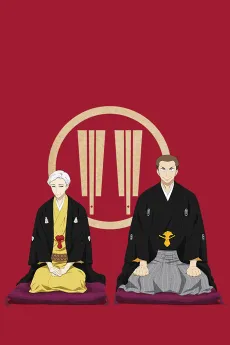
Showa Genroku Rakugo Shinju Season 2 Recap
Spoiler Alert: This recap contains detailed plot summaries and may reveal key story events.
TL;DR
Descending Stories: Showa Genroku Rakugo Shinju Season 1 is a masterclass in character-driven drama disguised as a show about traditional Japanese storytelling. What begins as a simple tale of an ex-convict becoming a rakugo apprentice quickly transforms into an epic decades-spanning flashback exploring rivalry, artistry, love, and tragedy between two performers in postwar Japan. The animation is restrained and elegant, the voice acting is extraordinary, and the emotional payoff is devastating. If you have any appreciation for stories about artists wrestling with their craft and their demons, this is essential viewing.
Season Summary
This Descending Stories: Showa Genroku Rakugo Shinju season 1 recap covers one of the most structurally ambitious anime dramas ever produced — a story that spans decades and redefines what the medium can accomplish with dialogue, performance, and silence.
Yotaro’s New Beginning (Episodes 1–2)
The season opens in the present day with Yotaro, a freshly released ex-convict with an infectious grin and zero subtlety. During his time in prison, he witnessed a rakugo performance by the aging master Yakumo Yuurakutei — specifically the tale of “Shinigami” — and it changed his life. Upon release, Yotaro barges into Yakumo’s world and essentially refuses to leave until the reluctant master accepts him as an apprentice.
Living in Yakumo’s home, Yotaro also meets Konatsu, a young woman with a fierce temperament and deep resentment toward Yakumo. Konatsu is the daughter of Yakumo’s late fellow apprentice Sukeroku, and she blames Yakumo for her father’s death. Despite being a talented storyteller herself, she’s barred from performing rakugo professionally because she’s a woman. These opening episodes establish the central tension — something terrible happened between Yakumo and Sukeroku, and the weight of it shapes every relationship in this household.
Yotaro’s earnest but clumsy attempts at rakugo provide warmth and comedy, but the show quickly signals that its real interest lies in the past. When Yakumo agrees to tell Yotaro the story of his youth, the series pivots into its true form.
Young Bon and the Rakugo World (Episodes 3–5)
The narrative leaps back to the 1930s and 1940s, and the rest of the season unfolds almost entirely in flashback. We meet Yakumo as a child — then called Kikuhiko, nicknamed “Bon” — a reserved, physically frail boy from a geisha house who is essentially abandoned at the doorstep of the 7th Generation Yakumo’s rakugo household. Bon has no particular love for rakugo. He’s quiet, disciplined, and deeply lonely.
Enter Hatsutaro, later known as Sukeroku — Bon’s polar opposite. Sukeroku is loud, wild, naturally gifted, and immediately brilliant on stage. Where Bon struggles to find his voice, Sukeroku commands rooms effortlessly. The two become unlikely friends, bonded by their shared status as outsiders taken in by their master. Their dynamic — the disciplined technician versus the untamed genius — becomes the emotional spine of the entire series.
These episodes chronicle their training years through wartime Japan. We watch Bon slowly develop his own style of rakugo, distinct from Sukeroku’s explosive energy. Bon’s rakugo is cold, precise, and intellectual. The show takes remarkable care in depicting actual rakugo performances, often letting scenes run for several unbroken minutes, trusting the audience to become absorbed in the art form itself.
Rivalry, Love, and Artistic Identity (Episodes 6–8)
As both men rise through the ranks, the postwar era brings new pressures. Rakugo itself is struggling to survive as entertainment — audiences are shrinking, younger people are turning to movies and television, and the art form feels increasingly antiquated. This existential threat to rakugo mirrors the personal crises of its two greatest young talents.
Sukeroku’s rakugo is revolutionary — he modernizes classic stories, performs with wild physicality, and connects with audiences viscerally. The establishment finds him disrespectful. Bon’s rakugo earns critical respect but lacks Sukeroku’s fire. The tension between innovation and tradition, between raw talent and refined technique, plays out in their performances and in their increasingly complicated friendship.
Then there’s Miyokichi — a beautiful, damaged woman who enters their lives and fractures everything. She begins a relationship with Bon, and their affair is tender but ultimately hollow. Bon cares for her but cannot love her the way she needs. He is consumed by rakugo, and perhaps incapable of the emotional openness she craves. When their relationship crumbles, Miyokichi drifts toward Sukeroku, and the two begin a passionate, self-destructive entanglement.
Major Spoiler — Miyokichi's Role
Miyokichi becomes pregnant with Sukeroku's child — this child is Konatsu, the young woman from the present-day timeline. The revelation recontextualizes everything we know about Konatsu's anger toward Yakumo and her complicated inheritance.The Fall of Sukeroku (Episodes 9–11)
This is where the Descending Stories: Showa Genroku Rakugo Shinju season 1 summary reaches its most devastating stretch. Sukeroku’s behavior becomes increasingly erratic. He drinks heavily, picks fights with the rakugo establishment, and refuses to conform. His master expels him from the school, stripping him of his performing name. It’s a death sentence for a rakugo artist — without institutional backing, he cannot perform in any major venue.
Bon, now ascending to prominence and eventually inheriting the name Yakumo, watches his friend’s downfall with a mixture of guilt, helplessness, and something darker — a recognition that Sukeroku’s destruction clears his own path. The show handles this moral complexity with extraordinary care. Bon is not a villain. He genuinely loves Sukeroku. But he also benefits from his friend’s ruin, and he knows it.
Sukeroku retreats to the countryside with Miyokichi, living in poverty and performing rakugo in small venues. He’s still brilliant — perhaps more brilliant than ever — but he’s broken. Bon visits them and finds a household held together by threads. Miyokichi is bitter, Sukeroku is drinking himself into oblivion, and little Konatsu is caught in the middle.
Major Spoiler — The Tragedy
The climax occurs when Miyokichi, in a moment of desperation and rage, confronts Bon on a snowy balcony. Sukeroku intervenes, and both Sukeroku and Miyokichi fall to their deaths. Whether it was an accident, a murder-suicide, or something in between is left deliberately ambiguous. Bon survives, takes custody of the orphaned Konatsu, and carries the guilt for the rest of his life. This single event defines every relationship in the present-day timeline.Return to the Present (Episode 12)
The season finale brings us back to the present, and we see Yotaro, Yakumo, and Konatsu with entirely new eyes. Every glance between Yakumo and Konatsu is loaded with decades of unresolved grief. Yakumo is a man waiting to die, keeping rakugo alive not out of love but out of obligation to the dead. Yotaro, oblivious to the full weight of this history, is perhaps the only person capable of breaking the cycle.
Yotaro earns his promotion to shinuchi and inherits the name Sukeroku — the 3rd Generation Sukeroku. It’s an act of breathtaking significance. For Yakumo, it’s either an attempt at atonement or a final cruelty to himself. For Konatsu, hearing her father’s name spoken again on stage is almost unbearable. The season ends with the suggestion that rakugo might yet survive, but only if these characters can find a way to let the past be a story they tell rather than a weight they carry.
Highlights & Must-See Moments
- Episode 3: Bon and Sukeroku’s first meeting — The contrast between these two boys instantly establishes the series’ central dynamic, and the warmth of their early friendship makes everything that follows hurt more.
- Episode 7: Bon’s breakthrough performance — After struggling for years to find his voice, Bon finally delivers a rakugo performance that is entirely his own, cold and haunting and beautiful. The extended, uncut performance sequence is mesmerizing.
- Episode 8: The love triangle crystallizes — The scene where Miyokichi realizes Bon will never choose her over rakugo is acted with devastating restraint by the voice cast.
- Episode 11: The balcony — The climactic tragedy is staged with operatic precision. Studio DEEN’s normally modest animation reaches genuine artistic heights here, with the snow, the silence, and the fall.
- Episode 12: Yotaro inherits “Sukeroku” — The emotional payoff of the entire season, concentrated into a single naming ceremony that means everything to every character in the room.
Our Take
Showa Genroku Rakugo Shinju is the rare anime that trusts its audience completely. It asks you to sit through extended rakugo performances, to care about an art form you likely knew nothing about, and to invest in characters whose defining moments happen in conversation rather than combat. The gamble pays off magnificently. In a medium often dominated by spectacle, this series proves that a person sitting on a cushion telling a story can be the most riveting thing on screen.
The show draws natural comparisons to Masaaki Yuasa’s work in its willingness to let art speak for itself, and to Satoshi Kon in its layered examination of performance and identity. But Rakugo Shinju is its own thing — a period drama with the pacing of literary fiction and the emotional precision of the best josei manga. Akira Ishida’s performance as Yakumo across multiple decades of the character’s life is one of the great vocal performances in anime history. This is a show that will make you cry about a dying art form in a country you may have never visited, and that’s a kind of magic only the best storytelling achieves.
Rating: 9.2 / 10 — A profoundly human drama that elevates both anime and the art of rakugo itself.
Where to Watch & Read
- Watch on Funimation
- Read the manga Descending Stories: Showa Genroku Rakugo Shinju by Haruko Kumota — Shop on Amazon
- The complete manga (10 volumes) tells the full story, including events beyond both anime seasons
- Descending Stories: Showa Genroku Rakugo Shinju — The Art of Rakugo art book — Shop on Amazon