Edited by Hong-Bin Yoon · Founder, zzinDev LLC
Published
Revue Starlight: The Movie Season 1 Recap
Spoiler Alert: This recap contains detailed plot summaries and may reveal key story events.
TL;DR
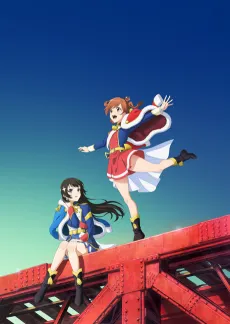
Revue Starlight: The Movie is the breathtaking theatrical finale to the Revue Starlight franchise, transforming the TV series’ themes of competition, destiny, and theatrical rebirth into a visually overwhelming cinematic experience. Director Tomohiro Furukawa and studio Kinema Citrus deliver what many consider one of the greatest anime films of the 2020s — a surreal, emotionally devastating send-off for the nine Stage Girls of Seisho Music Academy as they face graduation and the terrifying question of what comes next. If you loved the series, this film is essential. If you haven’t seen the series, stop and watch it first — this movie assumes full knowledge and rewards it tenfold.
Season Summary
This Revue Starlight: The Movie recap covers the entire film, which serves as the definitive conclusion to the franchise. The movie picks up after the events of the TV series and the Starlight re-LIVE stage plays, following the Seisho girls as they approach graduation and must confront who they are beyond the safety of the academy’s stage.
The Curtain Rises: Hikari’s Return and the Weight of Graduation (Opening Act)
The film opens with a stunning prologue — a retelling of the “Starlight” play itself, rendered in explosive, abstract animation that immediately signals this movie operates on a different visual plane than the TV series. We see the tragic narrative of Flora and Claire, the star-crossed performers whose story has haunted the franchise, reframed as raw theatrical combat.
From there, we return to Seisho Music Academy where the third-year students are preparing for their graduation. Hikari Kagura has returned to Seisho after the events of the TV series, but something is off. Karen Aijou, ever the optimistic force of nature, is thrilled to have her childhood friend back, but Hikari seems distant, burdened by something she won’t share. The other girls — Maya, Claudine, Nana, Junna, Mahiru, Futaba, and Kaoruko — are each grappling with their own post-graduation anxieties.
The film establishes its central metaphor early: graduation is death. The end of their time at Seisho isn’t just leaving school — it’s the death of who they were, and the terrifying birth of who they must become. This isn’t subtle, and the movie doesn’t want it to be.
The Revue of Separation: Each Girl’s Reckoning (Middle Act)
The heart of the Revue Starlight: The Movie summary lies in its extraordinary middle section, where the film cycles through a series of “revues” — the franchise’s signature duels blending song, dance, and combat — each one serving as a psychological reckoning for a pair of characters.
Maya and Claudine receive one of the film’s most celebrated sequences. Their rivalry, which defined them throughout the TV series, reaches its ultimate expression. Maya, the untouchable prodigy, and Claudine, who has spent her entire life chasing Maya’s back, finally meet as equals. Their revue is a declaration that their competition was always love — the desire to stand on the same stage, not above or below. The sequence is animated with a ferocity that borders on abstraction, bodies becoming light and motion.
Futaba and Kaoruko confront the fact that their lifelong friendship may not survive the real world. Kaoruko’s laziness masked a deep fear of inadequacy, while Futaba’s devotion to Kaoruko kept her from pursuing her own path. Their revue forces them to cut each other free — painfully, lovingly.
Nana and Junna face Nana’s lingering desire to freeze time. In the TV series, Nana (Banana) was revealed to have been looping the Starlight auditions to prevent change. Here, she must finally accept that time moves forward. Junna, the studious overachiever who fears she lacks natural talent, must believe she deserves a future on stage at all.
Mahiru gets a more understated but deeply felt arc. Her dependence on Karen — and her jealousy of Hikari — was a key thread in the series. The film shows Mahiru having grown beyond that, ready to shine on her own terms.
Each revue is visually distinct, scored with original songs that function as character confessions set to music. The animation shifts styles freely — from Ikuhara-esque surrealism to Takarazuka-inspired grandeur to sequences that feel like experimental short films.
The Final Revue: Karen and Hikari’s Last Stage (Climax)
Major Spoiler — The Film's Climax
The film’s final act reveals what Hikari has been hiding: she intends to leave again. Not to another school, but to London — to pursue her own path as a performer, separate from Karen. Their childhood promise to stand on stage together, the emotional engine of the entire franchise, must be broken for both of them to grow.
This triggers the final revue between Karen and Hikari, and it is one of the most astonishing sequences in modern anime. The two girls fight aboard and around a moving train — the “Starlight Express” — that barrels through surreal landscapes representing their shared memories. The train itself is a metaphor: you cannot stay on it forever; every journey has a destination, and arriving means stepping off.
Karen, who in the TV series literally rewrote the rules of the revue system through sheer force of will, must now accept that some things cannot be held onto. Her arc across the entire franchise completes here — from the girl who refused to let anyone lose, to the young woman who understands that letting go is not the same as losing.
The revue culminates in both girls “killing” their past selves — symbolically destroying the versions of Karen and Hikari who needed each other to exist. They part not with tragedy, but with the fierce joy of performers who know they’ll meet again on stage someday, as equals who chose to be there.
Curtain Call: The Girls Move Forward (Epilogue)
The film’s epilogue is brief but devastating in its quiet power. We see each of the nine girls stepping into their futures — some together, some alone, all changed. The final images echo the “Starlight” play one last time, but now the tragedy has been rewritten. Flora and Claire don’t cling to each other at the cost of their own light. They burn separately, brilliantly, and the sky is big enough for every star.
Highlights & Must-See Moments
- Maya vs. Claudine Revue — The single most technically impressive and emotionally resonant duel in the franchise. Their mutual recognition as equals is the payoff fans waited the entire series for.
- The Train Sequence (Final Revue) — Karen and Hikari’s climactic battle on the Starlight Express is a masterclass in visual storytelling, blending metaphor and action so seamlessly that every cut carries double meaning.
- The Opening Prologue — The retelling of the “Starlight” myth in hyper-stylized animation sets the film’s tone immediately and lets you know the movie will not be playing it safe.
- Nana’s Acceptance — After an entire series defined by her fear of change, watching Banana finally embrace the future is quietly one of the film’s most emotional beats.
- The Epilogue Montage — Simple, restrained, and absolutely devastating. The film trusts its audience enough to end quietly after the storm.
Our Take
Revue Starlight: The Movie is that rare sequel film that doesn’t just conclude its story but elevates everything that came before it. Director Furukawa, clearly influenced by Kunihiko Ikuhara’s work on Revolutionary Girl Utena and Penguindrum, has crafted something that stands alongside those landmarks of theatrical anime storytelling. The film’s central insight — that growing up means killing the person you were, and that this is both painful and beautiful — is rendered with such visual and musical inventiveness that it transcends its niche origins.
Comparisons to the Adolescence of Utena movie are inevitable and earned. Both films use surreal imagery to externalize the internal struggles of young women at a crossroads. But where Utena’s movie was cryptic to the point of alienation, Revue Starlight: The Movie is remarkably legible in its emotions even when its imagery is at its most abstract. Every viewer will understand what Karen and Hikari are fighting for, even if they can’t explain the talking giraffe. For fans of ambitious, visually driven anime that treats its audience as intelligent — this is unmissable.
Rating: 9.2 / 10 — A triumphant, visually staggering finale that turns graduation anxiety into grand theatrical myth.
Where to Watch & Read
- Watch on HiDive
- This is an original anime — part of a multimedia franchise that began as a stage musical
- Revue Starlight The Movie Blu-ray — Shop on Amazon
- Shojo Kageki Revue Starlight Manga Vol. 1 — Shop on Amazon
- Karen Aijo Nendoroid Figure — Shop on Amazon