Edited by Hong-Bin Yoon · Founder, zzinDev LLC
Published
MUSHI-SHI The Next Passage 2 Season 1 Recap
Spoiler Alert: This recap contains detailed plot summaries and may reveal key story events.
TL;DR
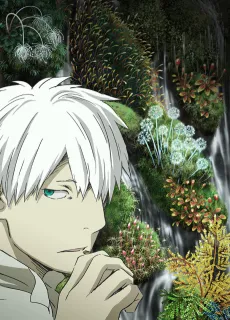
Mushishi Zoku Shou 2nd Season delivers another ten meditative, standalone tales of the wandering mushishi Ginko as he encounters primordial life forms disrupting human lives across rural Japan. This MUSHI-SHI The Next Passage 2 season 1 recap covers what many consider the pinnacle of the franchise — episodes exploring hidden inlets, eternal trees, living darkness, and the fragile thread connecting humanity to nature. If you appreciate atmospheric storytelling that prioritizes mood and meaning over action, this is essential viewing. It’s Mushishi at its most refined.
Season Summary
What happens in MUSHI-SHI The Next Passage 2 season 1? Ten self-contained stories, each a small masterpiece about the places where human life and mushi intersect. Ginko continues his solitary journey through a timeless rural Japan, arriving in villages just when something strange has begun to unravel the delicate balance between the visible world and the primordial forces beneath it.
Hidden Waters and Forgotten Places (Episodes 1–3)
The season opens with “Hidden Sedge,” introducing Izumi, a woman living near a concealed inlet where the boundary between the mushi world and the human world grows dangerously thin. Ginko discovers that the waters harbor mushi slowly altering the landscape, creating a hidden refuge that draws Izumi deeper into isolation. The episode sets the tone for the entire cour — quiet, contemplative, and tinged with melancholy.
“Tree of Eternity” follows with one of the season’s most haunting premises: an ancient tree sustained by mushi that grants it something resembling immortality. The villagers who depend on the tree face an impossible question about the cost of permanence in a world defined by change. Ginko must balance his understanding of mushi ecology with genuine compassion for people who have built their lives around something that was never meant to last.
The water-themed third episode rounds out this opening stretch, exploring how mushi dwelling in mountain streams affect the people living downstream. The lush, painterly backgrounds reach new heights here, with Artland’s animation capturing the movement of light through shallow water with almost documentary precision.
Seasons of Change (Episodes 4–5)
“Lingering Crimson” is a standout that uses autumn’s transience as its central metaphor. A woman discovers that the brilliant reds of the fall foliage around her village aren’t entirely natural — they’re sustained by mushi that feed on the boundary between life and death in the changing leaves. The crimson lingers far past its natural season, beautiful but wrong, and Ginko recognizes the danger in beauty that refuses to fade.
This is Mushishi at its most poetic. The episode never moralizes, but the implication lands hard: clinging to what’s meant to pass only invites something worse.
“Mirror Lake” presents one of the season’s most unsettling scenarios: a body of water that reflects not what stands before it, but something else entirely. Shigeru, a young man drawn to the lake, becomes fixated on what he sees in its surface. Ginko’s investigation reveals that the mushi inhabiting the lake aren’t malicious — they simply exist in a way that distorts the boundary between reflection and reality. The episode plays with ideas of identity and self-perception in ways that feel more psychological horror than fantasy.
Darkness, Light, and Perception (Episodes 6–7)
The season’s thematic core crystallizes in this pair of episodes. “Fragrant Darkness” follows Ginko into a village where night itself has taken on a physical quality — the darkness carries a scent, a texture, and a presence that the villagers have learned to navigate but never question. The mushi responsible have been there so long they’ve woven into the community’s identity. Ginko faces one of his recurring dilemmas: when mushi and humans have reached an equilibrium, is intervention always the right call?
“Thread of Light” brings the series back to the kouki — the river of light that serves as the fundamental life force connecting all mushi. This episode operates on a grander cosmological scale than most, touching on the deepest lore of the Mushishi universe. A disturbance in the local flow of light threatens an entire region, and Ginko must trace the thread back to its source. It’s the closest the show comes to urgency, though the “action” is still Ginko walking thoughtfully through forests and asking careful questions.
Unseen Forces (Episodes 8–9)
“Windswept” takes Ginko to a mountain pass where wind-dwelling mushi have made travel treacherous. The episode explores the lives of those who choose harsh, isolated environments, and the unspoken bargains they strike with nature. Mikage, a young woman with a preternatural ability to read the winds, has built her survival around a gift that Ginko suspects comes at a price she hasn’t yet recognized.
“Drops of Bells” features some of the most ethereal imagery in the entire franchise. Mushi that produce sounds resembling tiny bells have colonized a forest, creating an otherworldly soundscape that draws Yura, a village child, away from human company. The episode is a gentle meditation on the pull between the human world and the world of mushi — a tension that defines Ginko’s own rootless existence. The sound design alone elevates it into something more art installation than anime episode.
The Quiet Finale (Episode 10)
The season closes by circling back to the series’ foundational themes. Ginko encounters a phenomenon that ties together the ideas explored across the entire cour — the interconnection of all living things through the mushi, and humanity’s precarious place within that web. Rather than building to a climax, the finale opts for resolution through understanding.
Major Spoiler — Season Finale
The final episode connects its central phenomenon back to the kouki — the river of light underpinning all life. Ginko doesn't "defeat" the mushi but helps the affected community understand and coexist with the changes around them, reinforcing the series' core philosophy: mushi are neither good nor evil, simply another form of life that humans share the world with.It’s a fitting conclusion for a season — and arguably a franchise at its peak — that has always argued for coexistence over conquest. This MUSHI-SHI The Next Passage 2 season 1 summary captures a show operating with absolute confidence in its own rhythms.
Highlights & Must-See Moments
- Episode 1: “Hidden Sedge” — Izumi’s inlet — The season premiere immediately reestablishes Mushishi’s atmospheric mastery, with the hidden waterway serving as a perfect visual metaphor for the unseen world beneath the surface.
- Episode 4: “Lingering Crimson” — The autumn that won’t end — One of the most visually striking episodes in all of Mushishi; the unnatural reds create an eerie, gorgeous backdrop for a story about the cost of clinging to what’s meant to pass.
- Episode 6: “Fragrant Darkness” — Night with texture — The concept of darkness you can smell is uniquely Mushishi, and the episode’s exploration of long-term human-mushi coexistence raises questions the show rarely addresses so directly.
- Episode 7: “Thread of Light” — The kouki revealed — The most expansive episode thematically, offering a rare window into the larger cosmology Ginko navigates every day.
- Episode 9: “Drops of Bells” — The bell forest — Pure audiovisual poetry. The haunting sound design makes this one of the most memorable episodes in the entire franchise.
Our Take
Where the first cour of Zoku Shou felt like a confident homecoming, this second half reads as a mature refinement — episodes are tighter, themes resonate more deeply, and Artland’s animation has never been more assured. Mushishi exists in a category of one: no other anime so consistently transforms stillness into storytelling.
If you’re coming from faster-paced supernatural shows like Natsume’s Book of Friends or xxxHOLiC, Mushishi operates in an entirely different register. There are no power systems, no recurring villains, no escalating stakes. What it offers instead is rare in any medium — genuine contemplation about humanity’s relationship with forces beyond comprehension. In an era saturated with isekai power fantasies, Mushishi’s quiet insistence that the world doesn’t revolve around humans feels almost radical. This second cour earns its place among the best anime seasons ever produced.
Rating: 9.0 / 10 — A masterclass in atmospheric storytelling that refines an already exceptional formula to near-perfection.
Where to Watch & Read
- Watch on Funimation
- Watch on HIDIVE
- Based on the manga by Yuki Urushibara
- Mushishi Vol. 1 by Yuki Urushibara — Shop on Amazon
- Mushishi Complete Series Blu-ray — Shop on Amazon