Edited by Hong-Bin Yoon · Founder, zzinDev LLC
Published
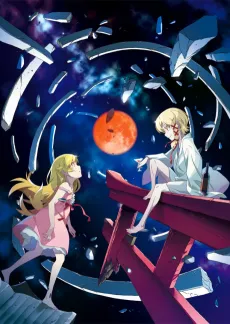
MONOGATARI Series: OFF & MONSTER Season Season 1 Recap
Spoiler Alert: This recap contains detailed plot summaries and may reveal key story events.
TL;DR
MONOGATARI Series: OFF & MONSTER Season marks the franchise’s triumphant return after years of waiting, adapting two of NisiOisiN’s “Monster Season” novels — Nademonogatari and Yoimonogatari — with Shaft’s signature visual flair cranked up to breathtaking new heights. This season shifts the spotlight away from Koyomi Araragi and onto the girls whose lives he changed, particularly Nadeko Sengoku and Yotsugi Ononoki, delivering introspective character studies wrapped in supernatural mystery. If you loved the Monogatari formula of sharp dialogue, unreliable narration, and emotional gut-punches hiding beneath layers of wordplay, this is the series operating at peak confidence. It’s dense, it’s gorgeous, and it rewards longtime fans with some of the most mature storytelling the franchise has ever attempted.
Season Summary
This MONOGATARI Series: OFF & MONSTER Season season 1 recap covers the two major narrative arcs that make up the 14-episode run — each functioning almost as its own self-contained novella while threading into the larger post-graduation Monogatari tapestry.
Nadeko Draw — The Manga Artist’s Struggle (Episodes 1–6)
The season opens not with Araragi but with Nadeko Sengoku, the former snake god who nearly destroyed the world during Second Season. Now fully human again and pursuing her dream of becoming a manga artist, Nadeko is trying to submit her work to a publisher — and failing. This arc, adapted from Nademonogatari, is a surprisingly grounded story about creative ambition, self-worth, and whether someone defined by their worst moments can build a new identity.
Nadeko’s manga keeps getting rejected, and her internal monologue — delivered with the same unreliable narration the series is famous for — reveals how deeply she still struggles with self-image. She’s no longer the quiet girl hiding behind her bangs, but she hasn’t fully become someone new either. Her interactions with her editor and her attempts to draw something “real” become metaphors for her broader struggle to face the world honestly.
Major Spoiler — Nadeko's Breakthrough
The arc's emotional climax comes when Nadeko realizes she's been drawing manga about other people's stories to avoid confronting her own. Her eventual submission — a raw, autobiographical piece about her time as a god — is both her artistic breakthrough and her final act of emotional honesty. It's a stunning inversion of her Second Season arc: where she once used fantasy to escape reality, she now uses art to process it.The Nadeko Draw arc also features the return of Kaiki Deishuu in a brief but memorable advisory role, and Shaft’s animation elevates the “manga within anime” sequences into some of the most visually inventive work in the entire franchise.
Yotsugi Buddy — The Doll’s Heart (Episodes 7–14)
The second half pivots to Yotsugi Ononoki, the expressionless shikigami familiar, in an arc adapted from Yoimonogatari. This is where the season earns its “OFF & MONSTER” title — Yotsugi’s story delves into what it means to be a constructed being searching for something resembling a soul.
Yotsugi begins investigating a series of supernatural disturbances that don’t fit the usual oddity patterns. Her investigation takes her through encounters with several returning cast members, including extended sequences with Tsukihi Araragi — whose own nature as the Phoenix mirrors Yotsugi’s questions about authenticity and identity. Their conversations, delivered in the franchise’s trademark rapid-fire dialogue, are among the season’s best scenes.
The arc gradually reveals its central mystery: something is “switching off” oddities across town — not destroying them, but rendering them inert. Yotsugi, as a being whose existence depends on supernatural forces, faces the very real possibility that she could be next. This existential threat transforms what begins as a detective story into a meditation on mortality and purpose.
Major Spoiler — The True Threat
The disturbances trace back to Deathtopia Virtuoso Suicide-Master, the legendary oddity killer introduced in Koyomi's story. Her presence in the post-graduation timeline raises the stakes enormously — she's not acting out of malice but following a philosophical conviction that oddities and humans must be fully separated. Yotsugi must confront someone who sees her very existence as an error to be corrected.Araragi himself appears sparingly but meaningfully throughout this arc, now occupying the role of a supportive presence rather than the protagonist. His scenes with Yotsugi carry a bittersweet weight — he’s the person who taught her that even a doll can choose who she wants to be, and watching her fight for that identity without his direct intervention completes a thematic thread that stretches back to Tsukimonogatari.
Major Spoiler — The Finale
The season concludes with Yotsugi making a definitive choice about her own existence — not through combat but through a characteristically Monogatari conversation that reframes the entire conflict. She argues that the distinction between "real" and "constructed" emotions is meaningless if the effect on the people around you is the same. It's the series at its most philosophically ambitious, and Shaft accompanies it with a visual sequence that shifts through every art style the franchise has used over its history.Connective Tissue — Shinobu and the Larger Story
Woven throughout both arcs are scenes with Shinobu Oshino, who is adjusting to her new status quo after the events of the Final Season. Her brief appearances serve as connective tissue between the two main stories and hint at the larger Monster Season narrative still to come. The season wisely doesn’t resolve her thread, instead using her presence to remind viewers that this is a chapter in an ongoing story, not a finale.
Highlights & Must-See Moments
- Episode 3: Nadeko’s manga montage — A dazzling sequence where Shaft animates Nadeko’s rejected manuscripts in different visual styles, each one revealing something about her emotional state. Pure visual storytelling at its finest.
- Episode 6: The autobiographical submission — Nadeko finally drawing her own story is the most emotionally cathartic scene the character has ever had, paying off an arc that began all the way back in Bakemonogatari.
- Episode 9: Yotsugi and Tsukihi’s park bench conversation — Two “inhuman” beings discussing what makes a person real. Twelve minutes of dialogue that somehow feels like an action set piece. Classic Monogatari.
- Episode 13: The art style sequence — Shaft pulls out every visual trick in its arsenal as Yotsugi’s climactic conversation unfolds across a kaleidoscope of animation styles spanning the franchise’s history.
- Episode 14: The final scene — A quiet, understated ending that recontextualizes the entire season’s themes in a single image. No spoilers — just watch it.
Our Take
OFF & MONSTER Season represents Monogatari at its most confident and mature. By stepping away from Araragi as protagonist, the series proves that its appeal was never just one character — it’s the entire philosophical framework NisiOisiN built around the intersection of identity, perception, and the stories we tell ourselves. The Nadeko arc is a masterclass in character rehabilitation, transforming one of the franchise’s most divisive characters into arguably its most compelling. The Yotsugi arc tackles questions about consciousness and authenticity that feel remarkably timely in an age of AI and digital identity.
Shaft’s production quality deserves special mention — this is among the best-looking anime of 2024, full stop. The studio clearly treated this return as an event, and every frame reflects that ambition. If there’s a criticism, it’s that the season’s deliberate pacing and dialogue-heavy approach will alienate newcomers entirely — but Monogatari has never pretended to be accessible, and at this point in the franchise, that’s a feature, not a bug. This MONOGATARI Series: OFF & MONSTER Season season 1 summary wouldn’t be complete without noting that it sets up future Monster Season entries beautifully while standing on its own as a deeply satisfying watch.
Rating: 8.8 / 10 — A visually stunning, thematically rich return that proves the Monogatari series still has vital stories to tell, even after its “final” season.
Where to Watch & Read
-
Watch on Amazon Prime Video