Edited by Hong-Bin Yoon · Founder, zzinDev LLC
Published
Kujira wo Yumemu Season 1 Recap
Spoiler Alert: This recap contains detailed plot summaries and may reveal key story events.
TL;DR
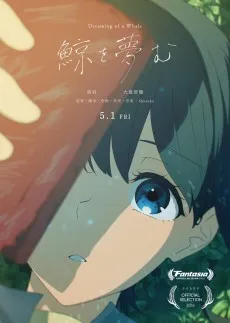
Kujira wo Yumemu is not a traditional anime season — it’s a poetic, post-apocalyptic short film by indie creator Shizuku that swept the 2025 Kochi Anime Creator Award out of thirty nominees and earned a slot in Fantasia International Film Festival’s Anime no Bento program. It follows a lone girl wandering a hushed, ruined Japan with her dog, kept company only by a stranger’s voice reciting poetry at the same hour each day on a battered radio. The vibe is melancholic, hand-drawn, and intimate — closer to Girls’ Last Tour whispered through a Studio Ghibli filter than anything you’ll find on a seasonal chart. Worth watching if you love quiet apocalypses, poetry, and animation that treats stillness as a feeling. Skip if you need plot momentum, dialogue, or a clean resolution.
Season Summary
THIS IS THE CORE OF THE ARTICLE. Because Kujira wo Yumemu is a graduation short film rather than a multi-episode broadcast season, this Kujira wo Yumemu season 1 recap organizes the work by its narrative movements rather than episode ranges. The film unfolds as a series of small, deliberate vignettes that build into a single emotional arc — what happens in Kujira wo Yumemu season 1 is less a plot than a slow tide of memory, loss, and the human refusal to be silent at the end of things.
Movement One: The Hush — Opening Vignettes
The film opens on the kind of silence that only animation can render: not absence of sound, but the specific acoustic weight of a world without people. Wind moves through warped power lines. A vending machine hums to itself. Somewhere in the mid-distance, a small dog trots across cracked asphalt while the camera holds on a sky too clean to be the one we live under.
Then we meet her — the girl, our unnamed protagonist, sitting cross-legged in what used to be a convenience store, eating cold rations and sharing them with the dog. She doesn’t speak. The film, in its first long minutes, refuses to over-explain. We learn her routine through observation: she scavenges, she walks, she sleeps in shells of houses, she keeps the dog close.
The opening’s defining gesture is the radio. At a precise hour — the film cues us with a wristwatch close-up, the only piece of clockwork still keeping her time — she sits, switches it on, and waits. A man’s voice drifts through the static and recites a short poem. She listens with the kind of stillness reserved for prayer, eyes closed, the dog curled against her leg. Then the broadcast ends, and she packs up and walks on.
Movement Two: The Walk — Building the World
The middle stretch of Kujira wo Yumemu — the bulk of the Kujira wo Yumemu season summary if you treat the film as a season — is a walking sequence that doubles as the world’s exposition. There is no narration. Instead, we accumulate detail: a school gymnasium with chairs still arranged for an assembly, a noodle shop where the daily specials chalkboard is half-erased, a torii gate threaded with vines. Whatever ended this world ended it gently. Nothing is burned. There are no skeletons. People simply… aren’t.
Through these sequences we get glimpses of who she was before. A photograph half-tucked in her satchel. A worn paperback of poems that she sometimes reads silently to the dog. A music box in an abandoned bedroom that she winds and listens to once, then leaves behind. The film trusts us to assemble her past from the shape of what she lingers on.
The dog — small, scruffy, alert — emerges as the film’s emotional anchor. Without dialogue, the bond is communicated entirely through animation: the way the dog circles back when she falls behind, the way she shares the last piece of food without hesitation, the way she sleeps with one hand fisted in his fur. By the time the film’s halfway point arrives, the audience understands that this is the story of two living things keeping each other from disappearing.
Movement Three: The Voice — Identifying the Broadcaster
The narrative tension, such as it is, sharpens when the girl begins triangulating the radio signal. She finds an old map, marks it with a soft pencil, and turns her wandering into a search. The poems become more specific — the broadcaster reads work that feels increasingly like personal correspondence. A reference to whales. A reference to dreaming. A reference to “the one who walks with the small dog in the empty streets.”
Major Reveal — Click to Expand
The voice is not coming from another survivor in real time. As she nears the broadcast tower — a tall, isolated building wreathed in birds — she discovers that the radio room is set up as a long-running automated loop. The broadcaster recorded a series of poems, one per day, before he died (or left, the film leaves it ambiguous), specifically anticipating that someone might be listening. The poems are addressed to whoever survives. The "whale" he references throughout is a metaphor he never fully unspools — a great dreaming creature beneath the world, a way of saying that the planet itself is not finished, only sleeping.This middle-late stretch is where the film’s craft is most visible. Backgrounds, hand-painted in watercolor textures, do enormous narrative lifting: light through a stairwell window, a corridor gone soft with dust, the broadcaster’s empty chair still warm from the sun. Kujira wo Yumemu season 1 episode guide-style breakdowns can’t quite capture this, because the work’s “events” are weather, light, and silence as much as they are anything plotted.
Movement Four: The Whale — Climax and Vision
The film’s climax is its strangest and most beautiful sequence. After the discovery in the broadcast tower, the girl walks to the coast — guided by a final recorded poem that names a specific stretch of shoreline. She arrives at dusk. The dog runs ahead. She sits in the sand.
And the sea breathes.
In a sequence that pivots from realism into pure dream-imagery, the ocean rises and a whale — vast, translucent, the color of the inside of a shell — surfaces and turns its eye toward her. It is not a real whale. It might be a dream, a hallucination, a metaphor finally made literal, the planet itself acknowledging the only person left to acknowledge it. The film does not arbitrate. The animation simply commits — long, unhurried frames of a child and a dog watching a great impossible animal move through water that shouldn’t be able to hold it.
She does not speak. She doesn’t need to. The whale dives. The water settles. The dog leans against her leg. Credits.
Season Timeline
| Section | Movement | Key Events |
|---|---|---|
| Opening | The Hush | Establishing the post-apocalyptic world; introducing the girl, the dog, and the radio ritual |
| Early Middle | The Walk | World-building through wandering; glimpses of the girl’s pre-collapse life; deepening bond with the dog |
| Late Middle | The Voice | The girl traces the broadcast signal; poems grow more personal; she heads for the broadcast tower |
| Climax | The Tower | Discovery of the broadcaster’s automated recordings; the “whale” metaphor takes shape |
| Finale | The Whale | Coastal pilgrimage; the dream-vision; ambiguous, transcendent ending |
Standout Sequences
Because Kujira wo Yumemu is a contemplative drama rather than an action piece, this section highlights the emotional and visual peaks of the short film rather than battles. These are the moments most often cited by Fantasia and Kochi jurors when explaining the film’s grand prix sweep.
The First Broadcast
The first time the girl tunes in the radio is the moment the film tells you what kind of work it is. We’ve watched several minutes of near-silent scavenging, and then suddenly there is a human voice — warm, unhurried, reading a four-line poem about morning light on water. The cut is to her face: eyes closed, the slightest tremor at the corner of her mouth. We don’t know yet that she has been doing this every day for an unknown number of days. We only know that this voice is the architecture holding her together.
The Music Box
A small interior scene roughly a third of the way in. The girl enters a child’s bedroom — pink walls, faded constellations on the ceiling — and finds a music box on a dresser. She winds it. The melody plays. She does not cry, exactly. She just sits on the edge of the bed and lets it run all the way to the end before standing up, leaving it open, and walking out. The animation lingers on the still-spinning ballerina inside after she’s gone. It is the film’s clearest statement that grief, here, is something you visit, not something you carry.
The Empty Chair
When she finally enters the broadcasting booth at the top of the tower, the camera takes her time. She sees the recording rig, the stack of papers, the chair. It is empty. There is a coffee cup on the desk with a ring of long-dried residue. The shot composition mirrors the iconography of an altar. The dog sniffs the chair, decides nothing is wrong, and sits. The girl, for the first time in the film, allows herself a small, audible breath that is almost a laugh and almost a sob. It is the film’s most economical act of acting.
The Whale Surfacing
The climactic vision sequence is unlike anything else in the 2026 spring season. The whale is rendered with a translucency that lets us see stars through its body. The animation deliberately mismatches its movement to what real physics would allow — it surfaces too slowly, displaces no water, exhales without sound. The choice rejects naturalism in favor of dream-logic, and it earns the film its title. Kujira wo Yumemu — to dream a whale, or to be dreamed by one.
The Final Shot
A long, static composition of the girl and the dog on the beach, backs to the camera, the dark water flat in front of them. The film holds the frame for what feels like a full minute before fading. There is no music, only the sound of distant waves and the dog occasionally shifting his weight. The shot trusts the audience to understand that nothing more needs to happen.
Character Development This Season
In a short film with effectively two characters and almost no dialogue, “development” means something different than it does in a 24-episode shounen. Both of the film’s main figures change, but they change the way real people change in real grief — quietly, asymmetrically, in moments you only recognize in retrospect.
The Girl
She begins the film as a creature of routine, and routine is how she is surviving. We can see it in the way she rations food, the way she chooses sleeping spots, the way she sets her watch by the radio broadcast. She is not numb — the film is careful about that — but she has narrowed her emotional aperture to the size of what she can carry. There is a discipline in her smallness that is its own act of mourning.
What changes over the film’s runtime is her willingness to want something beyond the next day. The decision to triangulate the broadcast tower is the first thing she does that isn’t strictly survival. By the time she sits on the beach and sees the whale, she has shifted from someone who is simply not-dying into someone who is, again, capable of being moved. The film does not pretend this is recovery. It is something quieter and more honest: the resumption of being a person.
The Dog
Animation rarely gives a non-anthropomorphic animal this much characterization, and Shizuku’s work earns it through specificity rather than cuteness. The dog is anxious, loyal, alert; he has a habit of sitting on the girl’s feet when she sleeps, and a habit of barking once, sharply, at things that don’t deserve a second bark. He is not a symbol — he is a coworker.
His arc is subtler than hers. Over the film, his vigilance softens; he grows more willing to nap in the sun, less likely to startle at small sounds. The change tracks with her own. He is mirroring her permission to be unguarded for a moment. The film implies that animals can grieve and that they can also — given a person to anchor them — let themselves rest. The bond between them is the film’s emotional thesis statement, and the animation team treats it with the seriousness most studios reserve for romantic pairings.
The Broadcaster (Voice Only)
We never see his face. We never learn his name. He exists entirely as a voice and as the absence at the top of a tower. And yet, by the film’s end, he is one of the most fully realized characters in the 2026 anime calendar.
His arc is reconstructed by the audience after the fact. We piece together that he was alone for a long time before he died or left, that he believed someone was still out there, that he sat in front of a microphone day after day choosing poems specifically intended to keep a stranger company. His “development” is a posthumous one: he is revealed to have been kinder, lonelier, and more deliberate than we realized while he was just a friendly noise in the static. The film is, in many ways, an act of tribute to a character who is gone before the story begins.
Our Take
Kujira wo Yumemu belongs to a small, fiercely beloved tradition of Japanese animation that treats the post-apocalypse not as a setting for action but as a condition for contemplation — Girls’ Last Tour, Nichijou’s quieter beats, Tatami Galaxy’s introspection, the slower stretches of Mushishi. What makes Shizuku’s film distinctive is how completely it commits to the form: there are no monsters, no factions, no scavenger gangs, no rationed-water tension. The world has ended without drama, and the film asks what art looks like in the after.
The poetry-on-the-radio conceit is the choice that elevates this from “another quiet apocalypse” to something genuinely transformative. By making the film’s emotional infrastructure a literal act of literary transmission, Shizuku argues that culture is not what we make when civilization is intact — it is what we make precisely because civilization isn’t. The broadcaster recording poems for a hypothetical survivor is the most hopeful thing in the film, and the most unbearable. Every viewer is going to walk out asking what they would record if they were the last one near a microphone, and that is exactly the question the film wants on the way home. Expect this short to circulate in indie animation curricula for the next decade and to anchor whatever Shizuku does next — a feature would be one of the most anticipated debuts of the late 2020s.
Rating: 9.0 / 10 — A small, perfect thing that earns every minute of its runtime and every prize it has won.
Where to Watch & Read
- Watch on Fantasia International Film Festival’s Anime no Bento program (festival circuit; a digital release is expected in 2026)
- Girls’ Last Tour Vol. 1 by Tsukumizu — Shop on Amazon
- Yokohama Kaidashi Kikou Vol. 1 by Hitoshi Ashinano — Shop on Amazon
- Mushishi Vol. 1 by Yuki Urushibara — Shop on Amazon
- The Selected Poetry of Shuntarō Tanikawa — Shop on Amazon