Edited by Hong-Bin Yoon · Founder, zzinDev LLC
Published
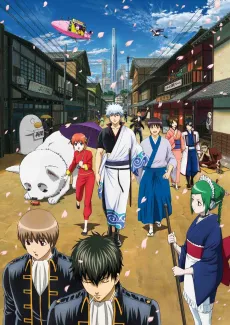
Gintama Season 2 Recap
Spoiler Alert: This recap contains detailed plot summaries and may reveal key story events.
TL;DR
Gintama’ (Season 2) picks up right where the original left off — with a brilliantly meta fake-out premiere — and proceeds to deliver some of the franchise’s most iconic arcs alongside its signature absurdist comedy. This 51-episode run masterfully balances gut-busting parody episodes with genuinely gripping dramatic storylines like the Yoshiwara in Flames and Red Spider arcs. If you’re looking for a Gintama Season 2 season 1 recap, know this: the comedy hits harder, the action scenes are jaw-dropping, and the emotional stakes reach new heights. This is where Gintama truly cements itself as one of the greatest shonen series ever made.
Season Summary
This Gintama Season 2 season 1 summary covers the major story arcs across all 51 episodes (202–252), blending Gintama’s trademark comedy with its most ambitious dramatic storytelling yet.
The Fake-Out Premiere & Comedy Reboot (Episodes 202–207)
The season opens with one of Gintama’s most legendary meta gags. After a year-long hiatus, Shinpachi returns to Edo only to find everyone has completely changed — Gintoki is a handsome bishonen, Kagura is a gorgeous young woman, and Otae has somehow married Kondou. The entire premiere is a parody of anime reboots that change everything fans love, and it works brilliantly as both satire and a love letter to the fanbase.
Shinpachi teams up with an unchanged Hijikata to “fix” Edo, and naturally everything resets by the end. The early stretch then settles into classic standalone comedy episodes — the Yorozuya take odd jobs, Hasegawa hits new lows, and the Shinsengumi cause chaos. These episodes re-establish the rhythm and remind viewers why they fell in love with this cast.
The Yoshiwara in Flames Arc (Episodes 210–214)
This is where the season first flexes its dramatic muscles. The Yorozuya get pulled into the underground red-light district of Yoshiwara, ruled by the fearsome Night King Housen, a Yato clan veteran of terrifying power. Kagura’s Yato heritage becomes central as Gintoki clashes with Housen to free the courtesan Tsukuyo and liberate Yoshiwara from his iron grip.
The action choreography reaches a new level here. Gintoki’s rooftop battle against Housen under the moonlight is one of the franchise’s most visually spectacular fights. Tsukuyo is introduced as a major recurring character — a hardened warrior who leads the Hyakka, Yoshiwara’s all-female police force. Her dynamic with Gintoki becomes an instant fan favorite.
Major Spoiler
Housen is ultimately defeated when sunlight floods Yoshiwara for the first time. His death scene is surprisingly poignant — he reaches toward the sun he hasn't seen in centuries, murmuring about a woman he once loved. Even the villain gets a tragic sendoff, classic Gintama.The Popularity Poll Arc & Comedy Stretch (Episodes 215–227)
Gintama goes full meta again with the Popularity Poll Arc, where characters literally fight each other over their rankings in Shonen Jump’s character polls. It’s absolute chaos — fourth-wall-breaking, self-referential humor at its finest. Characters who ranked low try to assassinate higher-ranked ones to steal their spots, and Shinpachi’s despair over his perpetual “glasses” status is comedy gold.
This stretch also includes some of the best standalone episodes in the series. The Owee arc parodies video game console wars (a thinly veiled Nintendo vs. Sony vs. Microsoft battle), the Yorozuya swap bodies in a hilarious Freaky Friday homage, and there’s a brilliant episode parodying detective mystery shows. The comedy writing is razor-sharp throughout, with rapid-fire references to everything from Dragon Ball to Hollywood blockbusters.
Hasegawa’s ongoing descent continues to provide some of the darkest comedy in the show, and Katsura’s appearances with Elizabeth remain reliably unhinged. These episodes aren’t filler — they’re the connective tissue that makes you care about these characters when the dramatic arcs hit.
The Red Spider Arc (Episodes 228–232)
Widely considered one of the best arcs in all of Gintama, the Red Spider Arc dives deep into Tsukuyo’s past and the dark underbelly of Yoshiwara. The villain Jiraia, the “Spider’s Thread,” is Tsukuyo’s former mentor who carved the scars on her face and returns to burn Yoshiwara to the ground.
This arc is Gintama at its most emotionally devastating. Tsukuyo’s backstory reveals how she sacrificed her identity as a woman to become a weapon, and Jiraia’s twisted philosophy about teacher-student bonds gives the conflict genuine thematic weight. The parallel between Jiraia and Gintoki — both mentors, but with opposite approaches — elevates this beyond a simple rescue mission.
Major Spoiler
Gintoki's confrontation with Jiraia on the burning rooftops is breathtaking. Jiraia wanted Tsukuyo to kill him all along — his entire plan was a suicidal gambit to force his student to surpass him. His death in the fire, finally acknowledging Tsukuyo's strength, is genuinely heartbreaking.The Kabukicho Four Devas Arc (Episodes 237–252)
The season’s climactic arc is an all-out war for control of Kabukicho, the Yorozuya’s home district. Four powerful figures — Otose, Saigou, Doromizu Jirochou, and the mysterious Kada from the Harusame space pirates — battle for supremacy. When Kada manipulates Jirochou into turning against Otose, Gintoki’s world is shattered.
This arc ties together years of character building. Otose’s history with Jirochou is revealed — they were once close, bound by a shared connection to a man they both lost. The arc forces Gintoki to confront what Kabukicho means to him and what he’s willing to fight for. Every major supporting character gets a moment: the Shinsengumi, Katsura, Tsukuyo, Sa-chan, and even Hasegawa all rally for the final battle.
Major Spoiler
Otose is stabbed and left for dead by Jirochou, sending Gintoki into a cold rage. His solo assault on Jirochou's forces — silent, brutal, and relentless — is one of the most chilling sequences in the series. When Gintoki and Jirochou finally clash, it's not just a fight but a reckoning between two men who define themselves by who they protect.The Four Devas Arc ends with Kabukicho united against Kada’s Harusame forces in a massive battle that feels like a love letter to the entire series. The resolution is satisfying without feeling final — wounds heal, alliances shift, and life in Edo goes on. It’s the perfect capstone to a season that proved Gintama can go toe-to-toe with any shonen when it wants to get serious.
Highlights & Must-See Moments
- Episodes 202–203: The Kintama Premiere — The fake reboot is one of the greatest meta gags in anime history, skewering industry trends while being genuinely hilarious.
- Episode 214: Gintoki vs. Housen — A moonlit rooftop battle that showcases Sunrise’s best animation work in the series up to this point. Pure spectacle.
- Episode 217: The Popularity Poll Brawl — Characters fighting over their own rankings is peak Gintama absurdity and fourth-wall demolition.
- Episode 231: Gintoki vs. Jiraia — The emotional climax of the Red Spider Arc, combining stunning action with a devastating meditation on mentorship and sacrifice.
- Episodes 247–252: The Four Devas Finale — The all-out war for Kabukicho is the most ambitious, emotionally charged sequence in Gintama to date. Every character shines.
Our Take
What makes Gintama’ special isn’t just that it can do comedy and drama — it’s that the comedy makes the drama hit harder. You spend dozens of episodes laughing at Gintoki’s lazy antics and Shinpachi’s straight-man suffering, and then when Gintoki walks silently into enemy territory to avenge Otose, you feel the weight of every joke, every bond, every quiet moment that came before. Few anime earn their dramatic payoffs this thoroughly.
Compared to other long-running shonen like Naruto or One Piece, Gintama’s advantage is efficiency. It doesn’t need filler arcs or prolonged power-ups because its comedy episodes ARE the character development. The Kabukicho Four Devas Arc works because you’ve spent 250+ episodes living in that neighborhood. This season also features Sunrise’s best animation work for the series, particularly in the Yoshiwara and Red Spider arcs, where the fight choreography rivals dedicated action anime.
Rating: 9.0 / 10 — A masterclass in balancing comedy and drama, featuring some of the franchise’s most iconic arcs and unforgettable character moments.
Where to Watch & Read
-
Watch on Hulu
-
Gintama Vol. 1 by Hideaki Sorachi — Shop on Amazon
-
Gintoki Sakata Figuarts ZERO Figure — Shop on Amazon