Edited by Hong-Bin Yoon · Founder, zzinDev LLC
Published
My Hero Academia Character Guide
Overview
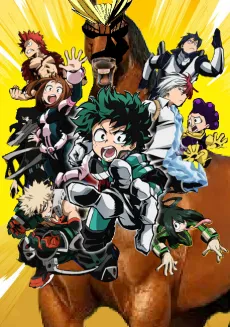
My Hero Academia boasts one of the most expansive and emotionally layered casts in modern shonen anime. Set in a world where 80% of the population possesses superpowers called “Quirks,” the franchise follows aspiring heroes through U.A. High School and beyond, exploring what it truly means to be a hero. From the rivalry between childhood friends to the tragic origins of its villains, My Hero Academia characters are defined by their growth, their ideals, and the bonds they forge under pressure.
Main Characters
Izuku Midoriya (Deku)
- Role: Protagonist
- First Appearance: Season 1, Episode 1
Arc Summary: Born Quirkless in a superpowered society, Izuku Midoriya begins as an underdog with an unshakable dream of becoming the greatest hero. His life changes forever when his idol, All Might, deems him worthy of inheriting the power of One For All — a Quirk passed down through generations. What follows is one of anime’s most compelling coming-of-age journeys.
Deku’s arc is defined by self-destruction and self-discovery. He starts by breaking his own body with every use of his power, learning through pain and perseverance how to make One For All his own. By the series’ end, he transforms from a trembling, tearful boy into a hero who can stand shoulder-to-shoulder with the greatest — not because of raw power, but because of his boundless compassion.
Season 1 Spoilers
Deku receives One For All from All Might and enters U.A. High School. He struggles to control his new power, shattering his bones with each use, but proves his heroic instinct during the USJ attack by standing against the villains despite being outmatched. Season 1 Recap
Season 2 Spoilers
The Sports Festival forces Deku into the spotlight, where he battles Todoroki in one of the series’ most iconic fights — winning not through victory, but by breaking through Todoroki’s emotional walls. His internship with Gran Torino teaches him Full Cowling, finally giving him a way to use One For All without destroying himself. He also encounters the Hero Killer Stain, whose ideology shakes the hero world. Season 2 Recap
Season 3 Spoilers
During the training camp arc, Deku faces Muscular and pushes One For All beyond his limits to protect Kouta. After Bakugou’s kidnapping and All Might’s final battle with All For One, the era of peace crumbles. Deku and Bakugou finally have their long-overdue confrontation, where Bakugou reveals his guilt over All Might’s retirement. The two begin their slow reconciliation. Season 3 Recap
Key Relationships:
- Katsuki Bakugou: A rivalry that evolves from one-sided bullying into mutual respect and partnership — the emotional backbone of the entire series.
- All Might (Toshinori Yagi): Mentor and father figure who entrusts Deku with his legacy, shaping Deku’s ideals and sense of responsibility.
- Ochako Uraraka: A grounding friendship built on mutual admiration that deepens into something more over the course of the series.
Significance: Deku embodies the series’ central thesis — that heroism isn’t about the Quirk you’re born with, but the choices you make. His journey from “the boy without a Quirk” to the inheritor of the greatest power in existence challenges every assumption about what makes someone worthy.
Katsuki Bakugou
- Role: Deuteragonist / Rival
- First Appearance: Season 1, Episode 1
Arc Summary: Bakugou starts as one of the most abrasive characters in shonen anime — an arrogant, explosive prodigy who bullied Deku for years. But beneath his rage lies one of the franchise’s most nuanced character arcs. His entire identity is built on the idea that strength equals worth, and watching Deku rise from nothing threatens the foundation of who he is.
Over the course of the series, Bakugou confronts his own insecurities, learns humility through defeat, and evolves from a selfish combatant into a hero willing to sacrifice everything for others. His growth is never sudden or clean — it’s grudging, painful, and utterly compelling.
Season 1 Spoilers
Bakugou is established as Deku’s childhood bully and the class’s most talented student. His capture during the USJ arc and his explosive temper set the stage for his ongoing rivalry with Deku. His battle with Deku during the heroes vs. villains exercise reveals the deep insecurity beneath his bravado. Season 1 Recap
Season 2 Spoilers
Bakugou wins the Sports Festival but is unsatisfied — his victory over Todoroki feels hollow because Todoroki refused to use his full power. This moment crystallizes Bakugou’s obsession with genuine, unqualified victory. His frustration grows as he watches Deku improve rapidly during their internships. Season 2 Recap
Season 3 Spoilers
Bakugou is kidnapped by the League of Villains, and the heroes’ desperate rescue mission results in All Might’s final stand. Bakugou carries immense guilt, believing All Might’s retirement is his fault. He finally confronts Deku in their explosive nighttime fight, revealing that he knows about One For All and demanding to understand why All Might chose Deku. This fight marks the turning point in their relationship. Season 3 Recap
Key Relationships:
- Izuku Midoriya: The rivalry that defines both characters — Bakugou slowly moves from contempt to acknowledgment to genuine partnership.
- Eijiro Kirishima: One of the few people Bakugou genuinely respects, forming an unlikely friendship built on Kirishima’s unwavering persistence.
- All Might: Bakugou idolizes All Might’s strength, and the guilt of his retirement drives much of Bakugou’s later growth.
Significance: Bakugou is the answer to the question “What happens when natural talent isn’t enough?” His arc deconstructs the shonen rival archetype — he’s not redeemed by one big moment but by hundreds of small, reluctant steps toward becoming someone worthy of the hero he’s always wanted to be.
Toshinori Yagi (All Might)
- Role: Mentor / Symbol of Peace
- First Appearance: Season 1, Episode 1
Arc Summary: All Might is the greatest hero the world has ever known — and he’s dying. When we meet him, his power is already fading from a grievous injury sustained years ago. He can only maintain his muscular hero form for a few hours a day. The rest of the time, he’s a skeletal, blood-coughing shadow of his former self.
His decision to pass One For All to Deku isn’t just about finding a successor — it’s about entrusting his legacy to someone who embodies what heroism truly means. All Might’s arc is about learning to let go: letting go of his power, his identity as the Symbol of Peace, and his role as the lone pillar holding society together.
Season 1 Spoilers
All Might meets Deku and initially tells him he cannot be a hero without a Quirk — then reverses course after witnessing Deku’s instinct to save Bakugou. He transfers One For All to Deku and becomes a teacher at U.A. to guide his development. Season 1 Recap
Season 3 Spoilers
All Might faces All For One in Kamino Ward in a battle that pushes him beyond his absolute limit. He delivers one final United States of Smash, defeats his nemesis, and exhausts One For All forever. His transformation into his true, frail form is broadcast to the entire world, ending the era of the Symbol of Peace. His parting words — “Now it’s your turn” — are directed at both the world and Deku. Season 3 Recap
Key Relationships:
- Izuku Midoriya: Deku is the son All Might never had — their bond as mentor and successor is the emotional core of the early series.
- All For One: A decades-long rivalry with the ultimate villain, whose very existence is the reason One For All was created.
- Nana Shimura: All Might’s own mentor, whose legacy and tragedy connect him to the villain Tomura Shigaraki.
Significance: All Might represents the burden of being the single pillar of a society. His fall forces the world — and the next generation — to confront the question the series ultimately answers: can many heroes together replace one symbol?
Ochako Uraraka
- Role: Main Character / Heroine
- First Appearance: Season 1, Episode 2
Arc Summary: Ochako enters U.A. with a modest dream — become a hero to earn money and give her struggling parents a comfortable life. She’s cheerful, warm, and immediately drawn to Deku’s determination. But as the series progresses, Ochako’s arc becomes about carving out her own identity beyond the people she admires.
She evolves from a support-oriented fighter into a hero who confronts villainy with empathy, ultimately playing a pivotal role in the series’ final act by choosing compassion as her weapon against despair.
Season 2 Spoilers
Ochako’s fight against Bakugou in the Sports Festival is a defining moment. She refuses to be pitied, executes a clever strategy despite being outmatched, and earns Bakugou’s respect. This fight establishes her as far more than a supporting love interest. Season 2 Recap
Season 3 Spoilers
Ochako begins to confront her growing feelings for Deku and consciously sets them aside, deciding that she needs to focus on her own path as a hero rather than chase after him. Her resolve to stand on her own strengthens through the provisional license exam. Season 3 Recap
Key Relationships:
- Izuku Midoriya: A relationship built on mutual inspiration — Deku’s selflessness motivates Ochako, and her support grounds him.
- Tsuyu Asui: Her closest female friendship, characterized by honest communication and mutual trust.
- Himiko Toga: A dark mirror relationship — Toga’s obsession with Ochako forces Ochako to confront what it means to empathize with a villain.
Significance: Ochako challenges the shonen heroine stereotype by developing agency and purpose independent of the male lead. Her arc argues that heroism rooted in empathy is just as powerful as heroism rooted in strength.
Shoto Todoroki
- Role: Main Character / Rival
- First Appearance: Season 1, Episode 5
Arc Summary: Shoto Todoroki is the son of Endeavor, the No. 2 hero who created him through a calculated Quirk marriage to surpass All Might. Shoto possesses a devastating half-cold, half-hot Quirk but refuses to use his fire side — a rejection of his abusive father’s legacy. He enters U.A. cold, isolated, and determined to prove himself using only half his power.
His journey is one of reclaiming his whole self. Through Deku’s intervention, his classmates’ influence, and his father’s painful attempt at atonement, Shoto learns to wield both sides of his power and both sides of his heritage — not for his father, but for himself.
Season 2 Spoilers
Shoto’s fight with Deku at the Sports Festival is the emotional peak of Season 2. Deku’s refusal to let Shoto handicap himself — shouting “It’s your power!” — breaks through years of trauma and convinces Shoto to use his fire for the first time. This moment redefines both characters. Season 2 Recap
Season 3 Spoilers
Shoto plays a key role in the training camp and provisional license exam arcs. He begins the slow process of reconsidering his relationship with his father after witnessing Endeavor’s public resolve to change. His interactions with Inasa Yoarashi force him to confront how his cold demeanor affects others. Season 3 Recap
Key Relationships:
- Endeavor (Enji Todoroki): The franchise’s most complex parent-child dynamic — abuse, resentment, and a genuine but imperfect attempt at redemption.
- Izuku Midoriya: The person who freed Shoto from his self-imposed limitations, earning a deep and quiet friendship.
- Dabi/Touya Todoroki: The reveal of Dabi as Shoto’s eldest brother transforms the Todoroki family saga into the series’ most devastating subplot.
Significance: Shoto’s arc explores generational trauma and the question of whether children can escape the sins of their parents. He represents the idea that accepting your full self — including the parts tied to pain — is an act of strength, not surrender.
Tomura Shigaraki
- Role: Primary Antagonist
- First Appearance: Season 1, Episode 1
Arc Summary: Tomura Shigaraki begins as a petulant, unstable villain leading the League of Villains with little more than a grudge against hero society. But beneath his childish rage is Tenko Shimura — a boy whose Quirk manifested by accidentally killing his entire family, and who was then groomed by All For One into a weapon of destruction.
Shigaraki’s growth as a villain mirrors Deku’s growth as a hero. He evolves from a puppet into a leader with genuine conviction, gathering outcasts and building a philosophy that challenges the foundations of hero society. His arc asks the audience an uncomfortable question: what happens to the people society’s heroes fail to save?
Season 1 Spoilers
Shigaraki orchestrates the USJ attack, sending Nomu to kill All Might. The attack fails, but it marks the first crack in the sense of security heroes provide. Shigaraki is immature and reactive, but All For One sees potential in him. Season 1 Recap
Season 3 Spoilers
Shigaraki kidnaps Bakugou and orchestrates the Kamino Ward incident. Though All For One is captured, Shigaraki is left to lead the League on his own — exactly as his master planned. Without his mentor’s direct hand, Shigaraki begins to develop real leadership and a personal ideology. Season 3 Recap
Key Relationships:
- All For One: Manipulative father figure who shaped Shigaraki’s hatred, raising him as both a successor and a symbol of society’s failure.
- Izuku Midoriya: Two sides of the same coin — both were failed by the system, but one was saved by a hero’s outstretched hand and the other was caught by a villain’s.
- The League of Villains: Shigaraki’s genuine bonds with Twice, Toga, Spinner, and the others humanize him and give him something worth fighting for beyond destruction.
Significance: Shigaraki is the franchise’s thesis on systemic failure. He exists because heroes focused on symbols instead of people, because a child fell through the cracks. He’s not just Deku’s enemy — he’s proof that the hero system Deku inherited is broken.
Supporting Characters
Tenya Iida
Tenya Iida is Class 1-A’s earnest, rule-abiding class president whose engine-powered legs make him one of the fastest students at U.A. Beneath his rigid exterior lies deep loyalty and a hot temper that surfaces when the people he loves are threatened.
Season 2 Spoilers
Iida’s brother Ingenium is paralyzed by the Hero Killer Stain, sending Iida on a reckless revenge mission during his internship. His confrontation with Stain — where Deku and Todoroki save him — forces Iida to confront the difference between justice and vengeance. This arc defines his character for the rest of the series. Season 2 Recap
He serves as the moral compass of Class 1-A and one of Deku’s most trusted allies, representing the disciplined, by-the-book heroism that complements Deku’s instinct-driven approach.
Yuuga Aoyama
Aoyama’s flamboyant, spotlight-craving personality masks one of the series’ most shocking secrets. His Naval Laser Quirk was given to him by All For One — a deal his desperate parents made for their Quirkless son, turning Aoyama into an unwilling spy for the villain.
Season 3+ Spoilers
The reveal that Aoyama is the U.A. traitor is one of the franchise’s most emotional twists. Rather than a betrayal born of malice, it’s a tragedy of a terrified boy trapped in an impossible situation. His classmates choose to forgive and protect him, and Aoyama ultimately turns against All For One — proving that it’s never too late to choose to be a hero.
Aoyama’s arc reinforces the series’ compassionate worldview: people are more than the worst things they’ve been forced to do.
Shota Aizawa (Eraser Head)
Aizawa is Class 1-A’s homeroom teacher — a perpetually exhausted, no-nonsense underground hero whose Erasure Quirk can temporarily nullify others’ powers. He appears cold and ruthless, threatening expulsion on day one, but every harsh lesson is designed to keep his students alive.
Season 1 Spoilers
During the USJ attack, Aizawa single-handedly holds off dozens of villains to protect his students, suffering severe injuries. This moment reveals the depth of his dedication and cements him as one of the franchise’s most beloved characters. Season 1 Recap
His backstory involving his fallen friend Oboro Shirakumo (later revealed to be the Nomu known as Kurogiri) adds tragic layers to his stoic exterior. Aizawa embodies the quiet, unglamorous heroism that the series argues is just as vital as the spectacular kind.
Eijiro Kirishima
Kirishima’s Hardening Quirk is straightforward, but his unwavering loyalty and relentless spirit make him irreplaceable. He’s the heart of Class 1-A’s friend group and the person who breaks through Bakugou’s walls — because Kirishima admires strength but defines it as the courage to never give up, not the power to always win.
His relationship with Bakugou is one of the series’ most organic friendships, and his backstory of overcoming cowardice to become a hero mirrors the franchise’s core message about choosing bravery every single day.
Key Relationships
Deku & Bakugou — The Rivalry That Defines a Generation
No relationship in My Hero Academia carries more weight than the one between Izuku Midoriya and Katsuki Bakugou. It begins in cruelty — Bakugou bullying Deku for being Quirkless — and evolves through resentment, grudging respect, genuine partnership, and ultimately a bond forged in sacrifice.
Their dynamic works because it’s never simple. Bakugou isn’t a bully who learns to be nice. Deku isn’t a victim who learns to fight back. They’re two people whose definitions of heroism are fundamentally different — and the series argues that both are necessary. Bakugou’s drive to win and Deku’s drive to save push each other to become complete heroes. Their final fight in Season 3 is the emotional turning point, but their growth together continues through every arc that follows.
Deku & All Might — The Torch Passed Forward
All Might and Deku’s mentor-student relationship is the franchise’s foundational bond. All Might sees in Deku what his own mentor Nana Shimura once saw in him — not power, but the instinct to run toward danger when everyone else runs away.
What makes this relationship special is that it’s not one-directional. All Might teaches Deku to be a hero, but Deku teaches All Might what it means to trust the next generation. All Might’s greatest struggle isn’t any villain — it’s learning to step back and let Deku surpass him. Their bond culminates in All Might’s final words at Kamino Ward, passing the torch not just as a power transfer but as an act of faith.
The Todoroki Family — Trauma, Abuse, and Atonement
The Todoroki family saga is My Hero Academia’s most ambitious character arc. Endeavor’s obsessive pursuit of surpassing All Might led him to an abusive Quirk marriage, the physical and emotional destruction of his wife Rei, and the fracturing of his children — culminating in eldest son Touya’s apparent death and transformation into the villain Dabi.
This isn’t a story with clean resolution. Endeavor’s attempt at atonement is genuine but can never undo the damage. Shoto’s forgiveness is conditional and hard-won. Dabi’s rage is justified even as his methods are monstrous. The Todoroki arc explores whether redemption is possible after irreparable harm — and wisely refuses to give a simple answer.
Deku & Shigaraki — Two Sides of One Coin
Deku and Shigaraki are the franchise’s ultimate foils. Both were failed children — Deku born without a Quirk in a Quirk-obsessed world, Shigaraki a boy whose power manifested in the worst possible way with no one to help him. The difference is that someone reached out a hand to Deku (All Might), while the only hand extended to Shigaraki belonged to All For One.
Their conflict is the series’ thesis made literal: heroes exist not to defeat villains, but to save people. Deku’s insistence on trying to reach Shigaraki even in the final battle — seeing the scared child beneath the monster — is what separates My Hero Academia from simpler good-vs-evil narratives. It asks whether a hero’s duty extends even to the person trying to destroy everything.
Ochako & Toga — Empathy vs Obsession
Ochako Uraraka and Himiko Toga share a fascination with identity and connection, but express it in opposite ways. Toga’s Quirk lets her literally become other people, and her twisted love manifests as a desire to consume. Ochako’s heroism is grounded in empathy — understanding others without losing herself.
Their confrontations force Ochako to grapple with the limits of compassion. Can you empathize with someone who wants to destroy you? Should a hero try to save a villain who doesn’t want to be saved? Ochako’s answer — extending understanding without surrendering her principles — makes her one of the series’ most thematically important characters and gives this My Hero Academia character guide its emotional anchor.